


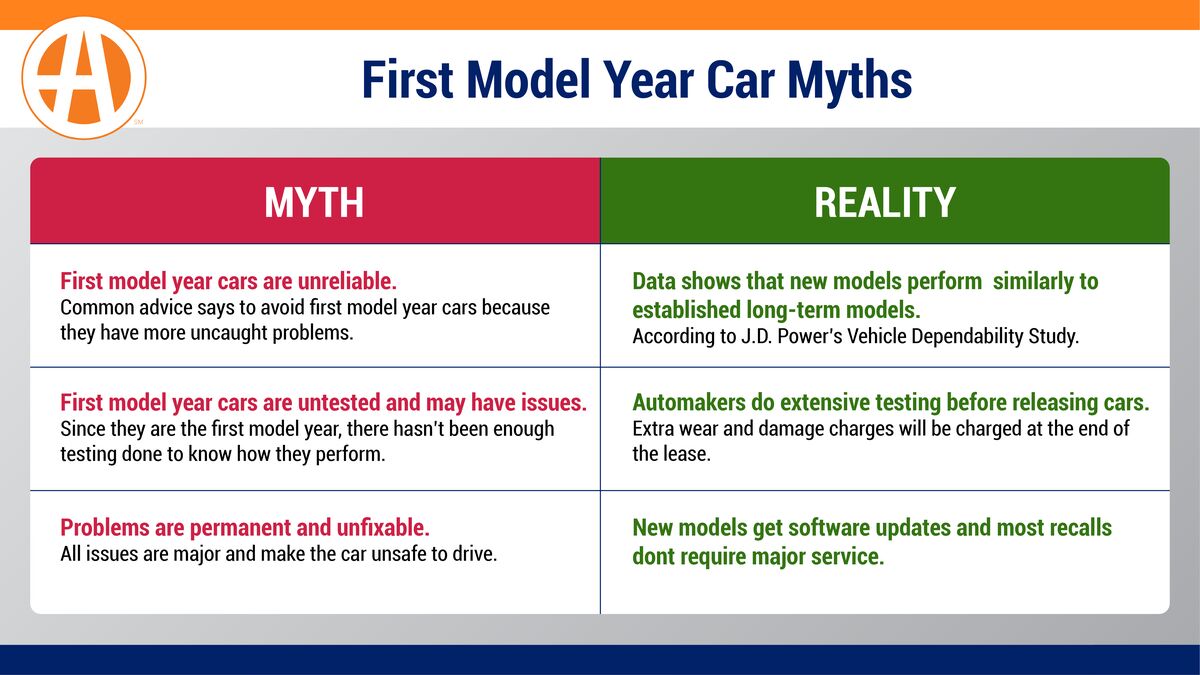
If you’re looking for a new car or simply doing research, you may hear the common advice that you should avoid buying the first model year of any new or redesigned vehicle. The idea comes from the thought that a new vehicle will have bugs and new features to work out. These could range from minor design flaws, like odd dashboard switches, to major issues, such as engine or transmission faults. But has this long-standing rule of thumb finally run out of warranty?
Some car shoppers believe it’s wiser to wait a little a year or two to avoid getting stuck with a faulty model. However, it’s important to remember that just because a vehicle is new doesn’t mean it’s going to be trouble. As with any vehicle, we recommend that you conduct thorough research to determine whether the first-year model fits your needs.
Reasons to Avoid a First-Model-Year Car
Buying a new model comes with the risk of the unknown. The vehicle could have design shortcomings or develop problems down the road. You could find your new vehicle getting recalled, which is not uncommon in the automotive world. While most recalls can be addressed relatively easily, others can be very serious.
Perhaps the best argument for skipping a first-year model is that drivers who choose one may miss out on later improvements. Some refinements made in later model years can’t be retrofitted to earlier vehicles. However, for some drivers, missing out on a future improvement is a small price to pay for having the latest and greatest model as soon as it’s available. On the other hand, many newer vehicles can receive over-the-air software updates that improve the performance of infotainment systems, driving aids, and other safety features.
Hearing this may be worrying, but remember one key thing: This idea applies to all new cars and used models. Model year alone shouldn’t determine whether you should buy a vehicle. So while this is something you may want to consider, exploring all your options and resources is far more important. Research expert reviews, reliability records, recalls, and owner complaints before deciding. A well-reviewed first-year model may be a better choice than an older design with a history of known problems.
MORE: Car Invoice Price and Dealer Markup: Tips for Buying a Vehicle
How Accurate is Automaker Reliability Data?
There may not be as much unknown as you think. Automakers spend thousands of hours on the road testing cars over millions of miles before releasing them for sale. Cars are repeatedly tested at high elevations, extreme temperatures, and other demanding conditions. Test drivers push vehicles to their limits to uncover problems before production. Even so, real-world use can reveal problems not seen in testing.
Historically, industry dependability studies often rank first-year models at or near the top of their segments for 3-year dependability. However, the broader takeaway is that first-year models don’t fare any better or worse than their longer-running rivals.
MORE: Negotiating With Car Dealers: 6 Steps to Get a Better Deal
Recommendations
With such significant advancements in automotive reliability over the years, it’s hard to say first-year models perform any better or worse than cars in later model years. A first-year vehicle isn’t necessarily a risky purchase just because it’s new.
If you plan to buy a first-year car, research the vehicle and manufacturer before signing a sales contract. Look at the automaker’s reliability history, warranty coverage, recalls, and early owner reports, but evaluate the specific model rather than relying on a rule about model years alone.
Editor’s Note: We have updated this article since its initial publication.


