


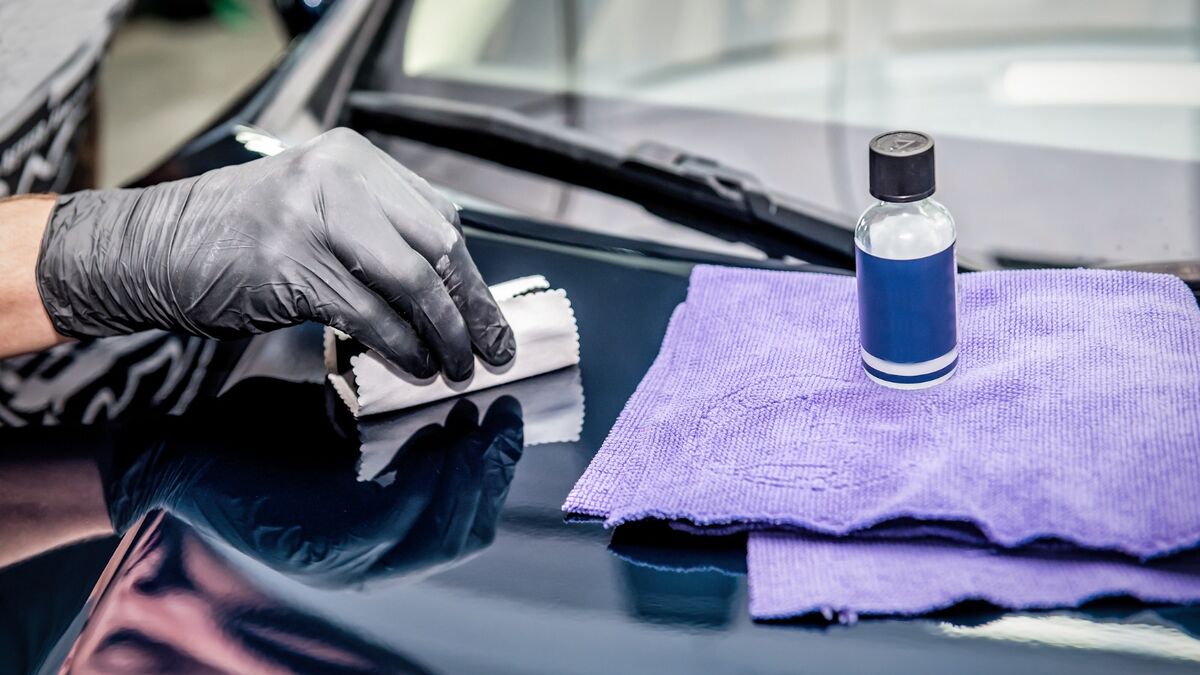
Ceramic coating is a liquid product applied to your vehicle’s exterior to create a durable, transparent protective layer. Unlike traditional waxes that sit on top of the paint, ceramic coatings form a semipermanent bond with the vehicle’s surface. This protective layer helps shield the paint from environmental damage, including dirt, grime, UV rays, and chemical stains.
With proper maintenance, most ceramic coatings last two to five years or 30,000 to 50,000 miles. However, many factors affect how long a ceramic coating effectively protects a vehicle’s paint.
Ceramic Coating Lifespan Estimates
Ceramic Paint Coating
Ceramic Glass Coating
Ceramic Wheel Coating
Ceramic Trim Coating
Ensuring Your Ceramic Coating Lasts
Car detailing is time-consuming and can be costly. Ceramic coating application is no different, so it’s important to do it right the first time to avoid wasting time and money.
For the ceramic coating to properly bond to the surface, your vehicle needs to be thoroughly cleaned, and the coating must be applied in suitable weather. Regardless of whether you’re applying the coating yourself or hiring a professional, the surface needs to be decontaminated and properly polished. Paint correction may also be necessary and can account for a large portion of the coating application cost.
It’s crucial to keep the coating dry for at least 12 hours after application. The car must remain unwashed for five to seven days while the curing process finishes. After the coating has cured, the car can be hand-washed with a pH-neutral shampoo designed for coated vehicles.
Applying a ceramic coating booster every three months will also help maintain effectiveness. Coating boosters are stand-alone products, often referred to as ceramic spray coatings. These spray coatings use a less concentrated formula, allowing them to be safely applied by most vehicle owners, regardless of their car detailing skill level.
In addition to regular washing, car owners should have the coating decontaminated annually. That procedure will remove any bonded contaminants. If the coating’s hydrophobic properties decrease, a deep cleaning may restore water beading.
Editor’s Note: We have updated this article since its initial publication. Trevor Spedden contributed to the report.


