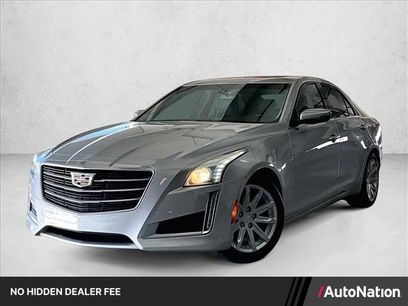
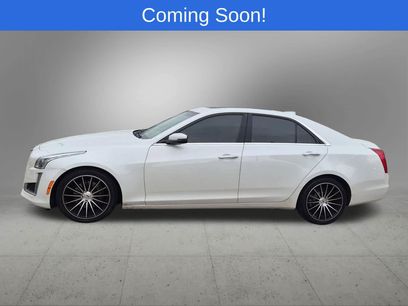
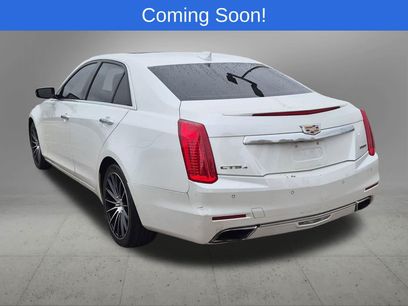
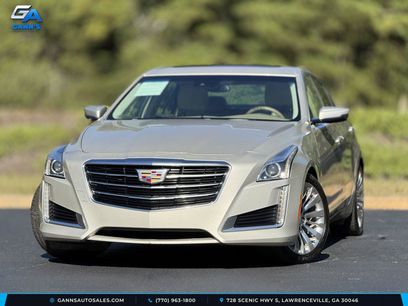
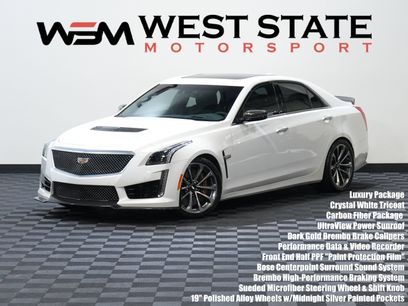
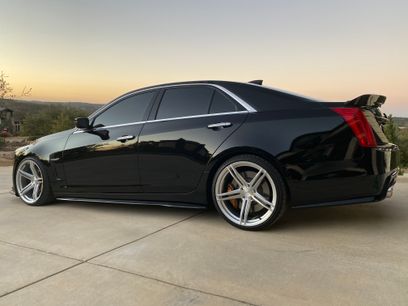
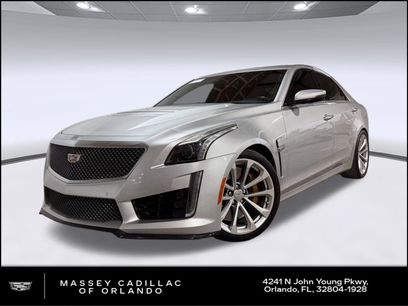
After recently beginning its third generation since first going on sale in 2003, the 2016 Cadillac CTS is now in the same league as rivals like the BMW 5 Series, Audi A6 and Mercedes E-Class. Longer, lower and lighter than the previous model, the latest CTS ups the ante by adding a trio of new engines, a new 8-speed automatic transmission and a new model: the CTS V-Sport, which touts an excellent 420-horsepower V6. But fans of the sedan’s high-performance V-model don’t have to make do with only 420 hp, as the famed CTS-V makes a return for 2016 with an amazing 640 hp. With the CTS, Cadillac has combined the bold and dynamic character unique to American cars with the power and performance that makes pricey European models so desirable. From an interior point of view, the CTS is stunning, boasting more opulence and more color than an E-Class or 5 Series and easily on par with the Audi A6. Interior environment colors include a lovely light brown dubbed Kona, as well as Twilight Blue leather or black leather with Morello Red accents. The biggest update for 2016 is the return of the high-performance CTS-V, which now offers a ridiculous 640 hp. Other changes include a revised version of the sedan’s 3.6-liter engine, along with a standard backup camera, a newly available 360-degree parking camera, and an improved infotainment system that features Apple CarPlay and eventually Android Auto.
Autotrader’s Advice:
While we appreciate the 2.0-liter engine’s punch, we think the 3.6 V6 with the 8-speed transmission delivers the best combination of performance, comfort and economy. The Premium trim is the best equipped and probably what most Cadillac buyers will want. Performance enthusiasts, however, should look no further than the CTS-V — unless its $85,000 price tag doesn’t fit into their budget. In that case, the V-Sport is an excellent consolation prize.
What We Like:
Bold styling; strong engine lineup; stunning interior detail; more rear-seat legroom; precise handling and brakin.
What We Don’t:
Run-flat tires deliver a rather harsh ride; front seats are a bit snug; CUE can sometimes be frustrating to use.
Original MSRP:
$46,600-$85,000 (when new).
MPG:
The 2016 Cadillac CTS is offered with four engine choices, all of which come standard with an 8-speed automatic transmission. The 2.0 model is powered by a turbocharged 2.0-liter 4-cylinder engine good for 270 hp and 295 lb-ft of torque. The Environmental Protection Agency rates fuel economy for this engine at 21 miles per gallon in the city and 31 mpg on the highway with rear-wheel drive and 21 mpg city/29 mpg hwy with all-wheel drive. The midlevel 3.6 is powered by a newly revised 3.6-liter V6 engine that develops 335 hp and 275 lb-ft of torque. Rear-drive models are rated at 20 mpg city/30 mpg hwy, while all-wheel-drive cars earn a slightly lower 19 mpg city/28 mpg hwy. The performance-oriented V-Sport is powered by a twin-turbocharged 3.6-liter V6 engine that pumps out an amazing 420 hp and 430 lb-ft of torque. Only offered with rear-wheel drive, the V-Sport returns 16 mpg city/24 mpg hwy. Topping the lineup is the high-performance CTS-V, which touts a raucous 640-hp 6.2-liter supercharged V8. Fuel economy is, not surprisingly, a mediocre 14 mpg city/21 mpg hwy.
Standard Features & Options:
The CTS 2.0 is offered in base, Luxury, Premium and Performance trims. The 3.6 only offers Luxury, Premium and Performance. You can get the V-Sport in V-Sport or Premium trims, while the CTS-V only offers one model. Optional equipment varies by trim. Some packages are included as standard on upper level trims. Options include navigation, HID adaptive headlamps, lane-departure warning, a blind spot monitoring system, rear cross-traffic alert, heated rear seats, a heads-up display, 19-in wheels and 20-way power front sport seats. All-wheel drive is available on all trims but the V-Sport and CTS-V, which come standard with rear-wheel drive.
The base CTS 2.0 ($46,600) includes Cadillac’s CUE connectivity and control system with an 8-inch touchscreen, 11-speaker Bose premium audio, dual-zone automatic climate control, selectable drive mode control, GM’s OnStar system with 4G LTE Wi-Fi, a remote engine starter, Bluetooth, keyless access with push-button starting, a 6-speed automatic transmission, leatherette upholstery, 8-way power front seats with 4-way power lumbar support, a backup camera, steering-wheel-mounted shift paddles, a tilt-telescopic steering wheel, Active Aero grille slats, rear park assist, 17-in painted aluminum wheels, OnStar with voice-guidance navigation (requires subscription) and automatic headlights.
The
2016 CTS 2.0 Luxury ($52,300) adds leather upholstery, heated and ventilated front seats, a heated steering wheel, a 13-speaker Bose stereo, a navigation system, a panoramic sunroof, lane-keep assist, a blind spot monitoring system and rear cross-traffic alert.
The
2016 CTS 2.0 Performance ($57,300) adds GM’s excellent magnetic ride control system, 18-in alloy wheels with run-flat tires, a heads-up display, the new 360-degree parking camera, automatic parking assist for parallel and perpendicular spaces, a power rear sunshade, manual rear-side sunshades, tri-zone automatic climate control and heated rear seats.
The
2016 CTS 2.0 Premium ($61,700) adds 20-way adjustable front seats, a reconfigurable gauge cluster, adaptive cruise control, front and rear automated braking, and automatic pre-collision seat belt tightening.
The
2016 CTS 3.6 Luxury ($54,300),
3.6 Performance ($59,300), and
3.6 Premium ($63,700) include the same equipment as their 2.0-liter counterparts, but substitute the 3.6-liter V6 for the 2.0-liter turbocharged 4-cylinder.
The
2016 CTS V-Sport ($61,000) is based on the Performance model, but adds the 420-hp twin-turbocharged engine, along with sport suspension, sportier steering, wider wheels and tires, Brembo brakes, wireless cell phone charging, a driver-selectable Track mode and an electronic limited-slip rear differential.
The
2016 CTS V-Sport Premium ($71,000) has all the V-Sport upgrades, plus much of the same luxury equipment as other Premium models.
Finally, the
2016 CTS-V ($85,000) comes in only one trim level, which adds the 640-hp supercharged V8 engine and a host of exterior upgrades that distinguish it from lesser CTS models.
Safety:
The Cadillac CTS comes standard with a full complement of safety equipment, including electronic traction and stability control, side-curtain airbags, and a backup camera. Optional safety equipment includes a blind spot monitoring system, lane-departure warning, forward-collision alert, automatic front and rear braking and rear cross-traffic alert. In crash tests carried out by the federal government’s National Highway Traffic Safety Administration, the latest CTS earned a perfect 5-star overall rating.
Behind the Wheel:
We spent time behind the wheel of each trim. The 2.0 has sufficient power and the softest ride of the three, but it’s not quite as responsive as the V6 — even if you play with the adjustable Drive Mode Control feature. Indeed, we think the 3.6 is the right engine and transmission choice for the CTS. Handling is spot on, as is feedback from the steering, though our test car’s optional 19-in wheels and run-flat tires delivered a pretty jarring ride. Instead, we might suggest sticking with the stock 18-in wheels. While we were thrilled about the muscular V-Sport in last year’s review, that model is now old news thanks to the arrival of the all-new CTS-V. With 640 hp and excellent performance upgrades, the CTS-V sets a new performance standard that other upscale sport sedans — like the Mercedes E63 AMG and BMW M5 — will have to follow. We’re especially impressed with its ride quality, which offers tracklike handling performance or cushy luxury, depending on which you prefer. Chalk that up as a benefit of GM’s amazing magnetic ride control system. Inside, the CTS delivers a big dose of Cadillac luxury with a stunning interior design complemented by available semi-aniline leather, a beautifully sculpted dash and contrasting suede and wood inserts. Unfortunately, even clever features such as the power-operated cup holder cover and electric glove box can’t make up for the still-cumbersome CUE interface and odd, haptic feedback touch controls.