




Quick Facts About MSRP
- The manufacturer’s suggested retail price (MSRP) reflects the costs of building and selling a new car.
- Carmakers set an MSRP, but dealers can ask for — and accept — any amount they choose.
- A vehicle’s MSRP includes a markup over its invoice price, which is how much the dealership paid for the car.
MSRP. You may see those four letters in the fine print or hear them in car ads, but what does MSRP mean? MSRP stands for manufacturer’s suggested retail price, and it’s the dollar amount the automaker recommends a dealer charge for the vehicle. It appears on the federally required window sticker (called the Monroney label), and it is only a suggestion. Car dealers can sell above or below MSRP, and car buyers don’t typically pay it, so how important is it?
Carmakers determine a model’s MSRP based on factors such as production costs, including labor, parts, and materials. It includes the car’s base price as well as factory packages and options that are installed prior to delivery to dealerships. A car’s price must also cover its development, engineering, and marketing. The suggested price also provides some dealership profit that helps keep it in business.
How Does the MSRP Affect the Cost of the Car?
Although the MSRP is the suggested price, dealers can ask for more or less than this figure. If a car is in high demand, a dealer might include a market adjustment, increasing the vehicle’s price beyond the suggested price. The dealer can do this because they feel that the market demand is high enough to ask for more than the manufacturer’s suggested price of the car.
Of course, dealers can also charge less than the suggested price for a car. Generally, the suggested price is typically a starting point for car negotiations, and, in many cases, customers insist on paying less than the MSRP.
Dealers have the authority to make these changes to the car’s final selling price because a suggested price is merely that — a suggestion. It’s ultimately up to dealers to decide whether they want to follow it.
What Is the Base Price and How Is It Different From MSRP?
The base price is a vehicle’s price without options. In contrast, the MSRP is the car’s price as it is delivered to the dealer, with options and factory-installed features.
For example, a car with a $36,000 base price might have an MSRP of $41,000 because it includes optional features totaling $5,000. These additional charges raise the vehicle’s MSRP well above the base price. A car’s base price excludes any destination charge. That fee is included as a line item in the window sticker price of any vehicle you buy from a dealer’s lot.
The destination charge, sometimes called a delivery fee, can range from about $1,000 to $3,000 in some cases, and that certainly adds to the cost of the vehicle. A manufacturer’s destination fee varies based on the make and model.
Most people don’t buy the least expensive version of a car; they buy somewhere in the middle, with some optional bells and whistles. Don’t fixate on MSRP alone; compare the vehicle’s current market value, incentives, and the dealer’s out-the-door price.
RELATED: Destination Charges and Dealer Fees Explained
MSRP vs. Out-the-Door Price
MSRP does not tell you the total cost you’ll actually pay for the vehicle. Taxes, title/registration fees, dealer fees, and optional dealer add-ons can push the out-the-door price higher. Conversely, rebates, incentives, and dealer discounts can lower the selling price. The MSRP is more of a reference point than the actual transaction price.
MORE: Negotiating With Car Dealers: 6 Steps to Get a Better Deal
What Is the Invoice Price?
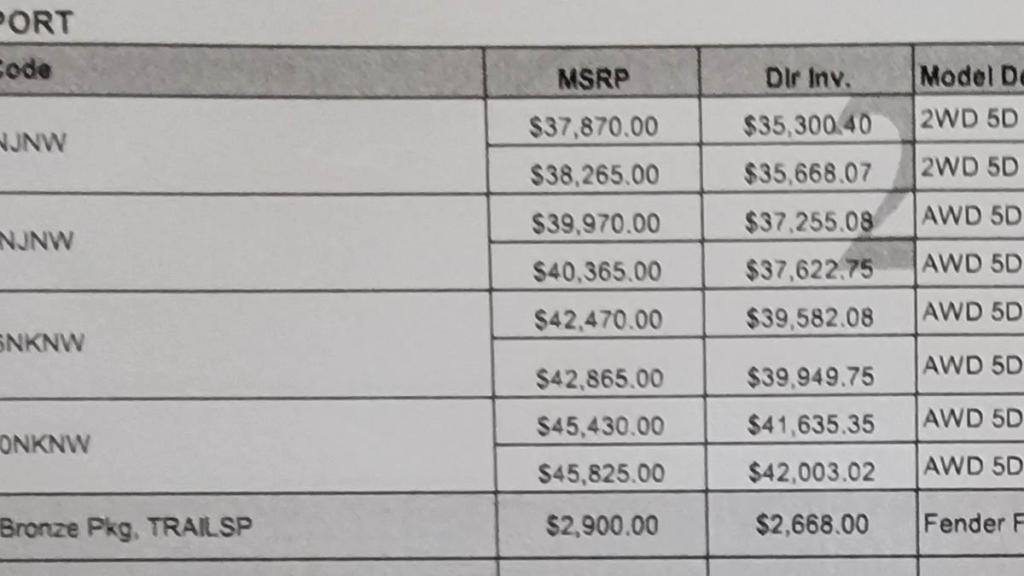
In the simplest terms, a car’s invoice price is the amount of money the dealership pays the manufacturer for a vehicle. For example, a car with a $40,000 MSRP might have a dealer invoice price of around $37,300. That means the dealer paid the automaker $37,300 for the car, which gives the dealer a $2,700 profit margin if a buyer pays the MSRP.
Given that the invoice price is the dealership’s cost of the car, you can’t always find a dealer willing to sell the vehicle for less than that. It is possible, though, because there are other ways that a dealership makes money from selling a car.
Dealers sometimes get an incentive from the automaker once they sell more than a set number of vehicles. There’s also something called “holdback,” which is an amount of money that the manufacturer pays the dealer after the sale of the car.
Another way for dealers to make money comes from the financing aspects of selling cars, which means paying with cash isn’t necessarily a factor when negotiating a lower out-the-door price. So even when a dealership doesn’t make any money from selling the car, it can still profit thanks to additional bonuses from the automaker.
Still, buying a car at or below the invoice price is an excellent feat.
RELATED: How to Get a Car Loan: Tips for First-Time Buyers
How Much Lower Than the MSRP Can I Negotiate for a New Car?
Most car-buying deals fall somewhere in between the invoice price and the MSRP. There’s no guarantee that your retail price will be less than what the manufacturer suggests. Remember that the dealer can charge more than the MSRP for new models in high demand. Negotiating far below the MSRP is more likely when the dealer wants to move vehicles off the lot.
In many cases, a small car will have a narrow profit margin between its invoice and retail prices. More expensive luxury cars may have a higher profit margin, which creates more room for negotiation.
Figuring out how much you should pay when buying a vehicle can be tricky, so check the car’s fair market range based on several factors, including its popularity and the spread between its base price and invoice price.
When You’re Ready to Buy, Keep These Negotiating Tips in Mind
Our car negotiation guide has many tips to follow when buying a new or used car at a dealership or from a private seller, including this general advice.
- Don’t talk payment. Negotiate the car’s price and not a monthly payment. It can be hard to figure out the purchase price if you’re negotiating based on payment. You might overspend in the long run if you concentrate on monthly car payments alone.
- Ask the dealer for the best price. Speaking first in negotiation isn’t a good idea because the price you’re willing to pay might be higher than the dealer’s best offer. And be sure to counteroffer, even if their price is better than what you expected.
- Don’t sweat it. After the dealer’s best price and your counteroffer are on the table, don’t walk away from a good deal over a small amount. Throughout a 5-year loan, the difference of a few hundred dollars equates to just $5 per month.
- Visit Autotrader’s Car Buying Information Center for curated articles and tools to help you go into your next deal with confidence.
Read Related Articles:
- Car Financing Glossary: Finance Terminology Explained
- How Much Money Should You Put Down on a Car?
- Car Finance 101: Everything You Need to Know
Editor’s Note: This article has been updated since its initial publication. Chris Hardesty contributed to the original report.


