


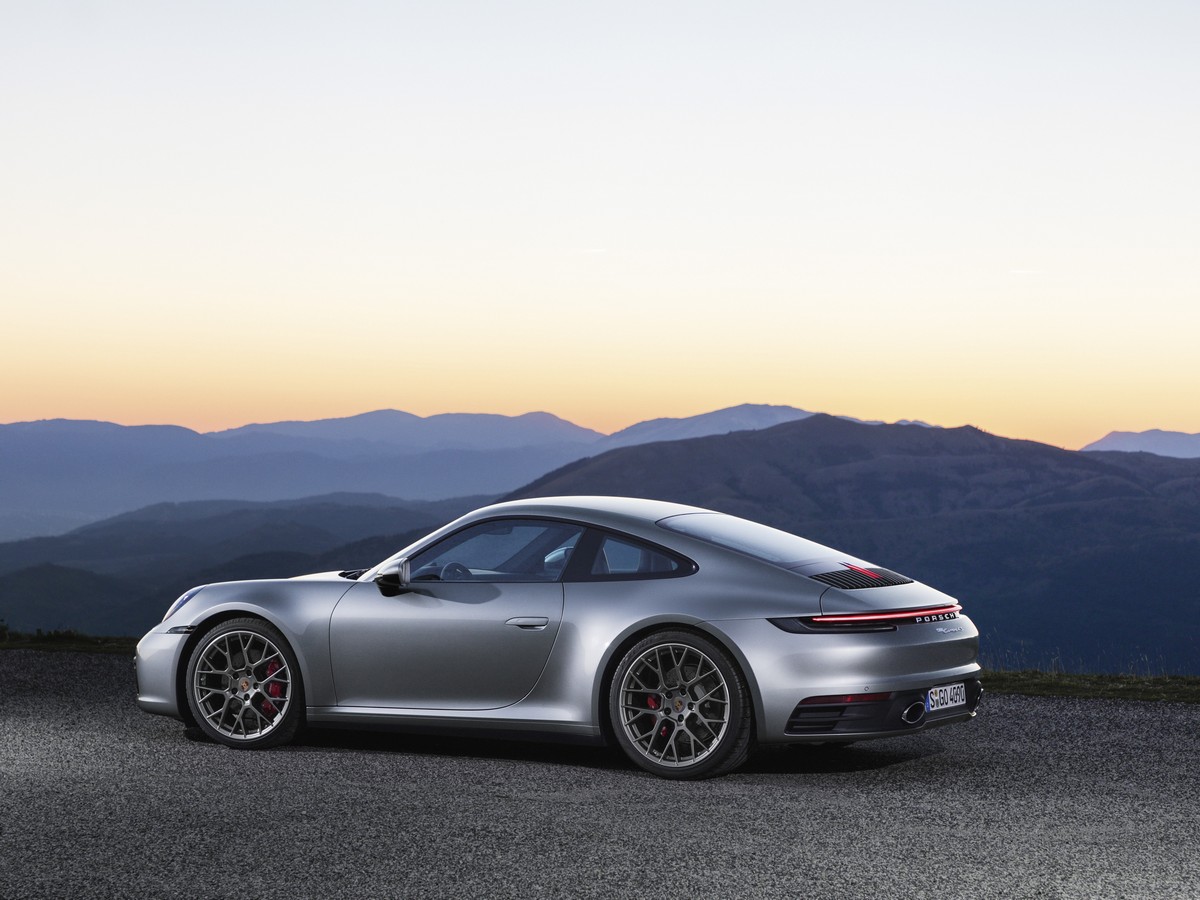
Why Buy a Used Porsche 911?
The Porsche 911 is one of the most recognizable and popular sports cars of all time, but enthusiasts’ fondness for the car has made it difficult to find a good deal on a solid used example. That’s the bad news. The good news is that most modern 911 variants deliver impressive performance and an engaging driving experience, and Porsche has made such a wide range of configurations for the car that it’s relatively easy to find the right 911 for your personality.
With so many choices available, it can be difficult to choose a 911, but the best place to start is with a question that has divided Porsche enthusiasts for more than two decades.
Porsche 911: Air-Cooled or Water-Cooled?
For the first 30-plus years of its time on sale, the Porsche 911 featured an air-cooled engine, which many enthusiasts view as the “real” versions of the car, but the more modern water-cooled variants offer better performance and a more up-to-date driving experience. This comparison focuses on the later water-cooled cars, but it’s worth comparing the two to understand their key differences.

- Mechanical feel
- Less complex
- Unique sound
- Easier maintenance
- Less robust temperature management

- Better temperature management
- More powerful and reliable
- Quieter
- More complex
- Less engaging sound
See Porsche 911 sports cars for sale near you.
Pick Your Porsche 911 Era
Porsche 911 (996) Generation — Powertrain Summary (U.S. Market)
| Powertrain (Engine) | HP / TQ (U.S. spec) | Trims | Body Styles | Years Available |
|---|---|---|---|---|
| 3.4 L NA flat-six (M96) | 296 hp / 258 lb-ft | Carrera, Carrera 4 | Coupé, Cabriolet | 1999–2001 |
| 3.6 L NA flat-six (M96) | 320 hp / 273 lb-ft | Carrera, Carrera 4, Carrera 4S, Targa | Coupé, Cabriolet, Targa | 2002–2005 |
| 3.6 L NA flat-six (Anniversary) | 345 hp / 273 lb-ft | 40th Anniversary Carrera | Coupé | 2004 |
| 3.6 L NA flat-six (GT3) | 355–381 hp / ~273 lb-ft | GT3 | Coupé | 2004–2005 (U.S.) |
| 3.6 L twin-turbo flat-six | 420 hp / 415 lb-ft | Turbo | Coupé, Cabriolet | 2001–2005 |
| 3.6 L twin-turbo flat-six (Turbo S) | 450 hp / 415 lb-ft | Turbo S | Coupé, Cabriolet | 2005 |
| 3.6 L twin-turbo flat-six (GT2) | 462–483 hp / 457 lb-ft | GT2 | Coupé | 2002–2005 |
Porsche 911 (996) Generation — Updates Timeline
| Year | Update |
|---|---|
| 1999 | Introduction |
| 2000 | 911 Turbo introduced |
| 2003 | 911 GT3 debuted for the U.S. market |
| 2004 | Turbo S introduced |
Porsche 911 (997) Generation — Powertrain Summary (U.S. Market)
| Powertrain (Engine) | HP / TQ (U.S. spec) | Trims | Body Styles | Years Available |
|---|---|---|---|---|
| 3.6 L NA flat-six (M96.05/M97.01) | 325 hp / 273 lb-ft | Carrera, Carrera 4 | Coupé, Cabriolet | 2005–2008 |
| 3.8 L NA flat-six (M97.01) | 355 hp / 295 lb-ft | Carrera S, Carrera 4S | Coupé, Cabriolet | 2005–2008 |
| 3.6 L NA flat-six (MA1.02) | 345 hp / 289 lb-ft | Carrera, Carrera 4, Targa 4 | Coupé, Cabriolet, Targa | 2009–2012 |
| 3.8 L NA flat-six (MA1.01) | 385 hp / 311 lb-ft | Carrera S, Carrera 4S, Targa 4S | Coupé, Cabriolet, Targa | 2009–2012 |
| 3.8 L NA flat-six (MA1.01S) | 408 hp / 311 lb-ft | Carrera GTS, Carrera 4 GTS | Coupé, Cabriolet | 2011–2012 |
| 3.6 L twin-turbo flat-six (M97.70) | 480 hp / 457 lb-ft | Turbo | Coupé, Cabriolet | 2007–2009 |
| 3.8 L twin-turbo flat-six (MA1.70S) | 530 hp / 516 lb-ft | Turbo S | Coupé, Cabriolet | 2011–2012 |
| 3.8 L twin-turbo flat-six (M97.70S) | 530 hp / 505 lb-ft | GT2 | Coupé | 2008–2009 |
| 3.6 L twin-turbo flat-six (M97.70R) | 620 hp / 516 lb-ft | GT2 RS | Coupé | 2011 |
| 3.6 L NA flat-six (M97.76) | 415 hp / 298 lb-ft | GT3 | Coupé | 2007–2008 |
| 3.8 L NA flat-six (M97.77R) | 450 hp / 317 lb-ft | GT3 RS | Coupé | 2010–2011 |
| 4.0 L NA flat-six (M97.74) | 500 hp / 339 lb-ft | GT3 RS 4.0 | Coupé | 2011 |
| 3.8 L NA flat-six (Speedster) | 408 hp / 310 lb-ft | Speedster (limited edition) | Speedster | 2011 |
Porsche 911 (997) Generation — Updates Timeline
| Year | Update |
|---|---|
| 2005 | Launch year |
| 2006 | New trims introduced, including a new Turbo variant |
| 2008 | Mid-cycle refresh, with new engines and performance upgrades |
| 2009–2011 | More power for 911 Turbo, new Turbo S |
| 2012–2013 | Final years, limited Carrera GTS model, last models of the GT2 and GT3 RS |
Porsche 911 (991) Generation — Powertrain Summary (U.S. Market)
| Powertrain (Engine) | HP / TQ (U.S. spec) | Trims | Body Styles | Years Available |
|---|---|---|---|---|
| 3.4 L NA flat-six (MA1.01) | 350 hp / 287 lb-ft | Carrera, Carrera 4 | Coupé, Cabriolet | 2012–2016 (991.1) |
| 3.8 L NA flat-six (MA1.02) | 400 hp / 325 lb-ft | Carrera S, Carrera 4S | Coupé, Cabriolet | 2012–2016 (991.1) |
| 3.8 L NA flat-six (GTS) | 430 hp / 325 lb-ft | Carrera GTS, Carrera 4 GTS | Coupé, Cabriolet, Targa | 2015–2016 (991.1) |
| 3.8 L NA flat-six (GT3) | 475 hp / 325 lb-ft | GT3 | Coupé | 2014–2016 (991.1) |
| 4.0 L NA flat-six (GT3 RS) | 500 hp / 338 lb-ft | GT3 RS | Coupé | 2016 (991.1) |
| 3.8 L twin-turbo flat-six | 520 hp / 487 lb-ft | Turbo | Coupé, Cabriolet | 2014–2016 (991.1) |
| 3.8 L twin-turbo flat-six (Turbo S) | 560 hp / 516 lb-ft | Turbo S | Coupé, Cabriolet | 2014–2016 (991.1) |
| 3.8 L twin-turbo flat-six (GT2 RS) | 700 hp / 553 lb-ft | GT2 RS | Coupé | 2018–2019 (991.2) |
| 3.0 L twin-turbo flat-six (base) | 370 hp / 331 lb-ft | Carrera, Carrera 4 | Coupé, Cabriolet, Targa | 2017–2019 (991.2) |
| 3.0 L twin-turbo flat-six (S) | 420 hp / 368 lb-ft | Carrera S, Carrera 4S | Coupé, Cabriolet, Targa | 2017–2019 (991.2) |
| 3.0 L twin-turbo flat-six (GTS) | 450 hp / 405 lb-ft | Carrera GTS, Carrera 4 GTS, Targa GTS | Coupé, Cabriolet, Targa | 2017–2019 (991.2) |
| 4.0 L NA flat-six (GT3) | 500 hp / 339 lb-ft | GT3 | Coupé | 2017–2019 (991.2) |
| 4.0 L NA flat-six (GT3 RS) | 520 hp / 346 lb-ft | GT3 RS | Coupé | 2018–2019 (991.2) |
| 4.0 L NA flat-six (R) | 500 hp / 338 lb-ft | 911 R | Coupé | 2016 |
| 4.0 L NA flat-six (Speedster) | 502 hp / 346 lb-ft | Speedster | Speedster | 2019 |
Porsche 911 (991) Generation — Updates Timeline
| Year | Update |
|---|---|
| 2012 | Launch year, some overlap with last years of the 997 generation |
| 2014–2015 | New trims, updated cabriolet variant, new GT3 RS model |
| 2016 | Mid-cycle refresh, with new engines, updated bodywork, and fresh tech features |
| 2017–2019 | Final model years, more power for the GT3, limited 911 Speedster model |
Porsche 911 (992) Generation — Powertrain Summary (U.S. Market)
| Powertrain (Engine) | HP / TQ (U.S. spec) | Trims | Body Styles | Years Available |
|---|---|---|---|---|
| 3.0 L twin-turbo flat-six | 388 hp / 331 lb-ft | Carrera, Carrera T | Coupé, Cabriolet | 2025–present (992.2) |
| 3.0 L twin-turbo flat-six (S) | 443 hp / — | Carrera S, Carrera 4S | Coupé, Cabriolet | 2020–present |
| 3.0 L twin-turbo flat-six (GTS) | 473 hp / — | Carrera GTS, Carrera 4 GTS, Targa GTS | Coupé, Cabriolet, Targa | 2022–present |
| 3.7 L twin-turbo flat-six | 572 hp / — | Turbo | Coupé, Cabriolet | 2021–present |
| 3.7 L twin-turbo flat-six (Turbo S) | 640 hp / 590 lb-ft | Turbo S | Coupé, Cabriolet | 2021–present |
| 4.0 L NA flat-six (GT3) | 502 hp / — | GT3 | Coupé | 2022–present |
| 4.0 L NA flat-six (GT3 RS) | 518 hp / — | GT3 RS | Coupé | 2023–present |
| 3.7 L twin-turbo flat-six (Sport Classic) | 550 hp / — | Sport Classic | Coupé | 2022–2023 |
| 4.0 L NA flat-six (S/T) | 518 hp / — | 911 S/T | Coupé | 2024 |
| Hybrid 3.6 L T-Hybrid | 388 hp / 331 lb-ft | Carrera | Coupé, Cabriolet | 2025–present (992.2) |
Porsche 911 (992) Generation — Updates Timeline
| Year | Update |
|---|---|
| 2020 | Launch year |
| 2021 | New trims |
| 2022 | New GT3 and GT3 RS |
| 2023 | 911 Sport Classic |
| 2024 | Expanded GT3 RS availability |
| 2025 | 992.2 mid-cycle facelift, engine revisions, new mild-hybrid systems, updated styling |
Porsche 911 Competitors
| Model | Engine | Horsepower | Torque | 0–60 mph | Base Price (incl. destination unless noted) |
|---|---|---|---|---|---|
| 2025 Porsche 911 (992.2) | 3.0L Twin‑Turbo H6 | 388 hp | 331 lb‑ft | 3.9 sec | $120,100 (destination NOT included) |
| 2025 Mercedes‑AMG GT 43 | 2.0L Turbo I4 (MHEV) | 416 hp | 369 lb‑ft | 4.5 sec | $105,900 (incl. destination) |
| 2025 Chevrolet Corvette | 6.2L V8 | 490 hp | 465 lb‑ft | 2.9 sec | $70,195 (incl. $1,895 destination) |
| 2025 BMW M4 (Base Coupe) | 3.0L Turbo I6 | 473 hp | 406 lb‑ft | 4.1 sec | $80,695 (incl. $995 destination) |
| 2025 Porsche 718 Cayman | 2.0L Turbo H4 | 300 hp | 280 lb‑ft | 4.7 sec | $72,800 (destination NOT included) |
Editor’s Note: We have updated this article since its initial publication.


For today’s prices, at least double or triple the values quoted in this article.
Up to $100K for a SWB? Try $400K+ for a 67’ 911S soft window Targa.
Camshaft bearing failures in model years 1999-2008 are a problem to be wary about, according to this article. Note that he points out that a gently-used car may be more prone to this failure: “ Although there is limited data, the general trend is that lower mileage vehicles with infrequent oil changes or driven light-footed (as in run at low speed/engine rpms) are most likely to suffer a failure rather than those cars that are driven hard and well-maintained.”
Replaced engine has same problems. You need to look for one with upgraded engine.
Quick question…I’m looking at a 1999 911 Carrera with 66,000 on it. Checking the CarFax it says the engine was replaced at 15,000 miles 6 years after purchase. Should I stay far away or investigate further?
Great read. I’m new to the world of Porsche. I’ve my mind set on owning a Porsche as my next car. Carrera is my desired model. Thanks for your breakdown of things to consider.
There was also a 2.4 liter motor with MFI for 1972-1973. A little discussion about the 911S, 911E and 911T built in the late 60’s to 1973 would be useful – the 911S can cost as much as 3 times more than an almost identical 911T. The mid 70’s 2.7’s were not really a design flaw – rather a rushed compromise to meet strict US smog laws, so they ran the engines hotter than designed to burn off more of the hydrocarbons, which lead to pulled head studs and failures. In Europe, the same motor had no issues.
First of all Porsche AG refers to the pre water cooled design as oil cooled. Having grown up in a German environment Porsches and Volkswagens were and everyday vehicle and became a normal mode of transportation. When listing the issues for the 911 sometimes I wonder why the following? In no specific order look out for; oil return tubes that leak from 2.0 to 2.7l, pulled cylinder studs mostly in the 2.7L, Dilivar studs were a little better then OEM but still had an expansion and contraction variation that still pulls threads out of the case, only the ARP studs fix the problem, splash fed chain tensioners failed at a very high rate so look for external oil lines that feed the much improved pressure fed tensioners, silicone bronze valve guides were good for about 30K at which point the engine had to be pulled to replace them, for the short time that they were used starting in 1975 the thermal reactors would cook the heads creating valve train problems, for 930 early the turbo would cook the left rear side of the engine, for cis cars the intake plenum could malfunction and back up air/fuel mixture into the air box and explode so look for a pop off valve on the intake housing, check for slack in the shift linkage which is common and easy to fix, early cars are prone to rust so be sure to check strut towers and spare tire and battery wells,oem shocks on some models would last only 30K,check for rear main seal leak. I could go on but i’m getting dizzy. Hope this helps! Georg Ehler
Uhh… Basem, liquid cooled is with water, not oil.
Air cooled engines are cooled by air and circulating oil. I don’t see where he wrote that liquid cooled engines are cooled by oil?
Umm… if you want to get technical, oil is a liquid.