


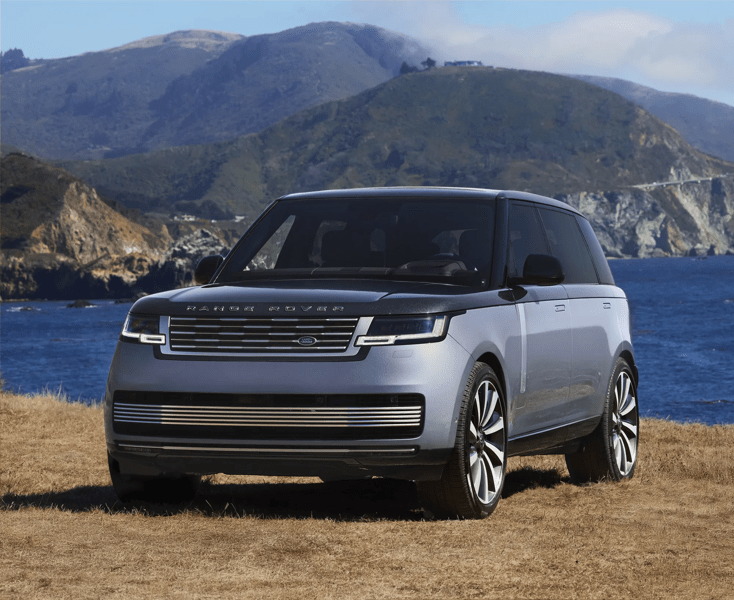
- Range Rover SUVs are enormously fun to drive but may not always operate to their fullest capacity. A bad reputation doesn’t mean a Range Rover is a bad car.
- In general terms, we recommend not going much older than the 2012 model year, though we suggest skipping the 2014 model.
- Despite Range Rover’s respected off-road abilities, suspension issues are common — especially on models with air suspension.
The Land Rover Range Rover is one of the most well-known and longest-running luxury SUVs on the market. It’s also a surprisingly popular option on the used market, and heavy depreciation has made many of the examples on Autotrader shockingly affordable — at least for the initial purchase. That makes it tempting as an impulse buy, but there are several factors to keep in mind, not the least of which are the sometimes tear-jerking repair prices.
Most Range Rovers feature complicated suspension and 4-wheel-drive systems, which, along with cutting-edge (for their time) electronics and sometimes spotty maintenance histories, make it necessary to do extensive research before jumping in. To help you get started on the right path, we’ve gathered the essential facts you need to know. Let’s get rolling.
Best Years To Buy A Used Range Rover
Quick guidance based on reliability patterns and ownership risk.
Go No Older Than 2012
In general terms, avoid going deeper than the 2012 model year to reduce exposure to expensive repairs.
2014 Model Year
Steer clear of 2014 versions due to commonly reported electrical issues.
2001 Model Year
If you want something classic, 2001 has a stronger-than-average reputation for reliability among older Range Rovers.
Bottom Line
For a used Range Rover, prioritize 2012 or newer. Skip 2014. If shopping classic, 2001 is the standout year with a better-than-average reputation.
Quick Year Callouts
Fifth Generation (L460 2022-Present)
Range Rover (L460) – 5th Generation Powertrain Specs
| Specification | P400 | P530 | P550e | P615 |
|---|---|---|---|---|
| Engine Type | 3.0L Twin-Turbo & SC I6 Mild-Hybrid | 4.4L Twin-Turbo V8 Mild-Hybrid | 3.0L Twin-Turbo I6 PHEV | 4.4L Twin-Turbo V8 Mild-Hybrid |
| Horsepower | 395 hp @ 5,500 rpm | 523 hp @ 5,000 rpm | 543 hp (combined) | 606 hp @ 5,000 rpm |
| Torque | 406 lb-ft | 553 lb-ft @ 1,800 rpm | ~590 lb-ft (combined) | ~553 lb-ft |
| Transmission | 8-speed automatic | 8-speed automatic | 8-speed automatic | 8-speed automatic |
| Drivetrain | All-Wheel Drive | All-Wheel Drive | All-Wheel Drive | All-Wheel Drive |
| Years Available | 2022–2026 | 2022–2026 | 2024–2026 | 2025–2026 |
Range Rover (L460) – Annual Updates 2022-Present
| Model Year | Key Updates & Changes |
|---|---|
| 2022 | Fifth-generation Range Rover (L460) launched on new modular architecture. Available powertrains: P400 (3.0L Twin-Turbo/Supercharged I6 Mild-Hybrid, 395 hp), and P530 (4.4L Twin-Turbo V8 Mild-Hybrid, 523 hp). SE and Autobiography trim levels introduced with SV premium variant. Both Standard and Long Wheelbase body styles available. |
| 2023 | Continuation of P400 and P530, with a new P440e powertrain. Enhanced suspension tuning and ride refinement across all models. Technology updates include improved Pivi Pro infotainment system with over-the-air update capability. |
| 2024 | P550e (3.0L Twin-Turbo I6 PHEV, 542-543 hp combined) introduced, replacing P440e designation. Electric range increased to an EPA-estimated 53 miles due to enhanced battery technology. Advanced driver-assistance system enhancements, including predictive adaptive suspension. |
| 2025 | P615 (4.4L Twin-Turbo V8 Mild-Hybrid, 606-607 hp) officially launched as flagship performance variant—exclusive to SV trim. Sensory Floor with haptic feedback and BASS (Body-And-Soul-Seat) haptic seating technology introduced on SV models. All variants feature upgraded Bilstein suspension and enhanced braking systems. |
| 2026 | No significant updates. |
Fourth Generation (L405 2013-2021)
L405 Range Rover (2013–2021) — U.S. Powertrain Specifications
| Specification | 5.0L V8 Supercharged | 5.0L V8 Naturally Aspirated | 3.0L V6 Supercharged | 3.0L TC V6 Diesel |
|---|---|---|---|---|
| Years Available | 2013–2021 | 2013–2016 | 2014–2021 | 2020–2021 |
| Engine | 5.0L V8 supercharged | 5.0L V8 naturally aspirated | 3.0L V6 supercharged | 3.0L turbocharged diesel V6 |
| Horsepower | 510 hp @ 6,000-6,500 rpm | 375 hp @ 6,500 rpm | 340 hp @ 6,500 rpm | 254 hp |
| Torque | 461 lb-ft @ 2,500-5,500 rpm | 375 lb-ft @ 3,500 rpm | 332 lb-ft @ 3,500-5,000 rpm | 443 lb-ft |
| Transmission | 8-speed automatic | 8-speed automatic | 8-speed automatic | 8-speed automatic |
| Drivetrain | All-Wheel Drive | All-Wheel Drive | All-Wheel Drive | All-Wheel Drive |
Range Rover (L405) – Annual Updates 2013-2021
| Model Year | Key Updates & Changes |
|---|---|
| 2013 | Fourth-generation Range Rover (L405) launched. Available with 5.0-liter V8 naturally aspirated (375 hp) and 5.0-liter V8 Supercharged (510 hp) engines. Advanced all-wheel-drive system. New TFT instrument cluster and InControl infotainment introduced. |
| 2014 | 3.0-liter V6 Supercharged (340 hp) engine introduced as entry-level option. New touchscreen infotainment interface. Updated interior material options. |
| 2015–2017 | SVAutobiography Dynamic model debuted in 2017, along with a new 10.2-inch touchscreen. |
| 2018 | Mid-cycle refresh with updated exterior styling and new LED headlights. Revised grille design. Enhanced interior cabin appointments. InControl Touch Pro infotainment interface updated. Revised V8 Supercharged powertrain. |
| 2019–2021 | Final generation years with continued refinements. Technology and connectivity updates. Enhanced driver assistance and safety features. |
Third Generation (L322 2003-2012)
L322 Range Rover (2003–2012) — U.S. Powertrain Specifications
| Specification | 4.4L V8 Gasoline | 5.0L V8 Supercharged |
|---|---|---|
| Years Available | 2003–2012 (base) | 2008–2012 |
| Engine | 4.4L V8 naturally aspirated | 5.0L V8 supercharged |
| Horsepower | 282 hp @ 6,000 rpm | 510 hp @ 6,000 rpm |
| Torque | 325 lb-ft @ 4,000 rpm | 461 lb-ft @ 3,500 rpm |
| Transmission | 5-speed (2003–2007) / 6-speed (2008–2012) | 6-speed automatic |
| Drivetrain | All-Wheel Drive | All-Wheel Drive |
L322 Range Rover (2003–2012) — U.S. Annual Updates
| Model Year | Key Updates & Changes |
|---|---|
| 2003–2005 | Launch & Early Refinement: L322 entered the U.S. market with its core luxury and off-road package. These years focused on settling the platform with small improvements to comfort, materials, and day-to-day drivability. |
| 2006–2010 | Major Mid-Cycle Development: This period brought the biggest updates, including broader powertrain and transmission improvements, a design refresh, and stronger infotainment, handling, and cabin technology. |
| 2011–2012 | Final Cycle & Transition: Late-run models emphasized polish, quieter cabin tuning, and feature packaging updates as the generation phased out and transitioned to the next Range Rover era. |
Classic Range Rover Models
While we’ve covered the most popular modern Range Rover models, the line goes back to the 1970s. The most popular from this time is likely the P38, which ran from the mid-1990s through 2002. Its boxy design and upscale interior remain relevant today, and you can find a range of used models for sale with reasonable mileage. That said, its early navigation systems and other electronics have proven troublesome over the years, making it essential that you either be good friends with an honest mechanic or be comfortable working on your vehicles at home.
Common Range Rover Problems
Biggest Trouble Spot
Range Rover issues are often tied to its off-road-focused hardware, especially the complex air suspension system. Those specialized components are a frequent failure point as vehicles age.
Buyer’s Watchlist
Suspension problems can be hidden in a short test drive. Get a mechanic inspection before purchasing. Older models converted to coil springs can avoid unresolved air suspension issues.
Heat + Electronics
Large engines generate heat that can stress electronics. Watch for malfunctioning engine management computers, damaged differentials, and electrical issues on older models.
Generation-Specific Issues
How Long Can They Last?
150k+
miles with strong maintenance200k
miles seen on used listingsForever
if garaged and rarely drivenEditor’s Note: We have updated this article since its initial publication.


Hello. Thinking of buying a used 2010 supercharged model from a local person. 107k miles, Timing belt already done. Service records dont show much more than that plus oil changes. Claims runs perfect.. what do I need to be looking for.. maintenance is a semi issue. Dont need to drop 2-4 thousand a year into it.. any pointers.. should I stay away?
I am going to test drive a 2012 HSE with 67k mikes tomorrow anything in particular I should look for? This would be my first RR
I’m looking at a similar one and am wondering too!?
Looking at a 2008 – any advise????
I’m thinking of buying a Land Rover Freelander SE, I’m use to driving Acuras & Hondas & I’m wondering if I’m going to be out of ALOT so money purchasing this vehicle?
I’m thinking of buying a Land Rover Freelander SE, I’m use to driving Acuras & Hondas & I’m wondering if I’m going to be out of ALOT so money purchasing this vehicle?
I like the idea of owning one, but would probably be wise to hang on to my low trouble Infinity FX35 suv.
I have had many many land rovers in the last 25 years and yes older ones are much harder to maintain as other cars do however I still own a 2012 range over hse and
thanks very much for your opinion. Doing my homework. I live in the Dom Rep. Had jags around all my life going to try to take my mechanic and buy a 2009 supposedly in garage for 9 years low millage etc. Seen the truck, no keys at the dealership. its pristeen ourside. Looks perfect through the windows. They want $24 US. Lots in the paper various years and prices condition etc. Cheap to fix cars here. New parts,
worth consideration. Cheers mate. I,m a Brit.
Horrible article…no relevant information
I just found a 2017 with 9K miles and a 2016 with 19K miles. This low mileage is kinda scary. While I appreciate being able to purchase a nearly new RR, I just can’t help but to wonder why the mileage is so low. What do you think? Are these year models improved reliability?
Where did you find those vehicles with such low mileage? If you don’t mind texting or calling me at 817.798.5233? I’m looking to purchase a used one. I’m one of those people who really watch miles. Finding one with low mileage is key to my purchase!!! Thanks so much for your time?
most of things you said here I don’t agree with, I started with the first 1970 Range Rover, and other one 1996, and now I am still driving a 2006, the only problem I have was the air suspension which I replaced it in 2018, like everything, you don’t expect it will
I have owned a luxury brand vehicles such as Lincoln Lexus Mercedes and have a BMW now but looking to get into my first 2008 Range Rover HSE SuperCharged with 106k does anyone have any information on this particular model with the 4.2 V8 and curious to know how many miles they typically last for?
I have owned a luxury brand vehicles such as Lincoln Lexus Mercedes and have a BMW now but looking to get into my first 2008 Range Rover HSE SuperCharged with 106k does anyone have any information on this particular model with the 4.2 V8 and curious to know how many miles they typically last for?
I found a Gold 2004 (love the body style & color), 1 owner older woman, garage kept, 80,000 miles. Sticker in the glove box was for $78,000 new. I paid $15,000 for it many many years ago. About 3.5 years ago at 10+ years old it began costing me $2000 -$3000 a yr for maintenance. I asked my mechanic if it was worth fixing. He said to me….Maintaining this vehicle is still cheaper than a $500 car payment a month and getting twice or more for the money. I have never driven a better SUV in my opinion. I love my RR.
This article is almost blatantly plagiarized by Mike Richards
I want to buy one despite its bad name I’d like to purchase this particular one cause of its mileage 04 50000 miles if it gets checked and all checks out..should I buy it ???
I’ve been researching Land Rover for the last year. After careful review I cannot bring myself to buy this beautiful vehicle. Like others have mentioned, I just can’t get past the known unreliability. I had heard they were known to have issues but after my research, it’s downright irresponsible to buy a car you know will depreciate faster than most vehicles, may leave you stranded and will end up costing you an average of $3K yearly in repairs/maintenance. I work hard for my money and throwing it away on a vehicle that should be better built for the price points they sell for is just asinine. Candidly, I can’t look at LRs and their owners the same anymore after reading up on them. Anytime I see one rolling down the street now I immediately wonder if the person has more money than sense.
That’s pretty judgmental my man. If you enjoy something enough, then the expense is worth it. That’s the general takeaway I get from the posts in this forum.
I am about to buy a 2008 Land Rover LR2 with 160k miles on it, is that reasonable?
I look at newer Range Rovers from an off road stand point and I really don’t know what the prestige is all about. They have absolutely terrible ground clearence, street tires from the factory, terrible approach, breakover, and departure angles, and a LSD system in place of locking diffs now. Not that long ago I was out on a pretty easy going trail in Joshua Tree and saw a brand new Range Rover high centered on a very basic and shallow rut in the trail that no other factory 4×4 vehicle would have a problem with. They are basically a fancy AWD crossover now with inclimate road condition going capabilities (snow/rain). If you are thinking about buying one for it’s prestigious offroad name, don’t let a salesman and video of a Range Rover doing a Ranger Rover built course fool you. They are not off road capable vehicles.
Sounds like there are a couple of Rover fans in this list of comments. I have owned 2007 LR3, 2007 RR Sport HSE and a 2006 supercharged RR and bought them all new. Great vehicles if you can handle the expense of owning (and that is very considerable, especially if you are used to driving the Asian vehicles) . I am in the oil & gas business so spend a bunch of time on the road but almost an equal amount of time off road. The LR3 has been a real trooper and is big enough for a 6’3″ man to set up an overnight residence in the back. The 07 RR Sport I is basically a sporty LR3 so does very well off road as well.
Great, honest review. Love this: “if you can afford them, you’ll love em. If you are tight on money, you’ll probably hate them.”
Hello All,
HI \, I wonder if you bought the car because I’m in the same situation here. What have you decided eventually?
@RobbyGregory I am thinking of buying a 2005 Range Rover Bmw 4.4 V8 with 210,000kilamitores not exactly sure what that converts to in miles but am turned off that it sounds like it will be in the shop more than the road, anyone have a Range Rover that high in km/mileage? Is it a bad idea?
@Zakk Y, had one for 1 week constant issues general bits falling apart, major fuel/air mixture issues causing to stall when accelerating, constant air suspension issues and a grossly overstated MPG figure I was getting avg 8MPG and thats without a heavy foot! gave it back got my money back and now going for a 2007 Diesel 3.6TDV8
As the author states, before buying a used Range, get a thorough inspection. My first Range was a 2004 HSE and it was a virtually in the shop every year. Thank heavens it was under warranty. I traded that in for a 2008 HSE and that car has been great to this point. I have 170k miles on it and the only mechanical problems I have had other than the general services is replacing the catalytic converters and a water pump. I plan to drive it until the wheels fall off. I am on my third Range, a 2016 Supercharger and so far no issues.
Cool! I will eventually,get a newer model but I honestly think the older models are better looking.
What HSE do you have ?
Does anyone know of any good after-market warranties for a range rover that will allow me to take it to the dealer for any repairs and upkeep? I’m looking at purchasing one…but would also like a warranty if possible…
I would like to know this as well. I’ve googled but experienced opinions are better.
Looking at a 2010 range rover sc. 70k miles. Lexus dealer. Priced about 23k. I can find nothing wrong. Anything I should look for?
my range says it is leaning when cornering why
One possibility is because of the air suspension
Wow, what a retarded and misleading article.
So you think I could be lucky and find a good Rover Sport ?
Lol..true…what model do you own?
Robert
Wow. Really? I have always known that they have issues. I have a 2003 and so far no problems …I pray it stays that way for a while but….
My decent gear won’t go off. Having to drive it in decent. Any advice please.?
Get it fixed
Having read this very well written and honest article, I won’t be buying any Range Rover. I really can’t believe that if the Japanese could build reliable cars 25 years ago and American auto makers learnt to do the same albeit quite a bit later, why the Brits are so incapable of doing it in this day and age? Wondering if they do any better with the Rolls?
Funny, Land Rover have been building Reliable vehicles since WW2.
The question is not whether they are reliable or not, it’s whether the necessary maintenance and servicing is worth it to own and drive this vehicle. I’ve been tested once or twice but overall for me it is still a yes.
Folk seem to think they are just going to spend on a modern one… Abuse it on tarmac and never have to worry about reliability…
In 2010 I bought a 2002 Mark 3 Vogue (L322), i.e. the first year of this model, with 150,000 miles on it. I bought it in Latvia mainly for occasional use when visiting Europe during the ski season. I paid 13,000 Euros for it, m logic being that as some heavy bills were probable, and paying a high purchase price was no guarantee against that, I might as well buy cheap and save some cash for the inevitable. During the first 4 years I had to replace both front air suspension struts, turbocharger and gearbox (which was reconditioned and half the price of a new one.) Since then I’ve also replaced all brake discs, a section of brake pipe, flywheel, and suspension arm, 4 new tyres, new front seat valances and some paintwork plus some minor items like fog lamp, rear brake lamp over the tailgate etc. So I’ve probably chalked up around 15,000 Euros in repair bills to date. However, I’m only clocking up about 3500 miles a year and the more expensive problems seem to have tailed off, meaning that the repairs I’ve done are a legacy of its previous use and (in theory) I can now look forward to relatively hassle free motoring. In total my outlay (purchase price + repairs) therefore stands at 28,000 Euros but nobody can expect to keep a car for 7 years without garage bills, so deducting “normal” repair costs of maybe 3,000 Euros my real outlay for the vehicle has been around 25,000 Euros and I now have a car which runs well and looks great. If I’d paid 25,000Euros for the vehicle originally there’s no guarantee that many of these issues (or similar) would not have occurred whereas at least I now know exactly what is going on with the car and what is unlikely to fail again for a good few years. Inconvenience aside, I think the financial strategy was sound. One thing I have also done is to have the entire car rust-proofed using the Krown system, as it stands for long periods and is used a lot in snow and slush during winter (I plan to have it treated at least every 2 years, maybe annually) to minimise longer term bodywork issues or rust underneath. My regular drive is a 2006 Toyota Land Cruiser and that car is faultless in reliability, but the journey with the Range Rover has been worth it to me because it’s a joy to own and drive, it looks fabulous and it turns otherwise mundane journeys into a form of recreation, something which is rarely free of charge nowadays.
I’m about to buy a 2006 Range Rover with 74,500 Miles on it. It seem to be in good shape for being 11 years old.
Some of the issues are difficult to detect in advance but I’d say a close inspection of the rubber “air bags” which operate the air suspension; these fail over time because grit gets trapped in the folds when they are contracted and wears away the rubber, causing leaks. Transmission can be an issue, difficult to detect but I’d suggest researching sources for reconditioned gearboxes in advance so it doesn’t take you unawares down the line (hopefully won’t be necessary. Likewise the driveshaft, often mentioned due to a joint issue but mine is still fine after 150,000 miles.Check carefully for rust spots or signs of a respray around the wheelarches and on the tailgate, these areas collect water and are prone to rot. Assuming they are sound, get the car rust proofed immediately after buying. The turbocharger on mine had to be replaced, so worth checking that if possible. Those are the main issues of my own experience. Check also lamps for water ingress & corrosion.
I own a 2006 HSE RR, I’ve owned it since 2009 and bought it with 43k miles, besides the oil changes and rotars and 2 air suspension bags, ive had no regular or yearly issues. I will buy another one. I love it.
I just got interested in range rovers ,my hobby is looking at used cars It sounds like this has been going on for a long time with this unreliability ,I don’t understand why a car company would keep puting out junk ,this is really crazy…
Perhaps they should stop selling them to imbeciles.
Hopefully I’m not too late to the comments section. The 2006 Land Rover Range Rover Sport HSE has always been my dream car. I fell in love with that body shape from day one, just never could afford it. Now, many years later, I see a local dealership advertise one for 12k (which is very reasonable I believe). I’m however concerned about the high miles (137k) and the age of the SUV. After all it’s a heavy machine, and physics is sure to prevail. Any thoughts? Should I bring it to a local RR dealer for inspection? Any insights would be greatly appreciated.
Mohamed:
My suggestion would be–first–to pass on this 2006 Land Rover. Then–second–to spend hours, days, weeks, and a couple of months learning EVERYTHING that you can possibly learn about Rovers, both Land and Range. Spend HOURS on the Internet. Talk to Owners. Talk to Mechanics at the Dealership. Become an Expert. Know more than Anybody Else. In the Whole World. Anywhere.
Then check out Craigslist, eBay, CarMax, and all Other Sources to find the Very, Very, Very BEST DEAL on a Rover, now that you are a Very Knowledgeable Potential Purchaser. Then use all of your Substantial Middle-Eastern Negotiating Skills (Don’t be shocked: Mid-Easterners are Fantastic Negotiators, compared to the Average American……..Like taking candy from a Baby. Don’t say it’s not true; it is.) to work the Very, Very, Best Bottom-Line deal for………………..You.
Then be prepared to Spend a Lot of Money and Love-Hate Your Rover. It’s like have a Very Beautiful Woman who is just a bit Neurotic. It’s worth it. Every Penny.
Sincerely,
Ken
My 2006 Range Rover has 203,000 miles now and I love it. If you buy one, you will average $2,000 in repairs annually but it will be worth it! 🙂
Hi Donald, how did you find a good mechanic to keep it in good condition?
Wow. I have a 2003 with 97k miles