


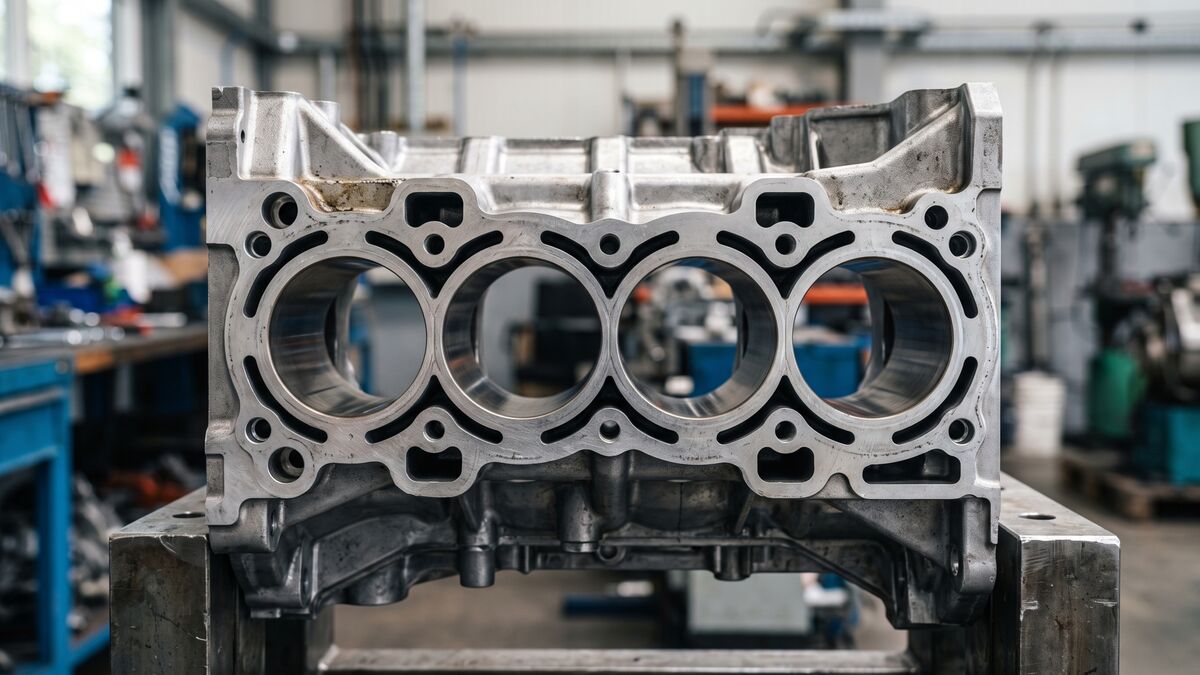
Just a few short decades ago, most new cars came with 6- or 8-cylinder engines, helping spawn the phrase “there’s no replacement for displacement,” but that’s no longer the case. Today, smaller options reign supreme, with inline-4-cylinder engines being one of the most common configurations for new vehicles. We’re not just talking about small economy cars, either. Four-cylinder engines power vehicles of all types today, from small hatchbacks to full-size trucks and everything in between.
What makes these engines different, and how do they work? We’ll cover the basics of 4-cylinder engines in this overview, so let’s get rolling to learn more.
What Is a Cylinder?
Cylinders are where the magic happens for internal combustion engines. They consist of a piston, intake and exhaust valves, a spark plug, and a fuel injector in direct injection engines. In simple terms, more cylinders mean higher displacement and more power.
It’s important to note the layout when discussing 4-cylinder engines. You’ll often see V6 or V8 engines, but there hasn’t been a new production car with a V-shaped 4-cylinder engine for several decades. All modern 4-cylinder engines in the U.S. are inline, with the cylinders laid out in a straight line.
Inline engines are inherently smoother and more balanced than those with a V-shaped layout. You may also hear this configuration referred to as “straight” engines, such as “straight-6.”
While 4-cylinder engines aren’t usually as powerful as their 6- or 8-cylinder counterparts, they are generally considered to be more than adequate for everyday driving, offering a solid balance of power and fuel efficiency.
Fuel economy figures are EPA highway estimates and vary by model year, trim, and driving conditions.
Cars with a 4-Cylinder Engine
Vehicles with a 4-cylinder engine range from sports cars to commercial vans to pickup trucks, but most often, you'll find them in smaller cars and SUVs. Here are just a few of the many vehicles available today with a 4-cylinder engine under the hood:
Are 4-Cylinder Engines Better Than 6-Cylinder Engines?
The "better" engine completely depends on your needs and the situation. The general rule of thumb is that 4-cylinder engines trade power and performance for fuel efficiency and lower emissions. While some modern 4-cylinder engines deliver staggering horsepower numbers, especially with force induction (turbocharging or supercharging), most automakers rely on the format to provide better fuel economy and lower prices.
Moving up the ladder to a 6-cylinder engine opens the door to a higher level of performance and a unique sound. They also usually provide stronger towing and payload numbers, and inline-6-cylinder engines are some of the smoothest, most refined powerplants around. In most cases, the tradeoff is lower fuel economy, and 6-cylinder engines often cost more up front.
This article has been updated since its original publication.


