


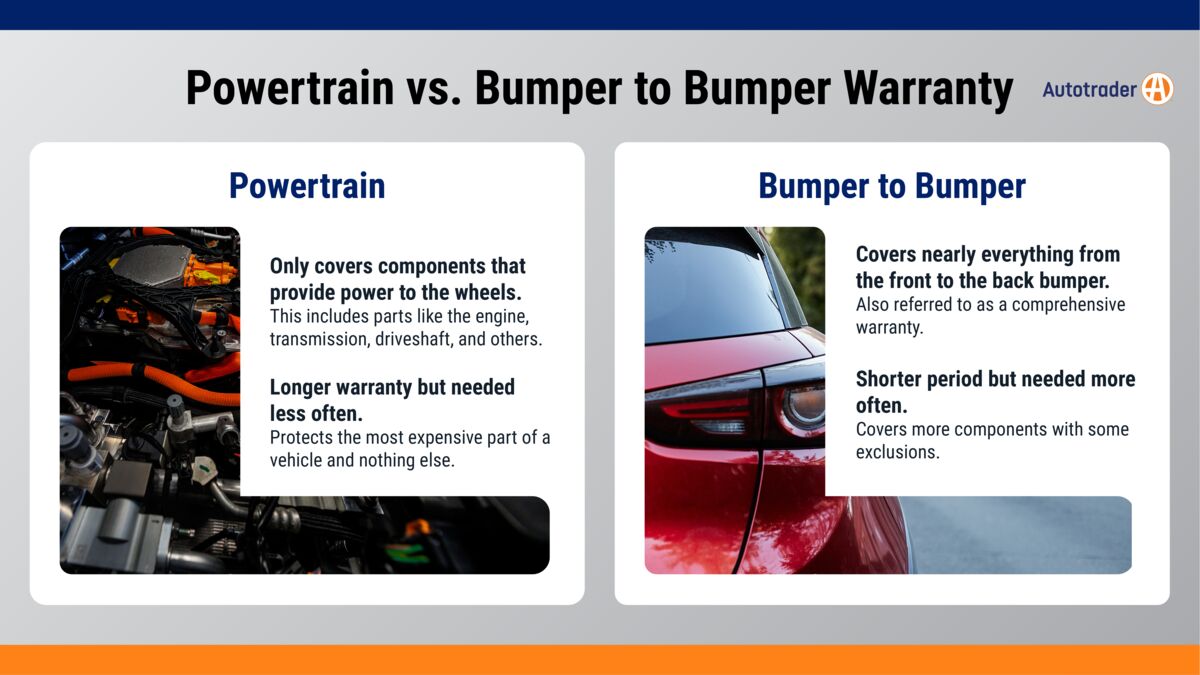
Car shoppers notice that most new or certified pre-owned vehicles have two types of warranties: a powertrain warranty and a bumper-to-bumper limited warranty. Powertrain warranties typically last longer, but have less coverage than bumper-to-bumper warranties. Read your plan to understand which items and situations are excluded from warranty coverage.
What Does a Powertrain Warranty Cover?
Powertrain warranties only cover vehicle components that provide power to the wheels. This includes the engine, transmission, driveshaft, and other related parts.
However, not everything under the hood is covered by a powertrain warranty. Some parts are “wear items,” meaning wear is built into their design, and a warranty won’t cover their replacement. Typical exclusions are the battery, clutch, and specific drive belts.
How Long Does a Powertrain Warranty Last?
The factory warranty for a car’s powertrain can last up to 10 years. However, the coverage period varies by manufacturer. For example, most mainstream brands like Ford or Toyota offer a 5-year/60,000-mile warranty, whichever comes first. Some luxury brands, like Mercedes-Benz and BMW, offer a 4-year/50,000-mile powertrain warranty. Other luxury brands go a little further: Cadillac, Lexus, and Lincoln offer coverage for six years or 70,000 miles. Lucid and other electric vehicle automakers must cover their electric powertrains for at least eight years or 100,000 miles in accordance with federal regulations. The brands that have the longest combustion powertrain coverage are Kia, Hyundai, Mitsubishi, and Genesis. These brands all offer 10-year/100,000-mile warranties.
How Much Does a Powertrain Warranty Cost?
Manufacturers include the new car powertrain warranty in the transaction price of a vehicle. It is part of every new vehicle’s warranty package, which also consists of the bumper-to-bumper limited warranty and may include a limited tire warranty, a corrosion warranty, and others. Some carmakers offer the option to pay to extend the factory coverage. For instance, Porsche offers a couple of extra-cost plans that extend the standard factory powertrain coverage from four years/50,000 miles to 10 years/100,000 miles.
What Does a Bumper-to-Bumper Warranty Cover?
A bumper-to-bumper limited warranty is sometimes called a comprehensive warranty. These warranties cover nearly everything from the front bumper to the back bumper. This includes components with the vehicle’s electronics, audio system, air conditioning system, suspension components, and more. The bumpers themselves will be excluded from this warranty, though, because body panels aren’t covered.
Bumper-to-bumper warranties cover far more parts than powertrain warranties, but they often don’t last as long. For example, a typical new car factory warranty for mainstream models usually lasts three years/36,000 miles, whichever comes first. Even though they’re known as “bumper-to-bumper,” these plans have exceptions.
What Isn’t Covered by a Bumper-to-Bumper Warranty?
Bumper-to-bumper limited warranties vary by the automaker. Refer to your paperwork for details on your car’s warranty coverage. Typically, powertrain warranties and bumper-to-bumper plans do not cover repairs to these items:
- Interior trim, seating fabric, and cabin surfaces
- Side windows, windshield, and wiper blades
- Tires and wheels
- Brake pads
- Fluids
- Paint
- Corrosion
- Body panels and damage from collision
How These Warranties Protect You
As the name suggests, powertrain warranties cover only the vehicle’s powertrain, which is usually the car’s most significant and expensive component. Meanwhile, the bumper-to-bumper warranty covers everything else.
Your bumper-to-bumper warranty will protect you from minor, more common problems at no extra cost. You may want to consider buying an extended warranty for added protection.
In the case that your bumper-to-bumper warranty expires, or your vehicle only offers powertrain protection, the powertrain warranty can bring peace of mind since it covers the most expensive components of your car.
Always check the fine print of your warranty to avoid any unexpected out-of-pocket costs before you take your car for service.
Editor’s Note: We have updated this article since its initial publication. Doug Demuro contributed to the report.


