




If you’ve been looking to buy a used car, you’ve probably seen sellers or dealers advertising certain vehicles with “all-highway” miles. At first, this may seem counterintuitive — since highway miles are at high speeds, wouldn’t this be a bad thing? Or is it the other way around? Are city miles more challenging because of the constant stopping and starting associated with driving in town?
The short answer is that highway miles tend to be easier on your car, and looking for a vehicle that has all highway miles might be to your advantage as a shopper. This doesn’t mean you should rule out a used car that’s done some city time, but you may want to do a little extra investigation if one of these has made it onto your shopping short list.
- Highway vs. City: Which Miles Are Easier on a Car?
- How Do You Know if a Car Has City Miles or Highway Miles?
- How High is Too High for Car Mileage?
Highway vs. City: Which Miles Are Easier on a Car?
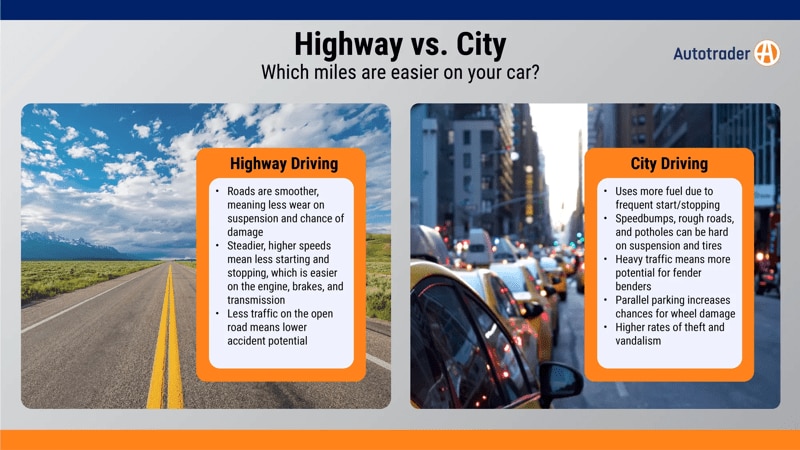
There’s no question that highway and city miles impact cars in different ways. While it might seem like the low speeds and occasional idling associated with city driving are gentler on a vehicle than steady high-speed highway travel, the truth is the opposite.
City driving means your car is constantly starting and stopping, using more fuel and working the engine, transmission, and brakes. City road conditions are also more unpredictable. They can have potholes, pockmarks, speed bumps, and gravel that can tax your suspension. Heavier traffic means a greater risk of accidents, and parking in tight spots or curbside can lead to wheel damage and door dings.
Highway driving isn’t without its risks, of course, but the roads tend to be smoother and easier on your car. Speeds are more consistent, which eases stress on your engine. Not having to start, stop, and idle in traffic constantly reduces accident risk and helps preserve your brakes and transmission.
How Do You Know if a Car Has City Miles or Highway Miles?
While most used cars aren’t going to come with a full log of exactly how their miles were spent, there are a few ways you can get a sense of what type of miles the car has been racking up:
- Odometer reading: A relatively new car with unusually high mileage will usually be a highway vehicle. For instance, a one-year-old car with 50,000 miles probably spent the majority of those miles on the highway. Few drivers can rack up 50,000 miles in one year solely within stop-and-go traffic unless they’re driving a taxi, police car, or delivery vehicle.
- The body: Are there any dents? Is there any curb rash on the wheels? Are there any body scrapes? If the answer to these questions is no, the car probably hasn’t spent much of its life in the city, where it would be subject to parking lots, curbs, and other drivers.
- Inspection: If you want to be sure that a car has covered chiefly highway miles, check with a mechanic. A qualified inspection is a good idea anytime you’re buying a used car, especially if you’re considering a high-mileage used car. A mechanic can examine the car’s suspension and other components to determine wear and let you know whether the car has been babied on the highway or thrashed on city streets.
How High is Too High for Car Mileage?
Should a buyer looking at used cars even consider a vehicle with 200,000 miles or more? Not necessarily. When talking about car mileage, how a car has been driven and maintained has more to do with its longevity than the miles it has traveled. Meticulously following the car’s maintenance schedule as outlined in the owner’s manual and avoiding aggressive driving can add thousands of miles and years to its useful life. Driving primarily on the highway rather than in the city can also significantly affect its life expectancy.
When you’re considering a used car, look closely at its maintenance records and vehicle history. A car that has regular maintenance and quick resolution of major repairs can have plenty of life left in it.
MORE: Used Car Buying Guide
Editor’s Note: We have updated this article since its initial publication. Doug Demuro contributed to the report.


