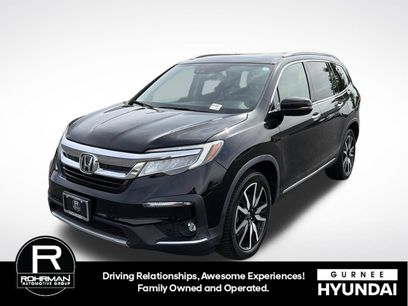
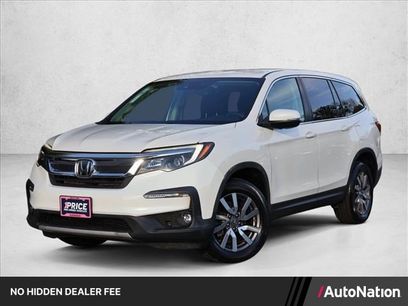
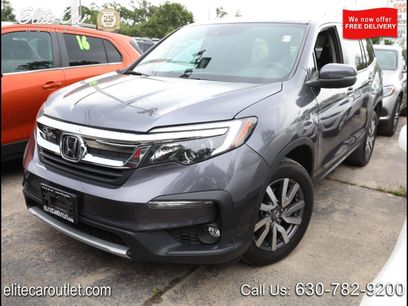
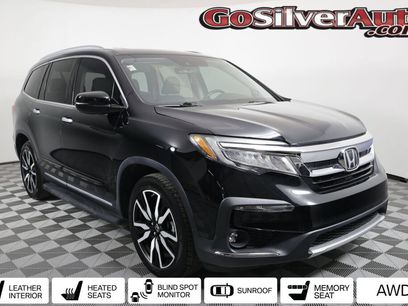
Don’t expect massive changes from the 2019 Honda Pilot. You have to look pretty closely at side-by-side pictures to spot the design tweaks, or get one of the top trim levels to notice the improvements made to their 9-speed automatic transmission. Nope, it’s all about feature content. It was already pretty generous on the Pilot, but it gets even better this year as accident avoidance tech has been made standard, while the much-maligned touchscreen interface has been replaced with a newer, more user-friendly unit. Certain features from upper trims have also trickled down to lower ones. Yet, the Pilot’s overall selling points are unchanged. The cabin boasts massive space despite smaller exterior dimensions and a lower curb weight than many competitors. Adults can even fit in the third row, which is typically a bit of a penalty box for even kids. The Pilot also has an efficient and powerful engine, a driving experience that strikes a good balance between comfort and handling precision, and strong safety credentials. In 2019, the Pilot receives its first significant update since it was completely redesigned three years ago. There are slight styling changes and refinements made to the powertrain, but it’s the features content that received the biggest boost. The Honda Sensing suite of accident avoidance tech is now standard on all trims, while all but the base LX get an updated touchscreen interface.
Autotrader’s Advice:
Very few people choose the base Pilot LX, and it’s easy to see why: the EX adds a massive amount of desirable equipment for a reasonable $3,000 more. Besides the EX-L’s leather upholstery, there are few features in the upper trims that would be difficult to live without. The Elite trim in particular seems like a questionable value given its price jump and feature content beyond the Touring.
What We Like:
Roomier and more versatile than most competitors; clever storage solutions; comfortable ride; generous features for your money.
What We Don’t:
Hyperactive and unsophisticated safety tech; a style icon it is not.
Original MSRP:
$32,445–$49,015 (when new).
MPG:
The 2019 Honda Pilot offers only one engine: a 3.5-liter V6 good for 280 horsepower and 262 lb-ft of torque. LX, EX and EX-L models get a 6-speed automatic, while the upper two trims add a 9-speed transmission. All come standard with front-wheel drive except the Elite trim, which comes with otherwise optional all-wheel drive. With the 6-speed automatic and front-wheel drive, the Pilot returns 19 miles per gallon city, 27 mpg highway and 22 mpg combined according to the Environmental Protection Agency. The 9-speed yields a slight bump to 20 mpg city, 27 mpg highway and 23 mpg combined, but in practice, you’re unlikely to see any difference. With either transmission, opting for all-wheel drive essentially lowers those figures by one mpg.
Standard Features & Options:
The Pilot is available in five trim levels: LX, EX, EX-L, Touring and Elite.
The base-level
2019 Honda Pilot LX ($31,450, when new) comes standard with 18-inch alloy wheels, a forward-collision warning system, automatic emergency braking, lane-departure warning and lane-keeping assist, adaptive cruise control, three rows of flat-folding seats, a rearview camera, Bluetooth, two USB ports and a 7-speaker sound system with an auxiliary audio jack and a media player interface.
Moving up to the
2019 Honda Pilot EX ($34,330, when new) adds an abundance of extra equipment: Automatic headlights, LED foglights, extra body-color exterior trim pieces, remote ignition, blind spot monitoring and rear cross-traffic warning systems, 3-zone automatic climate control, heated front seats, an 8-way power driver seat, 1-touch sliding rear seats, Honda’s latest 8-in touchscreen interface, Apple CarPlay, Android Auto, HD radio and satellite radio. With all-wheel drive, you also get multiple low-traction driving modes (Snow, Sand and Mud).
Next up is the
2019 Honda Pilot EX-L ($38,755, when new), which adds a power liftgate, a sunroof, acoustic windshield glass, leather upholstery, a 4-way power passenger seat, driver memory settings, a leather-wrapped steering wheel, second-row sunshades and an auto-dimming rearview mirror. The inelegantly named EX-L Navi & RES package adds integrated navigation, a 115-volt house-style electric outlet and a rear entertainment system (RES) that includes a 10.2-in roof-mounted display, Blu-ray player, HDMI input, built-in streaming apps and CabinTalk (which projects the driver’s voice through the rear speakers and wireless RES headphones).
Going up to the
2019 Honda Pilot Touring ($43,515, when new) adds the 9-speed automatic transmission, 20-in wheels, roof rails, LED headlights, parking sensors, extra sound deadening, a 10-speaker sound system, in-car Wi-Fi, the integrated navigation and all the RES features. Heated second-row captain’s chairs can be added as an option in place of the standard second-row bench seat. Seating capacity is reduced to seven.
Opt for the top-of-the-line
2019 Honda Pilot Elite ($49,015, when new) and you’ll get LED headlights, auto-dimming and power-folding mirrors, automatic wipers, a panoramic sunroof, heated and ventilated front seats, the second-row captain’s chairs, a heated steering wheel and a wireless smartphone charging pad. Unlike all the other trims, it only comes with all-wheel drive.
Safety:
All 2019 Pilot trim levels come standard with front side airbags, side-curtain airbags, a backup camera, a forward-collision warning system, automatic emergency braking, lane-departure warning and lane-keeping assist. All but the base LX gets blind spot and rear cross-traffic warning systems. In government crash testing, the 2019 Honda Pilot received a 5-star overall rating plus 4-star frontal and 5-star side ratings. The nonprofit Insurance Institute for Highway Safety awarded the Pilot its Top Safety Pick award. It got the best possible rating of Good in most crashworthiness categories (minus the new passenger-side small overlap test, where it got an Acceptable rating) and a Superior accident avoidance tech rating. Its headlights were given a rating of Acceptable.
Behind the Wheel:
On the road, the 2019 Pilot drives a lot like a minivan, and we mean that as a compliment. Not spry or sporty, the Pilot is instead comfortable and sure-footed, offering a well-controlled driving experience without the cumbersome feeling you sometimes get in larger SUVs. The steering is more precise than that of competitors like the Subaru Ascent, the Toyota Highlander and the GMC Acadia, and in general, the Pilot feels more nimble than those. A more sophisticated all-wheel drive system than most helps in that area as well. When you put your foot down, you’ll be happy with the Pilot’s 280-hp V6 and the relatively light curb weight it’s tasked with lugging around. The standard 6-speed transmission is really all you need, as the upper trims’ 9-speed offers negligible fuel economy benefits. It also suffered from ill-timed or unresponsive shifts, but Honda says it corrected those issues. We didn’t detect them during our brief drive, but would need a more substantial test to know for sure.
As for the cabin, passenger and cargo space are better than most, with seating for up to eight passengers. Even adults can fit in the third row, which is rare. Really, only the Subaru Ascent and Chevrolet Traverse are noticeably more spacious for people and stuff. Well, big stuff at least. The Pilot’s clever center console up front is a champ at storing everything from your purse to smartphones and other smaller items. Honda also corrected one of the Pilot’s biggest issues: technology. Gone is the frustrating old touchscreen and in its place Honda’s latest unit with updated, more user-friendly software brought over from the new Accord and Odyssey. It doesn’t have those models’ handy physical menu buttons, but the new volume knob is at least appreciated.

 Learn more