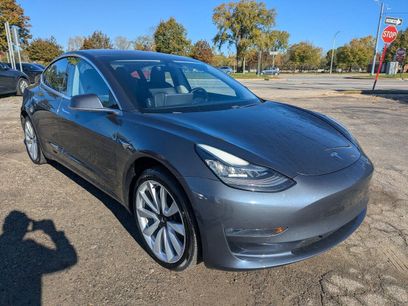
With the introduction of the 2017 Tesla Model 3, America’s premier electric car manufacturer moves into the realm of the affordable, offering a smaller version of the pioneering Model S, with a bit less room, less range and, supposedly, a $35,000 price tag. Given Tesla’s history of past proclamations that failed to materialize, we won’t hold our breath. However, what we do get for now is a rear-wheel drive (RWD) Model 3 with a 310-mile range, a 5.3-second 0-to-60 mph time and a top speed of 140 mph. Roughly the same size as the Audi A5 Sportback, the Model 3 offers room for five, although four is a more comfortable fit. In typical Tesla fashion, the Model 3 is loaded with high-tech innovations, such as a single large display screen with internet capability through which all functions are operated. An available semi-autonomous driving mode makes the Model 3 unique in this class, however, the Model 3 isn’t big on rear-seat space or comfort, the single-screen control panel and enhanced Autopilot features both require too much driver attention to operate.
Autotrader’s Advice:
In 2017, there was only one model, so we’d go ahead and add whatever options are offered and enjoy. A few years later, Tesla released the Model 3 with more options (like all-wheel drive), as well as a less contented model for around $35,000.
What We Like:
- Up to 310-mile driving range
- Fast acceleration
- Good crash test scores
- Most affordable car in the Tesla lineup
What We Don’t:
- Everything in one screen can be distracting for the driver
- No Apple CarPlay or Android Auto
- Second-row seat comfort
- No Insane or Ludicrous mode
Original MSRP:
$36,500-$55,000 (when new).
MPG:
As the Model 3 Long Range is powered solely by electricity, the Environmental Protection Agency (EPA) has a different measurement for its range calculated under the MPGe standard. The 2017 Model 3 earns a 126 MPGe rating, meaning that on a single charge, it can travel 310 miles. Charging with a conventional 110-volt outlet isn’t really practical, as it produces only about two miles of range per hour of charging, which would literally take days. Using a 240-volt charger reduces that time to between eight and 12 hours depending on the type of charger, but at a Tesla Supercharging station, that time drops to about an hour and a half for a complete charge from empty. In the real world, most people won’t need a full charge, so getting roughly 180 miles worth of juice at a Tesla Supercharging station should take about 15-20 minutes.
Standard Features & Options:
The 2017 Model 3 comes in
Long Range and
Standard Range trims. Tesla’s pricing uses some backhanded ways of dropping the price, basically calculating gas savings and possible local tax breaks into the price. We’ve listed the list price without the possible discounts. The 2017 Model 3 also qualifies for the government’s $7,500 federal tax credit.
The Model 3 Long Range ($44,000, when new) comes with RWD, Autopilot (automatic emergency braking, lane-keeping assist, blind spot monitoring), heated 12-way adjustable power front seats, an immersive sound audio system, standard maps and navigation, fog lights, Wi-Fi and LTE connectivity, keyless entry, a dual-zone automatic climate control, black paint, 18-in wheels, a 15-in center control screen, power windows, power locks, auto-dimming power-folding heated side mirrors, Bluetooth, app-based key for entry and some car functions, a rear camera, a tinted glass panel roof and eight airbags. The Premium package is mandatory and adds heated front and rear seats, 14-speaker premium audio with subwoofer and two amps, satellite-view maps with live traffic visualization, LED fog lamps, a power-adjustable steering column, leather seats, four USB ports and docking for two smartphones. Options include paint colors other than black ($1,000, $1,500 or $2,000 depending on color) and the enhanced Autopilot system with full self-driving capabilities for $5,000.
Safety:
In addition to its numerous safety features, which include a super strong frame cage, forward emergency braking, a blind zone alert, lane-departure warning, electronic traction and stability control and eight airbags, the Tesla Model 3 can also tout a 5-star government crash test rating. The fully autonomous driving mode can help reduce fatigue and avoid accidents, but as of now, it still requires you to keep a hand on the wheel and your eyes on the 15-in touch screen.
Behind the Wheel:
Given its nearly 4,000-lb weight, the 2017 Tesla Model 3 displays an impressive ability to sprint from 0-to-60 mph in just over five seconds. Beyond its blistering speed, the Model 3 handles quite well for an electric car. There are various settings for steering feedback, but we found the standard setting less sensitive than the Sport setting and more communicative than the Comfort mode. Braking is also quite good, and Tesla will periodically upload software updates to improve anti-lock braking, acceleration and other programmable features, which is a nice perk. The Model 3’s front seats are comfortable and form fitting, and there’s good legroom and headroom too. In the back, two occupants can fit comfortably, providing their legs are not too long. The wide flat floor helps with foot room, and the glass panel roof gives up a few more inches of headroom. Storage areas are numerous throughout the cabin, with a 15-cu ft. cargo bay with additional storage under the load floor. Up front, there’s a small cargo hold where an engine usually resides, providing even more storage. The rear seats are of the 60/40 split-folding variety.

 Learn more