


Quick Facts About American Cars vs. Made in the USA
- The first character of a VIN is the country code indicating where the manufacturer built your car.
- Cars with VINs beginning with 1, 4, 5, 7F-7Z, or 70 came from assembly plants in the United States.
- A new vehicle’s window sticker shows the source of its parts and the final assembly point.
Many Americans have patriotic thoughts and share a desire to support the country’s workforce, even when buying a new car. But in this increasingly global economy, how can you tell if the American car you’re considering was built in the USA? What about “import” models assembled on American soil — are they American-made cars? As the U.S. government implements new automobile tariffs for imported cars and car parts, knowing where the manufacturer built your new car is essential. We have some suggestions for figuring this out.
How to Know Where the Manufacturer Built Your Car
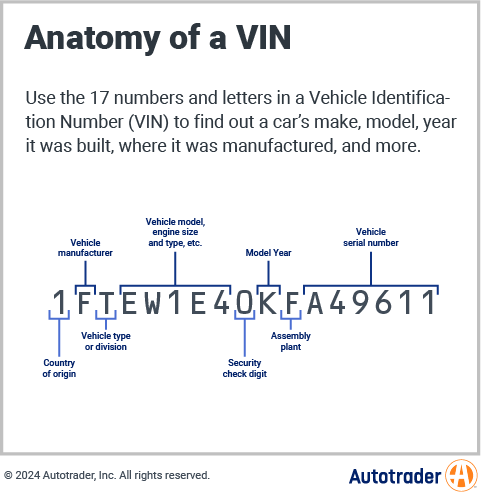
It requires minimal deciphering, but the vehicle identification number, or VIN, indicates the car’s production location. The first character in the VIN is part of a standardized 3-digit world manufacturer identifier or WMI. Generally, the first number or letter of the VIN signifies the vehicle’s country of manufacture.
Where Was My Car Made?
The first digit of a car’s VIN indicates the country of origin. Use the following WMI country codes to determine where the manufacturer made the car:
- United States: 1, 4, 5, 7F-7Z, 70
- Canada: 2
- Mexico: 3
- Japan: J
- South Korea: K
- China: L
- United Kingdom: S
- Germany: W
- Sweden or Finland: Y
- Italy: Z
These letters and numbers reflect the car’s final assembly point, even if some or most of the car’s production happens in other countries.
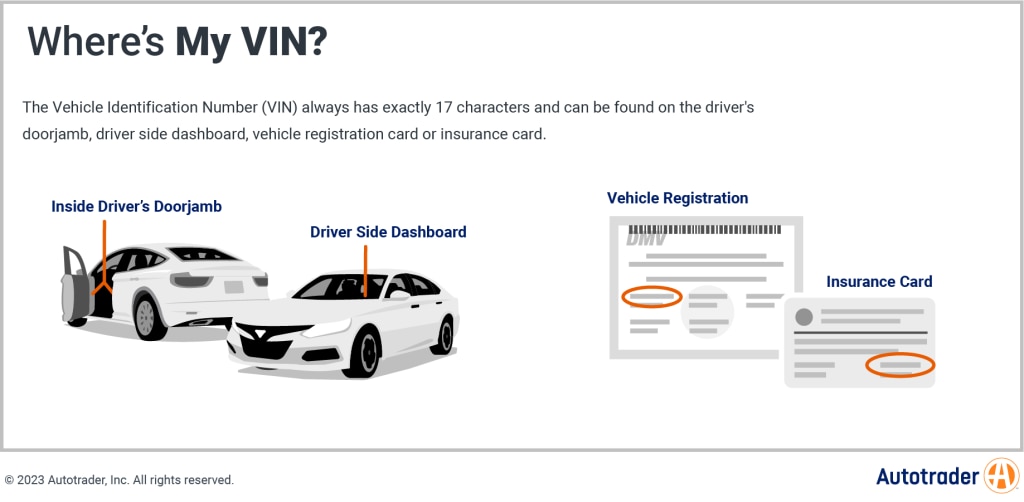
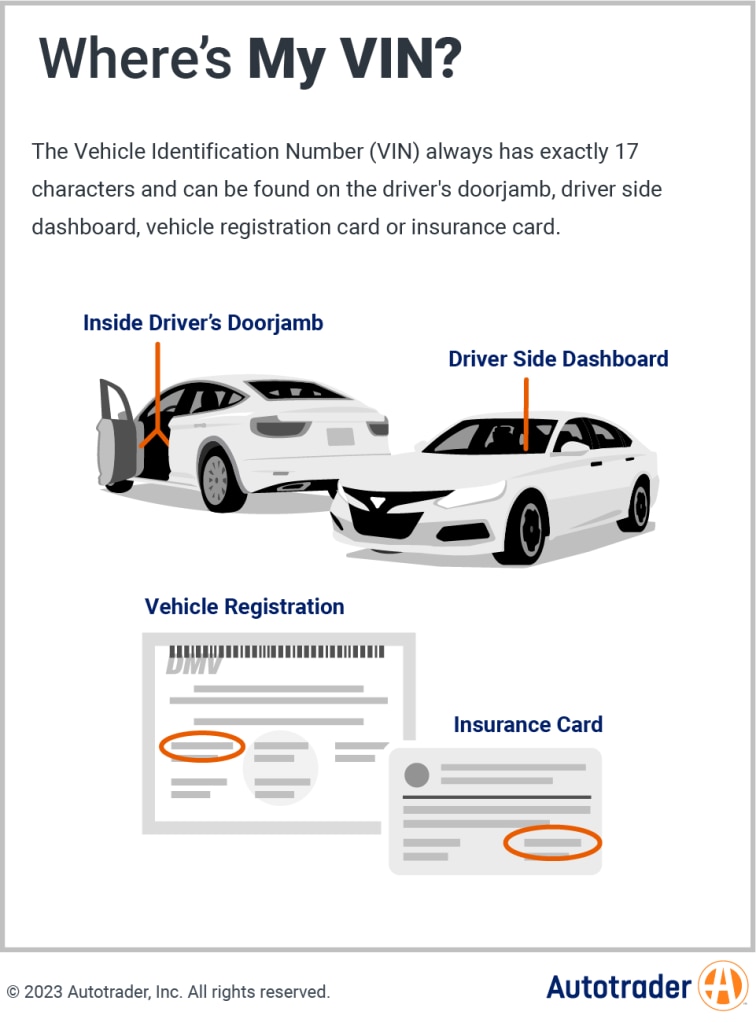
Another, perhaps simpler, way to find out where the automaker built a car is to check the VIN label located inside the driver’s door jamb. This sticker often spells out the car’s manufacturing location. While the description is not required, you might see a phrase, such as “Manufactured by Ford in the USA” or “Built in Japan by Honda,” that leaves no doubt regarding its assembly point.
You can also try searching online to find out where the manufacturer built your car. To get an accurate answer, ensure that you’re considering the correct model year and version of your vehicle. Automakers will often make certain cars or trim levels in several factories worldwide, though many U.S. models will come from only one or two assembly plants.
It can be confusing and might seem inconsistent. For example, one 2025 Subaru Crosstrek model at a dealership could have been built in Japan, while the Crosstrek next to it came from an assembly plant on American soil in Indiana. To figure it out, glance at the VIN and know that the first digit represents the country it came from. The vehicle’s final assembly was in the United States if its VIN begins with digits 1, 4, 5, or 7F-7Z, or 70.
Built, Made, Assembled: Are They Different?
Various terms describe car production, and we use them interchangeably to refer to the location of the car’s assembly point, no matter where its parts come from or which country the automaker calls home. Where the automaker puts the car together — the place where it is built — determines the VIN’s first digit.
The completed vehicle originates at that final assembly point on its route to your local dealership. The VIN on a BMW X7 begins with “5” because those SUVs are made on American soil in South Carolina, while the company’s headquarters are in Germany. On the other hand, Buick Envision models have VINs beginning with an “L” to indicate their final assembly was in China, even though Detroit is the automaker’s home base.
Where Is the VIN?
Check the Window Sticker
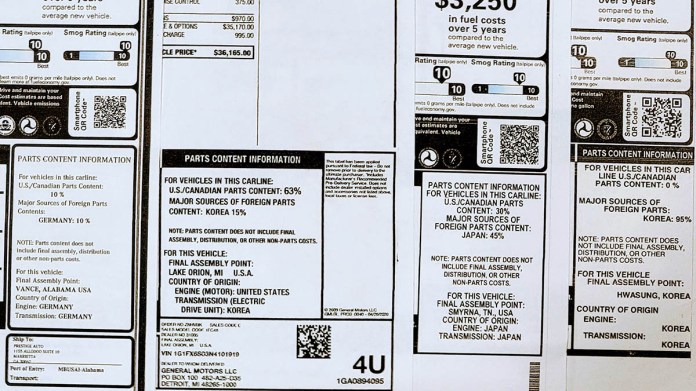
Each new car’s window sticker (also known as the Monroney label) provides three essential pieces of information for drivers interested in discovering where the automaker built the vehicle: the parts content label, the final assembly point, and the country of origin for the car’s major components. Why does it even matter? Tariffs on imported passenger vehicles took effect on April 3, 2025, and the next month on car parts. So far, many automakers have kept prices steady. However, some are cutting costs by eliminating buyer perks such as complimentary maintenance.
The parts content label shows two items: the total percentage of U.S. or Canadian parts and the significant sources of foreign parts. For the first category, a typical car might say “50%,” meaning that half of its components come from the U.S. For the second, a car may say “Japan: 20%,” which reveals that Japan is a significant source of around a fifth of the car’s parts.
The window sticker also displays the vehicle’s final assembly point. In plain speech, this is where the car is built. A car’s Monroney label listing its final assembly point as the United States is built in the U.S., even if most of its parts come from other countries.
Finally, the window sticker displays the country of origin of the car’s major components. It reveals the production location of the car’s engine and transmission, which is a big deal to some drivers because these are the most critical items powering a vehicle.
Are American Cars Made in the USA?
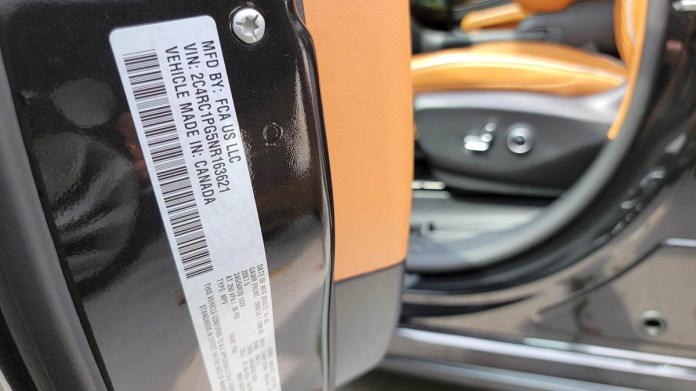
Buying a car built entirely in the U.S. using all American parts is impossible in a global marketplace. Just because a vehicle is an “American brand” doesn’t mean the automaker made it in America. According to the National Highway Traffic Safety Administration, no vehicle sources 100% of its parts and manufacturing within the United States. Still, this information should help you figure out whether the car you’re considering has U.S. roots.
Are American-Made Cars the Same as American Car Companies?
American car companies can have assembly plants in other countries. For example, Chrysler might have assembled your Pacifica in Canada, and your neighbor’s Chevrolet Equinox came from Mexico. On the other hand, American workers assemble many “import” models at plants in the United States. That list includes models from BMW and in South Carolina, Nissan and Volkswagen in Tennessee, Toyota in Kentucky, Honda in Ohio, Kia in Georgia, Subaru in Indiana, Mercedes-Benz in Alabama, and more.
Editor’s Note: This article has been updated since its initial publication.


