


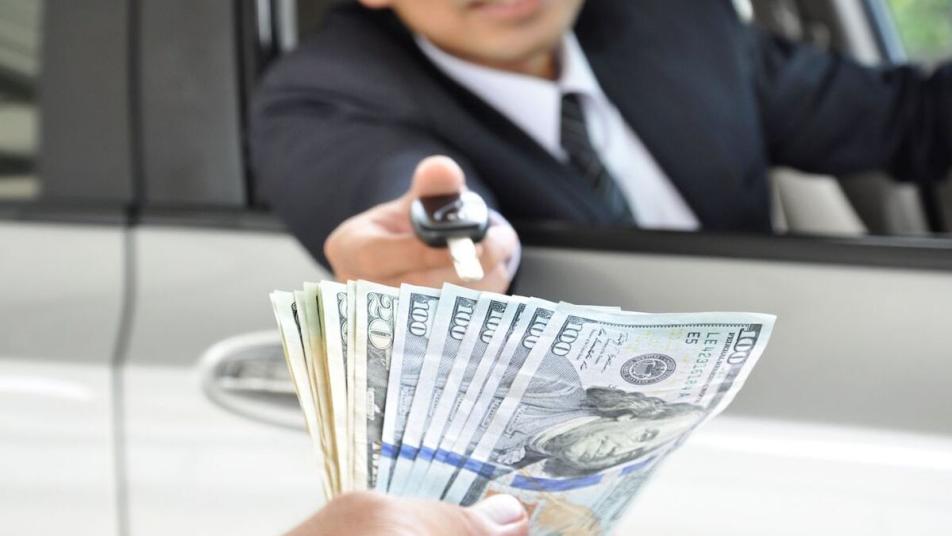
The process of buying a new car has numerous moving parts. For many shoppers, a major consideration is what to do with the used car they currently drive.
- Sell it to a dealer using a Kelley Blue Book Instant Cash Offer.
- Sell it to another person in a private sale.
- Trade it in toward the down payment on a new car.
No matter which route you take, it’s in your best financial interest to maximize your car’s value. We’ve put together a few trade-in tips to help you get the most for your current ride when buying a new car.
1. Wash It
When you sell a car, you can often increase what you’ll get by simply washing it. The same rule applies to trade-ins. Take the time — or spend a little money — to clean it up before trading. Vacuum the interior, wash the wheels, and apply tire shine. The vehicle will get a comprehensive detail before it’s sold again, but showing up with a clean, presentable car can help you get the benefit of the doubt when the dealership evaluates the trade-in value.
2. But Don’t Clean It Out
It’s not necessarily the best idea to arrive at a dealer with your trade-in totally cleared of every paper and personal item. The dealer will take your trade-in for a test drive. If it’s empty, they might gain an edge in negotiations, as it suggests that you’re willing to part with your old car and purchase a new one. Our advice: Even if you want to buy right away, don’t show that to dealers. Make sure your trade-in still has a few personal items inside so you can credibly say you’re still deciding.
3. Fix Any Dents
Trade-in evaluators at the dealership expect your used car to have a few minor dings and scratches. Your trade-in value shouldn’t be significantly affected by them. But, if some of those dings aren’t minor, or there are a lot of them, then they can affect the trade-in value. The same goes for noticeable scratches. Having a dent repaired is often less expensive than you might think. Companies specializing in paintless dent repair can fix a small dent for about $200 or less. With the right tools and materials, you might be able to touch up some nicks and minor scratches in the paint.
4. Fix Small Problems
Although you may have learned to live with a window that doesn’t roll down or a headliner that sags, a dealer can’t. That means such small issues could affect trade-in value, since dealers will have to pay to fix them before putting your car on the sales lot. Our advice: Use a small budget and address the most obvious repairs on your trade-in. A new key fob battery, for instance, may go a long way in convincing a dealer that your car has been well maintained.
5. Fix Wheel Curb Rash
It’s happened to everyone: You pull up to a curb and scrape the wheels on the edge. The unsightly result is called “curb rash.” Repair costs vary depending on the wheel material and the severity of the damage. A typical alloy wheel can be repaired for $200 or less. Many dealers won’t sell a car with such curb rash, meaning they’ll have to pay to fix it. If they put it on the lot with scuffed wheels, they’ll get a lower sales price. Either way, wheel damage is an easy negotiation card for the dealer. If you address curb rash before trading in your car, you may see an increase in value.
6. Consider Your Tires
While we generally don’t suggest buying new tires before trading in your vehicle, it can be necessary in certain cases. If the tread-wear indicators are showing, for example, the dealer can use this as a negotiating point to offer a lower price. If this is the case with your car, we suggest buying a set of inexpensive new tires before trading it in. It may be worth it when it comes time to negotiate the trade-in price of your vehicle.
7. Show Service Records
Service records give the dealership (and private buyers) proof of routine maintenance and repairs and show when key services were done, reducing their incentive to discount your trade-in for unknowns. Sure, vehicle history reports from AutoCheck or Carfax show what work was done on a car, but the reports only show service information that was submitted to those providers. A neat folder of receipts signals careful ownership and helps justify a higher appraisal. If you don’t have records, get a pre-trade inspection and bring substitute proof like parts receipts.
Bottom Line
Do not neglect the value of your trade-in when you’re buying another vehicle at a dealership. Follow our tips to help ensure you get top dollar for your old car.
Editor’s Note: We have updated this article since its initial publication.


I own a 2001 ZO6 Corvette that was purchased 2 years ago from the Mecom Auto Auction in Arizona. The car was in a Corvette collection by Jay Lenos friend . I bought it with 66000+ miles on it for $30000.
It is immaculate,and hasn’t cost me money to own except for new Michelin set of rubber,and a complete tune-up.
It’s a SHOW CAR although in ONLY NICE WEATHER the car comes out to play it’s usually covered in my garage.
Has won numerous 1st place trophies and it currently has 82000+ miles on her as I drive the car it’s not a trailer queen LOL!
I tried trading it in,the dealer offered me $15000!
Seriously????
Screw the dealers,I’ll sell it privately so I can get a used C7 or C8. No rush to sell, I really enjoy the car and get 32-34 MPG on the highway at 65 with the cruise on ….better than a Toyota,and 3 always get honks and thumbs up from other drivers,and lots of ladies too LOL!
If no one buys her at $27000 form, I’ll keep her and keep enjoying it!
I agree with all but #2! The strongest tool you have is that if they meet your numbers, you will buy today! Having your car cleaned out, even low on fuel shows them you are ready to act if they will meet your price!
Don’t trade it in, you’ll probably get more by selling it privately, but then you end up sticking a junk car to an innocent buyer. At least with a dealer, there is no guilt giving them your lemon.
Your all right. They just don’t care because they don’t have to. We are the ones looking for a different car.
The dealers want a near perfect trade in but won’t step up to the plate with more money. My advice is to trade your vehicle as it is. Don’t pit another dime into it. $$$$$$
I totally disagree with your statement. I was the used car manager at a Mercedes-Benz dealership for 17 years. when you’re trying to sell your car it’s almost impossible to change a first impression. be in a client trading in a car or a client purchasing a car. I know personally we will put more money in the car. that’s basics common sense
Just got screwed over recently at a car dealer!! no matter how my car looked or how well it is maintained or is in excellent shape! they just didn’t care!!
Dealers will screw you over no matter if the tires and wheels are good or not.
You got that right!!