


- Nissan’s first hybrid is a plug-in hybrid with an electric range of up to 38 miles
- 2026 Nissan Rogue PHEV fills a gap in Nissan’s lineup until arrival of the 2027 Nissan Rogue Hybrid
- Rogue PHEV priced higher than the 2026 Toyota RAV4 PHEV and the related 2026 Mitsubishi Outlander PHEV
The new 2026 Nissan Rogue PHEV is a tweener. It has a third row, but it’s not quite 3-row-sized. It has two electric motors and a combustion engine, an electric driving range of 38 miles, and an EPA-estimated 26 mpg combined. You can charge it, or fill it, or both.
The plug-in hybrid (PHEV) version of Nissan’s bestseller is the quickest, most powerful, and most efficient Rogue. It’s also the most expensive, starting at $47,535 and culminating at $51,535 for the top Platinum.
Is Nissan’s first PHEV, and the vanguard of an expanded hybrid lineup that will include a new Rogue hybrid without a plug next year, worth that much?
I tested a Rogue PHEV Platinum for a week during drab, dreary February in Chicagoland, trying to answer that.
Nissan Rogue PHEV vs Outlander PHEV
Under the skin, the Nissan Rogue PHEV is nearly identical to the Mitsubishi Outlander PHEV. Many companies share mechanical underpinnings to cut costs, especially on heavy investments in alternative powertrains, including Toyota and Subaru, as well as Honda and GM. Let’s move on.
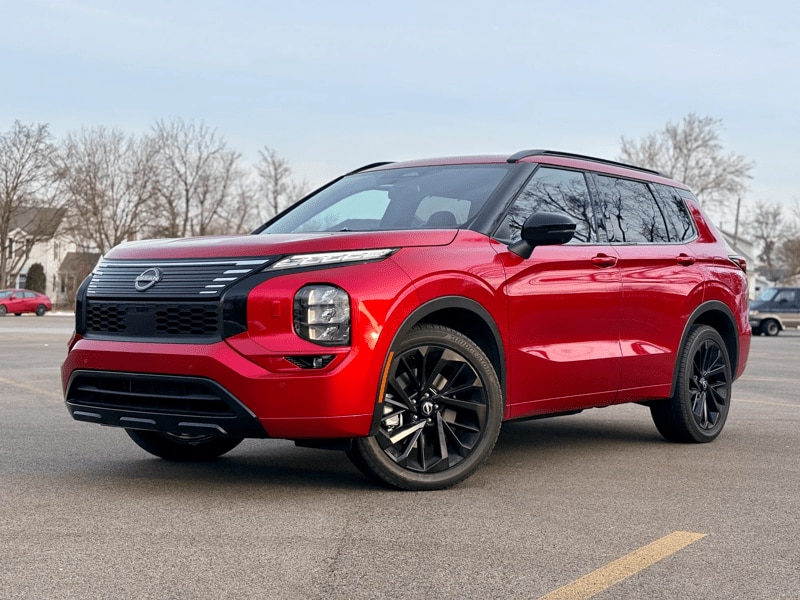
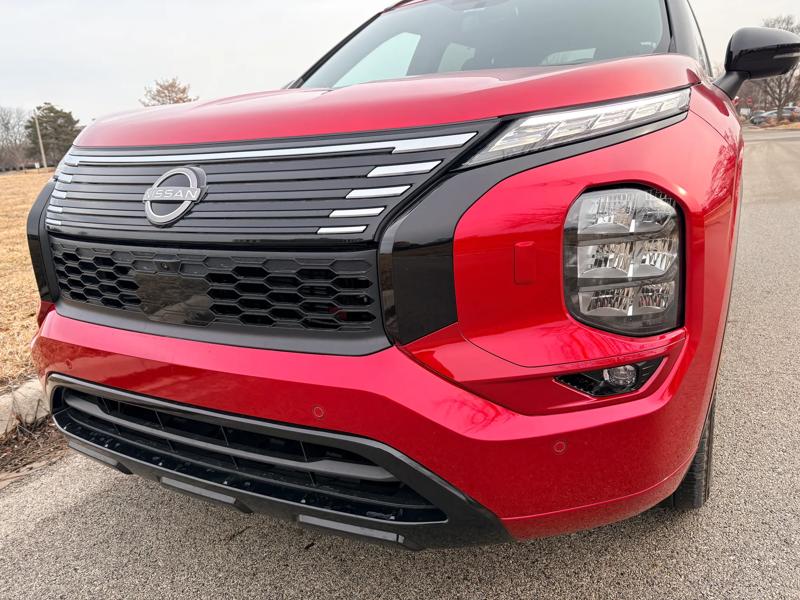
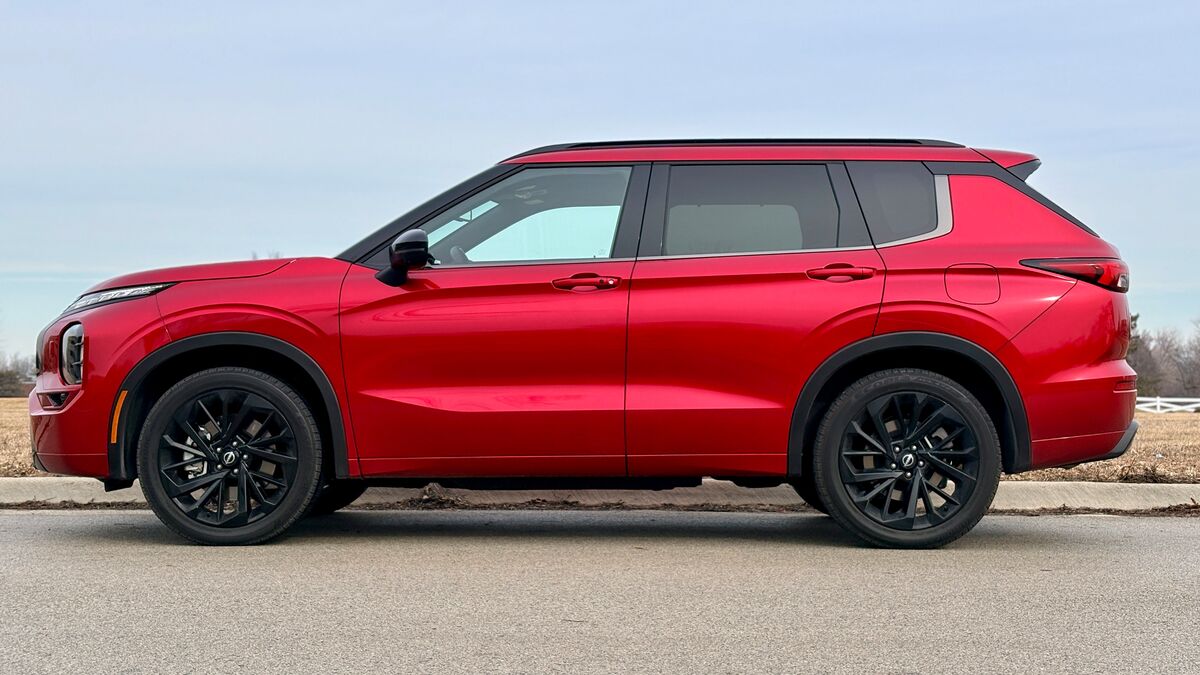
The differences are more notable than the similarities. The Outlander PHEV takes on a more Family Truckster vibe, while the Rogue looks more characteristically Nissan. A lightbar crowns the V-shaped grille and bends into thin daytime running lights. Vertical headlights stack the edges, and down the sides, a body crease fills in the gaps between the rounded wheel arches. Black accents streamline the design, especially when paired with the Royal Red premium paint on my tester. Nissan toned down the floating roof — those black accent bars that visually bridge the rear window with the tailgate — to good effect.
It has more SUV presence than the gas-only Rogue, in most part because it is larger, longer, taller, and wider.
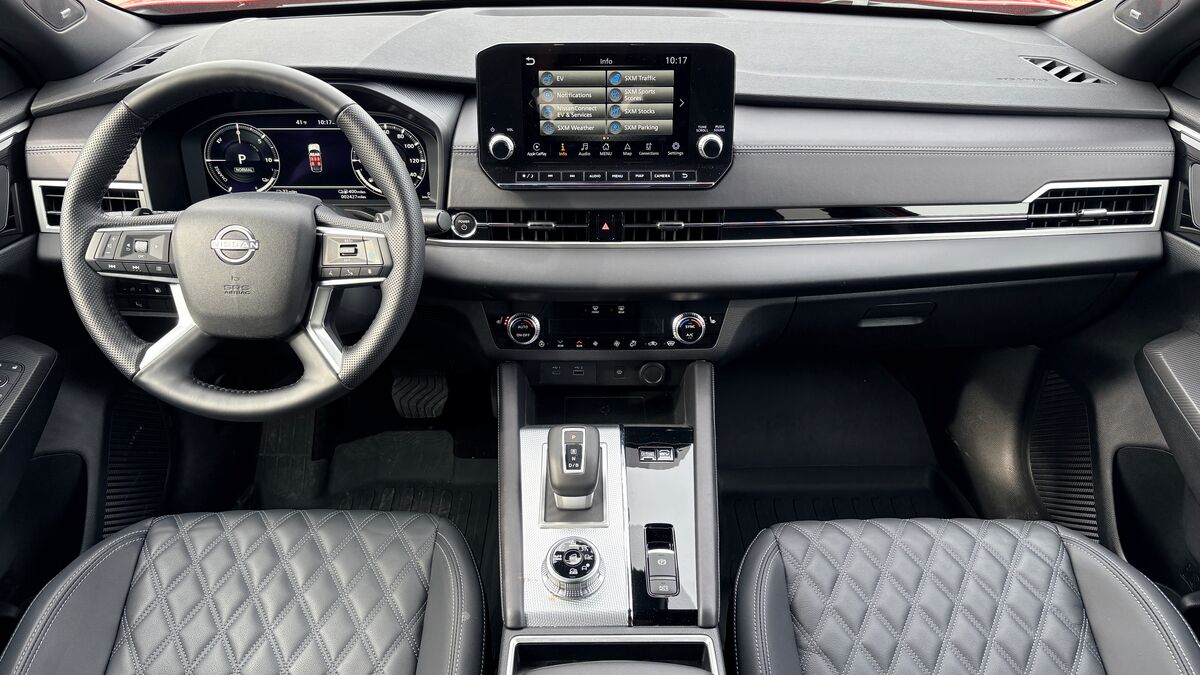
The interior marks a Nissan difference as well, with a standard 12.3-inch digital instrument cluster with sharp graphics and a 9-inch touchscreen that protrudes from the dash like a tablet. The Outlander PHEV has a 12.3-inch touchscreen, but size does not matter here. The interface is easy to use, even if it lacks some of the flashier elements on Kia and Hyundai models. A separate climate bar with buttons and dials keeps the interfaces familiar and easy to use, and overall, the black and metallic dash elements work well when contrasted with the quilted leather upholstery on the top Platinum. The mouse-like gear shifter saves space in the console, and you get used to it soon enough.
On the whole, it’s all very familiar and welcoming.

Nissan Rogue PHEV Around Town
Less familiar is how it drives. The EPA estimates an electric range of 38 miles. After a full charge on my standard 120-volt outlet in my garage, the readout showed 48 miles. When I turned on the heat, it dropped to 41 miles. This falls within the usual range estimates of other PHEVs, and is based as much on past driving behavior as on external conditions.
During my week of driving about 150 miles, the Rogue PHEV had enough drive modes and settings to optimize my around-town driving and limit fuel use. The needle for the 14.8-gallon fuel tank stayed near full. Parents and caregivers who log a lot of local miles shuttling kids around should see the big advantage of not having to stop at a gas station, especially in February.
An E-Step button also used on Nissan’s electric vehicles (EVs) provides the highest level of regenerative braking to recharge the 20-kWh battery pack. It nearly takes the car to a full stop without the driver needing to use the brake. Conversely, Power mode dials in more grunt from the 2.4-liter inline-4, which pairs with a two-motor hybrid system to generate 248 horsepower and a potent 332 lb-ft of torque. It jumps off the line and is quicker and more responsive than other Rogues, giving it plenty of passing power for drivers running late.
Throttle response was more jerky in Power mode, but that’s not uncommon. I preferred EV mode, mostly.
What’s That Sound?
The core issue with the Rogue PHEV is the various electric sounds it makes. At mid-range speeds, a whirring sound like a distant drone provided a constant soundtrack. It was present with the heat on or off, whether in EV or Power mode. It’s distinct from that lunar landing sound mandated by the federal government for any hybrid or EV operating at speeds under 19 mph.
The engine has its own sound, inside and out, like the faint whistling of a tea kettle. When the engine shuts off, the kettle comes off the burner, leaving it with that mid-range electric whirring.
These electrical sounds fade at cruising speeds or when the radio is on at low volume, so it’s not a dealbreaker. Yet one of the advantages of any electrified vehicle is its quiet operation around town. Not the case with the Rogue PHEV.
Nissan Rogue PHEV vs. Nissan Rogue
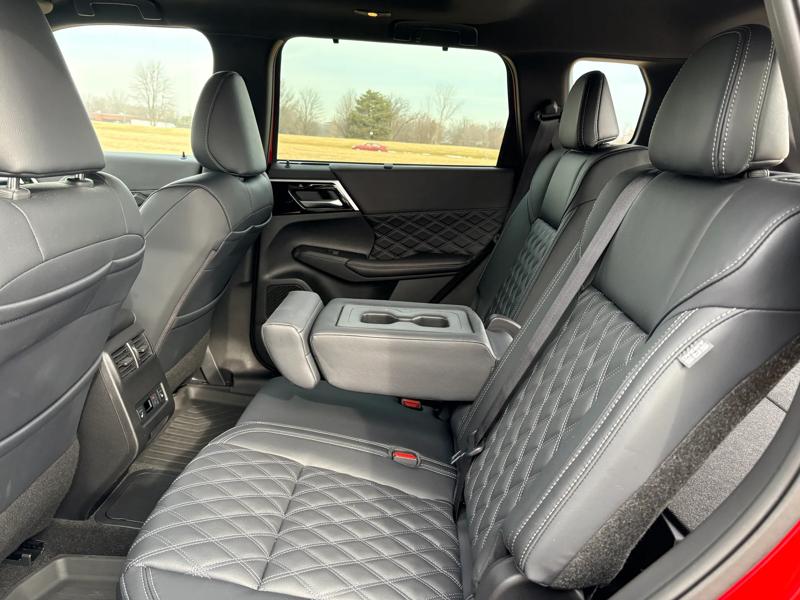
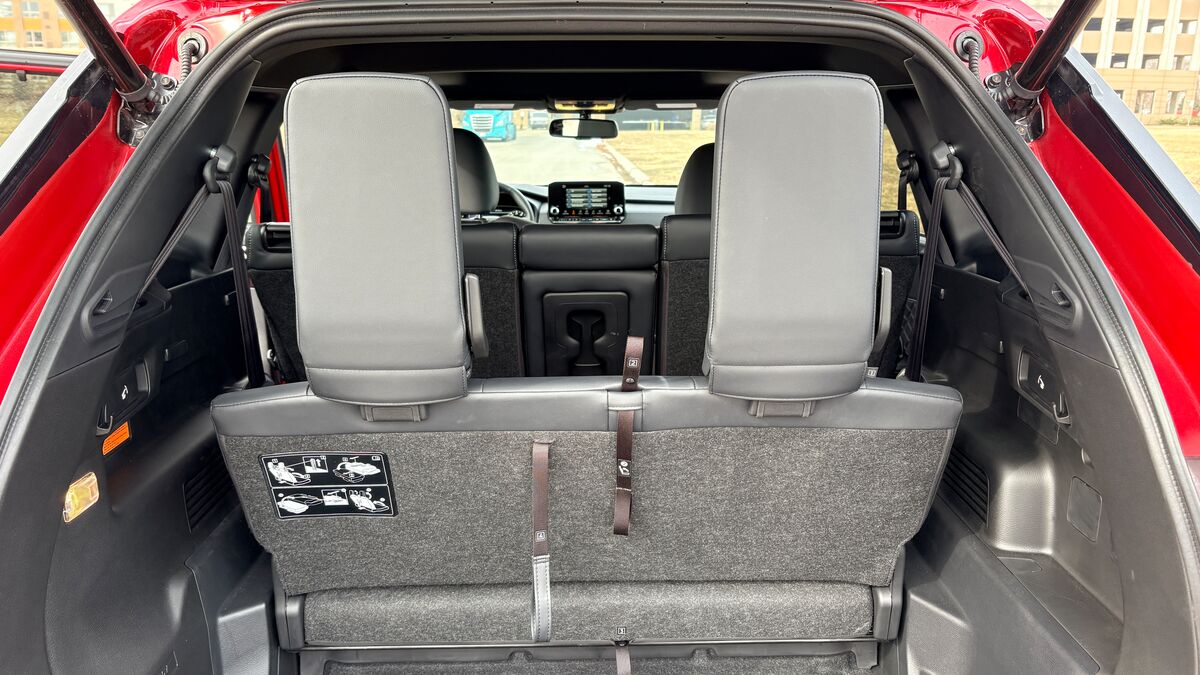
The Rogue PHEV has something the best-selling RAV4 can’t match: an emergency third row of seats. The second row splits into a 40:20:40 configuration, so you could fit five grade-schoolers in the second and third rows, in a pinch. For short distances. With special accommodations for the two passengers in the third row.
At 5-foot-8, I couldn’t fit my head in the third row without contortion, and if I could, I wouldn’t have enough legroom to fit behind myself in the driver’s seat and second row. Still, for the occasional third-row use, such as by grandkids, it offers something unmatched in the class.
The Rogue PHEV is longer, wider, and taller than the standard Rogue. Its clever packaging makes the second-row legroom the same as the gas-only Rogue, and the third row tucks so neatly in the cargo floor you might not notice it. That collapsed third row only takes a small bite out of cargo volume.
| Rogue Variant | Length | Height | Width | 2nd Row Legroom | Cargo (behind 2nd/behind 1st row) |
| 2026 Nissan Rogue PHEV | 185.4 inches | 68.5 in. | 84.4 in. | 38.5 in. | 30.8/64.7 cubic feet |
| 2026 Nissan Rogue | 183 in. | 66.5 in. | 82 in. | 38.5 in. | 36.5/74.1 cubic feet |
Nissan Rogue PHEV’s Pricing Problem
The 2026 Nissan Rogue PHEV builds a bridge to the fourth-generation Nissan Rogue hybrid that arrives in 2027 without a plug. Nissan needs it yesterday to better compete with nearly every other major automaker selling a hybrid compact SUV, including the Subaru Forester and Jeep Cherokee.
For now, the Rogue PHEV comes at a price. It’s $11,000 more than a similarly equipped gas-only Rogue — oof. And the redesigned 2026 Toyota RAV4 PHEV undercuts it by at least $4,000 — double oof.
Sold in more configurations but lacking Nissan’s dealer and service network, the Outlander PHEV also undercuts the Rogue PHEV but isn’t as nicely equipped. Then there’s the $49,785 Kia Sorento PHEV, which stretches out 4.2 inches longer and has a roomier cabin.
It’s hard to say where the Rogue PHEV fits in right now. Had it arrived a couple of years earlier and benefited from the now-defunct $7,500 federal tax credit, it might have warranted a longer look from shoppers. For now, it’s a bridge to what’s to come.


