


Quick Tips on How to Get Lovebugs Off Cars
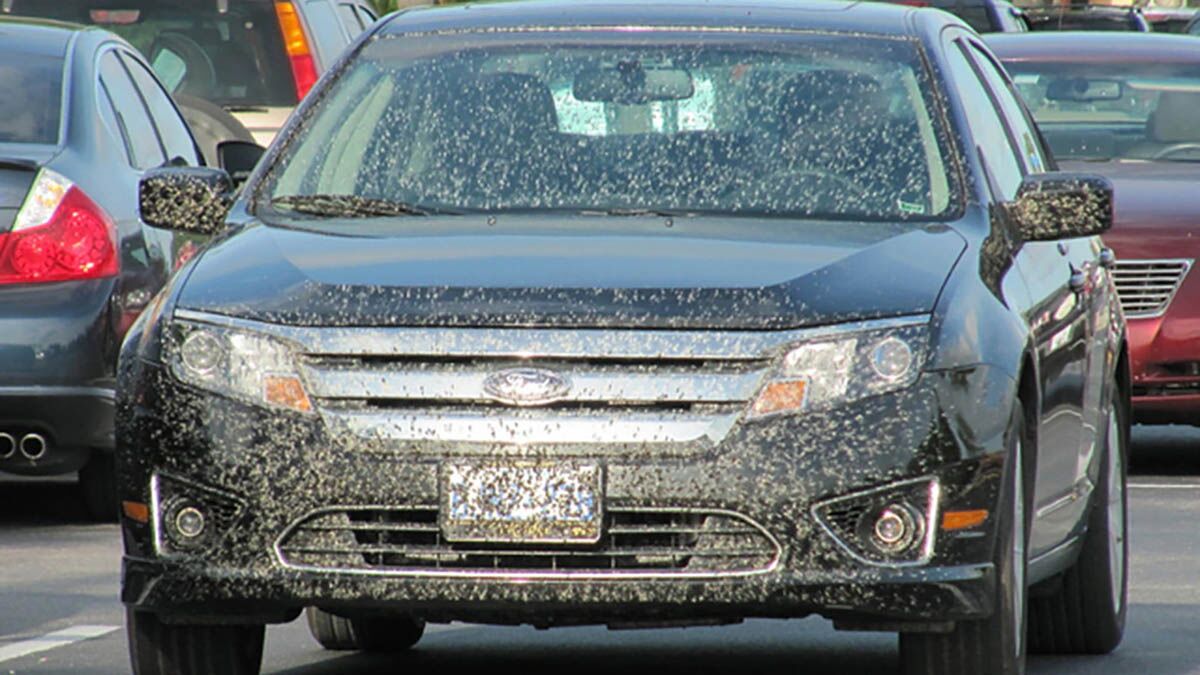
- These flies don’t bite, sting, or threaten crops, but removing lovebugs from cars can frustrate drivers. Remove lovebugs from cars as soon as possible.
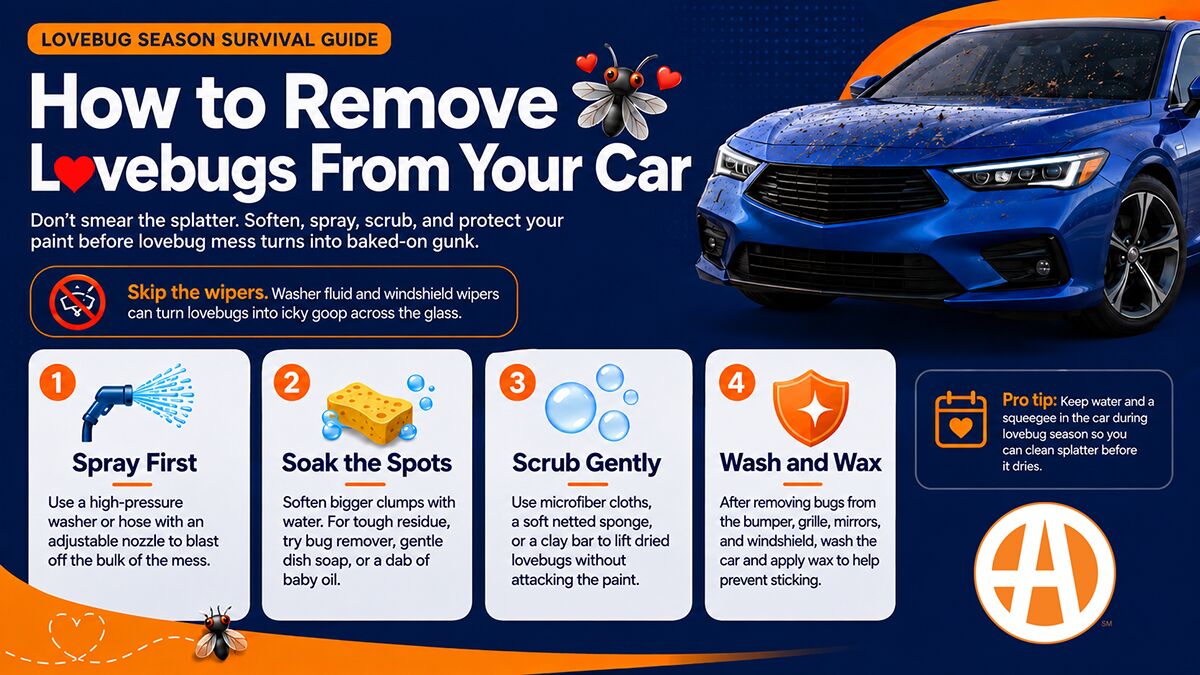
- Avoid using washer fluid or wipers, as they can smear splatters. Instead, use clean water and a squeegee on the windshield and headlights.
- Use a pressure washer to remove big clumps of lovebugs on cars.
- Soak remaining blobs to soften them, then scrub stubborn spots with a dab of baby oil and a microfiber cloth or moistened dryer sheet before washing and waxing.
- Use car wax as a protective layer between your vehicle and acidic bug guts.
Before lovebug season hits Florida and other Southern states, it’s wise to prepare your vehicle for these annoying insects. But you can’t predict when you’ll drive through a swarm, so you should also know how to remove lovebugs from your car before their splattered eggs and body parts leave a stain.
Here’s how to clean lovebugs off your car, protect the paint, and prepare before the next swarm.
How to Remove Lovebugs From Cars
Clean Lovebugs From Cars Promptly
When you have a run-in with lovebugs in Florida or anywhere in the Southern United States, it’s essential to quickly and adequately take care of the splatters. Debris on your headlights and windshield can reduce visibility. Letting lovebug body parts and egg masses fester in the sun increases the acidity and can etch the car’s paint.
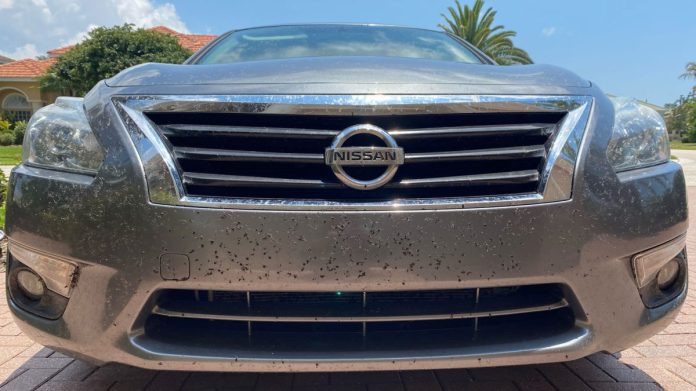
Lovebug season can create an immediate traffic hazard. Many crushed lovebugs can obstruct visibility for drivers. If left to accumulate, lovebug remains covering the car’s grille might cause the engine to overheat because of reduced airflow. And if car owners don’t clean off bug body parts quickly, the blotches of acidic lovebug guts can damage the vehicle’s paint.
RELATED: How Much Does Ceramic Coating Cost?
Preventing Lovebug Damage
Advancements in new vehicle finishes can help reduce the problem of bugs damaging car paint. For example, you could consider a ceramic coating or other car protection film for your vehicle. You’ll be glad for the extra layer of paint protection.
However, if you don’t remove the bug masses over time, your car’s finish could end up stained or otherwise damaged. In that case, an automotive detail shop might be able to help. Its technicians will likely have the tools, products, and skills to restore paint imperfections caused by lovebugs.
If you wonder whether car insurance will cover lovebug paint damage, the answer is no. Even with full coverage, lovebug damage is considered cosmetic.
Car warranties also do not cover this type of damage. Keeping your car free of lovebugs helps retain its value if you ever need to resell or trade it in at a dealership.
RELATED: Exterior Car Detailing: 14 Steps to Clean Your Car Like a Pro
Protect Your Car With Wax and Deflectors
Before lovebug season hits Florida and other Southern states, it’s wise to prepare your vehicle for these annoying insects. But you can’t predict when you’ll drive through a swarm, so you should also know how to remove lovebugs from your car before their splattered eggs and body parts leave a stain.
Here are steps you can take in advance to prepare your car for lovebug season.
- Wash and wax your vehicle before lovebug season begins. Car wax adds a protective layer between your vehicle’s paint and the acids in lovebug guts. Applying a thorough coating of wax gives you a little more time to remove the splatters before the finish is damaged. Maintain the wax throughout the season.
- Consider installing an air deflector or bug guard on your vehicle’s hood. It could help divert some of the flies. Plastic bug shields for car hoods are available through auto parts retailers. While they won’t keep every little fly from colliding with your car, the shields can catch or change the course of enough of them to reduce the amount of lovebug mess sticking to the car’s paint and glass.
- Use a bug screen or protective netting across the front end of your car to keep lovebugs away from the engine’s air intake. Temporary mesh netting found at automotive supply stores is simple to install and can help keep insects out of the car’s grille. Clean the mesh regularly during lovebug season to ensure proper airflow.
What Are Lovebugs?
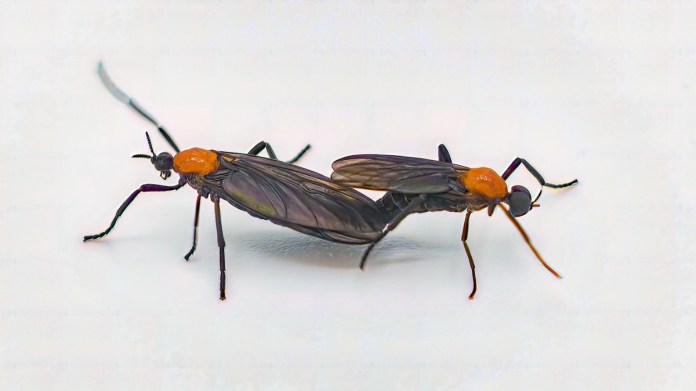
Most Florida and Gulf Coast residents are aware of swarms of pesky lovebugs and the big nuisance they cause twice yearly during mating seasons.
This species of fly doesn’t bite, sting, or threaten crops. Instead, frustration comes from an abundance of black-and-red fly bodies smashed on car windshields, grilles, headlights, and hoods during lovebug mating frenzies.
Millions of mating lovebugs swarm along highways in Florida and other Southern states during four-week mating seasons twice yearly — one from around April to May or longer and another from August to September.
The timing and size of the swarms depend on the weather. Even in off-peak seasons, this invasive species can be abundant, making lovebugs hard to avoid while driving.
Researchers say lovebugs are drawn to the irradiated exhaust fumes from automobiles. The flies might confuse that smell with the scent of rotting vegetation they’re naturally attracted to. Hot engines and vehicle vibrations may also contribute to their attraction to highways.
Whatever the reason, it can seem impossible for turnpike and interstate highway drivers to avoid lovebugs after they’ve taken flight during daylight hours in mating season.
Editor’s Note: We have updated this article since its initial publication.


I’ve learned that a little preparation can save a lot of cleaning when lovebug season hits. A good coat of wax and a quick rinse after driving can make a real difference in keeping the car’s finish in good shape.
Hi. I live in California and have a 2021 Nissan Leaf SV that we purchased one year ago. This EV works for us as we only use it locally, less than 4k a year. Home charging both level 1 and level 2. Only once did we try charging at a station, and that was to see how the pay system worked.
I have read several articles on the 20-80 % charging rate which we like. Our local electricity supply is SPMUD. They are very helpful with EV rates and equipment assistance.
The reason for this comment has to do with the misleading mileage estimate we get on our dashboard. Why do the estimates of mileage always exceed the actual battery charge percentages. Supposedly the cars computer is suppose to take in account the driving habits of the users.
We use the battery charge percentage as a guide to estimate our charging needs.
I was a pilot for about 20 years and every flight you needed to know how much fuel was expected during your trip and how much load you could carry. I mostly adopted the aircraft estimating system for our EV.
Thank you for your information and I’ll be interested if you could explain the misleading mileage build in the car.