


A manufacturer buyback (often called a “lemon-law buyback” or a “reacquired vehicle”) is a vehicle the manufacturer took back from the original owner due to repeated warranty problems, then reconditioned and put up for sale again. These cars can be excellent bargains or expensive headaches, depending on the defect, the quality of the repair, and its documentation.
Why Buybacks Exist and Where They Show Up
Manufacturers may repurchase a vehicle after a dispute, arbitration, settlement, or court decision under consumer warranty laws. After a repurchase, many states allow resale only if the car is repaired and the buyer receives specific disclosure, which varies by state. For example, Georgia requires written disclosure of the reacquisition and the alleged defect or defects, and the manufacturer must provide a 1-year/12,000-mile warranty on the defects. Contact your state Attorney General’s Consumer Protection Division or visit their website.
Buybacks appear:
- On dealer lots, sometimes as “manufacturer buyback,” “lemon law buyback,” or “warranty return”
- At auctions, then later at retail
- In online listings with vague wording like “special title” or “prior manufacturer ownership”
The Upside: Why People Buy Buybacks
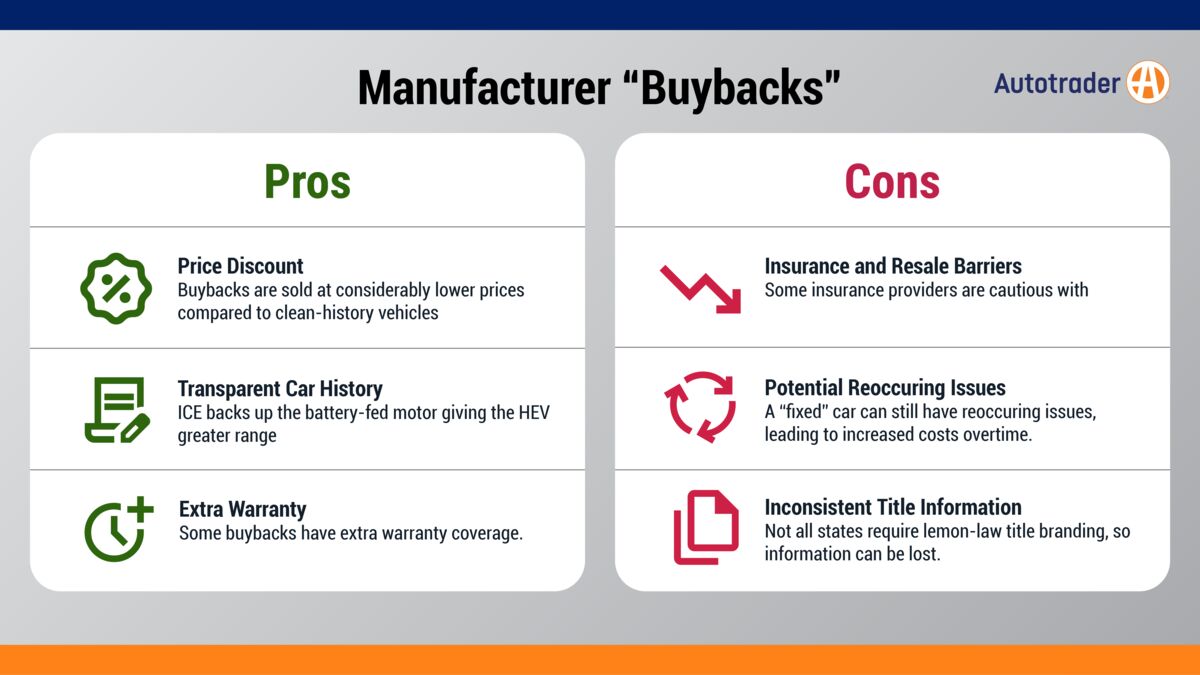
✅ Price discount. Because resale stigma is real for reacquired cars, buyers can often get a late-model car for significantly less than a comparable clean-history vehicle.
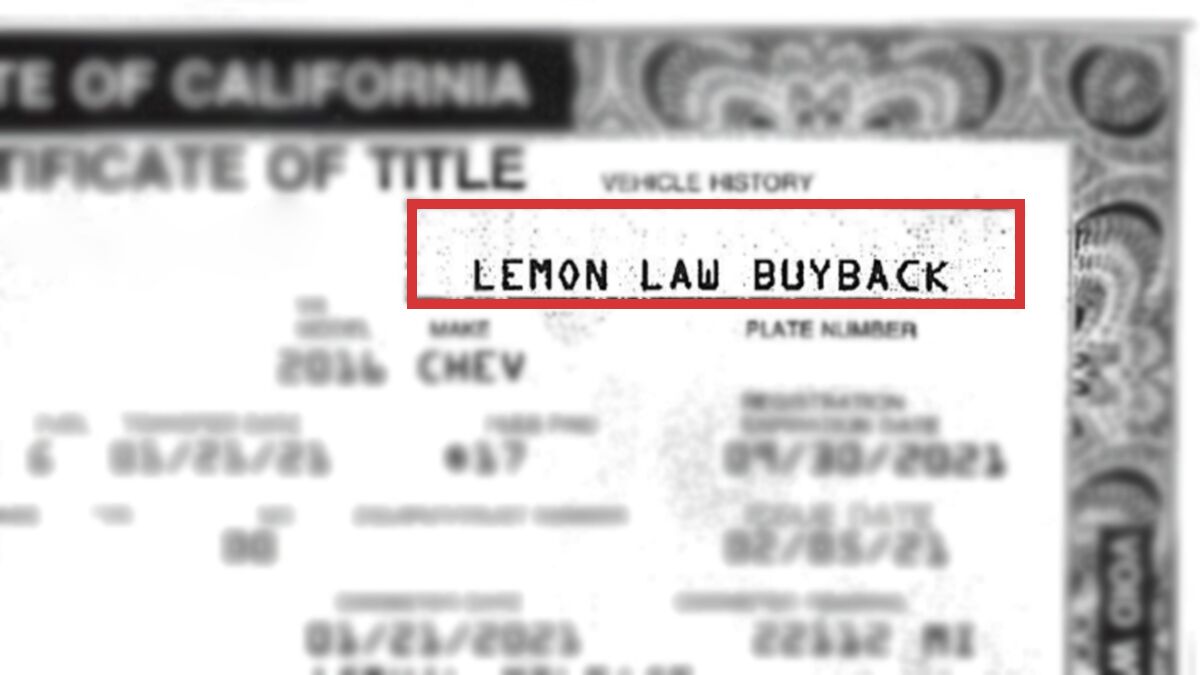
✅ The defect is known and documented. In strong disclosure states, paperwork may spell out the original mechanical problem and repair history. For example, California requires prominent “Lemon Law Buyback” branding on the title and additional disclosures to buyers.
✅ Some buybacks may offer extra warranty coverage. Georgia is a clear example: The resale of a reacquired vehicle comes with a mandated warranty on the nonconformity for one year or 12,000 miles, whichever occurs first.
The Downside: What Can Go Wrong
❌ The original problem can come back. Some defects are inherently intermittent, such as electrical gremlins, water leaks, and software faults. A “fixed” car can still be a repeat visitor to the shop.
❌ You might not get the full story — even legally. Not all states require lemon-law-title branding or disclosure to later buyers. Michigan, for instance, does not require disclosure to subsequent purchasers or title branding. A buyback can look “normal” if paperwork isn’t carried forward.
❌ Financing, insurance, and resale can be more challenging. Some lenders and insurers are cautious with branded titles or vehicles labeled “buyback,” and trade-in offers can be lower even if the car runs perfectly.
❌ A “clean title” can still hide risk. Title/brand information can be inconsistent across states. The National Motor Vehicle Title Information System (NMVTIS) exists in part to reduce “washing” or concealing vehicle records, and can show brand history and other key title signals.
How Cautious Should You Be?
Treat buybacks as risky purchases.
If you do the verification work and get a real discount, they can be smart. However, if you skip the documentation review and inspection, a buyback can become a costly mistake.
Pro tip: Be twice, or maybe three times, as picky as you’d be with a normal used car.
Information Potential Buyers Need to Obtain
If you’re considering a buyback, ask the dealer for all the information listed below. Read everything carefully and ask as many questions as needed to ensure you have a clear picture of the car’s history and present state of repair.
Proof of status: “Is it a buyback?”
Look for:
- Title brands/remarks: Some states are explicit, like California’s “Lemon Law Buyback” and Florida’s “Manufacturer’s Buy Back.”
- Mandatory disclosures: Paperwork packet and sometimes decals or labels, depending on the state.
- Listing language: “Manufacturer buyback,” “lemon law,” “reacquired,” “warranty return,” and “factory repurchase” are flags.
Don’t rely on the dealer’s summary. Get the documents.
Proof of History: Run an NMVTIS Report
NMVTIS reports can include title, brand history, and odometer readings and are obtained through approved providers listed at VehicleHistory.gov. A report costs about $20 from most approved vendors, though some offer subscription or package deals for multiple reports.
It’s not the only history source you can use — but it’s particularly relevant to brand/title signals and reducing “washed” histories.
Proof of Terms: What Is the Car Being Sold As?
At any dealer, you should see the FTC Buyers Guide window sticker disclosing whether the vehicle is being sold “As Is” or with a dealer warranty, and what that warranty covers.
This matters because a salesperson saying, “Don’t worry, we’ll take care of you,” is not the same as a written warranty.
The FTC Used Car Rule applies broadly (with state exceptions like Maine and Wisconsin having similar requirements).
Proof It’s Fixed: Repair Orders
Ask for:
- The defect description
- Each repair attempt (dates, mileage)
- What parts/software were replaced/updated
- The final resolution notes
If they can’t produce a repair history, you’re buying blind.
A Pre-purchase Inspection Targeting the Original Defect
For buybacks, a normal inspection is not enough. You want a shop that will not only diagnose symptoms tied to the original complaint but also test conditions likely to reproduce it, such as temperature, speed, charging, rough road, etc.
Avoiding the Pitfalls of Buying a Buyback
| Common Pitfall | How to Avoid it |
| “It’s fixed,” but no one can explain what was fixed. | Require the defect description and repair orders. If the story is vague, treat the risk as high. |
| You think you’re covered, but the sale is effectively “As Is.” | Read the Buyer’s Guide and any service contract carefully. |
| You overpay because you compare it to clean-history comps. | Price buybacks as a different category. Assume it will have a lower resale later, and you’ll spend more time and effort managing repairs if the issue returns. |
| State-to-state differences confuse the paper trail. | Use NMVTIS for brand history and insist on the disclosure packet/repair orders regardless of where it was first sold. |
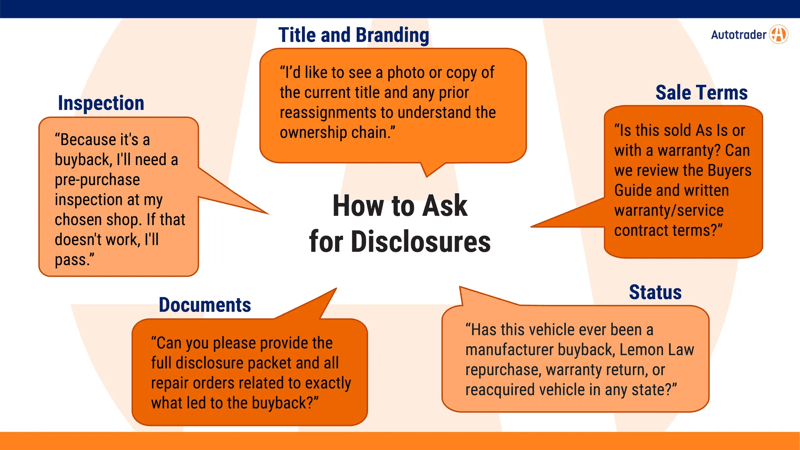
Exact Phrases to Use When Asking for Disclosures
Use these anywhere, any dealership:
Who Should Consider a Buyback and Who Shouldn’t
Good fit if you:
Not a good fit if you:
Bottom Line
A buyback can be a great deal only if you can answer three questions with evidence:
- What was wrong? (You have the specific defect description.)
- What exactly was done to fix it? (You have seen and tracked the repair orders.)
- What protections do I have now? (You fully understand the terms of the warranty/Buyers Guide/service contract.)
If any of those are unclear, feel free to walk away — there will always be another car.


I am looking at an INFINITI QX80 at a Georgia dealership. I have the Repurchase Disclosure Statement regarding the radio replacement. At 30% off MSRP i might take the leap!! any advise?