



- Leasing does not lead to ownership at the end of the lease term.
- Financing a car sometimes leads to higher monthly payments.
- Loan terms (lengths) are often longer than leases.
- Either option can be a good choice, depending on your financial situation and vehicle needs.
While there are dozens of choices for new cars on the market, you really only have two options when it comes time to pay for your purchase: Leasing or Buying. Either could be a good decision for you, depending on your needs and financial situation, but both have downsides that should be considered. It can be stressful to decide between leasing and buying when you’re already at the dealer’s finance desk, so let’s look at the ups and downs of each to help you decide which approach is best.
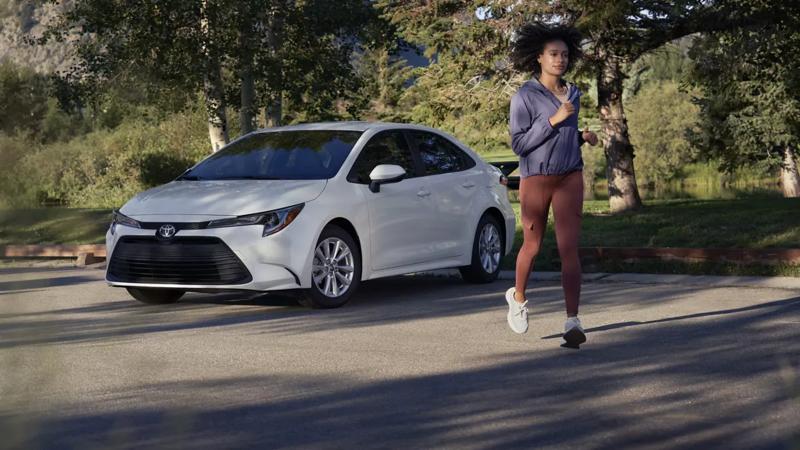
We chose a 2026 Toyota Corolla LE to get some baseline numbers. To get the most accurate comparison, we leveled the playing field on the down payment, strong credit scores, and time period. To make things simple, we excluded taxes, fuel costs, insurance, and registration fees. That said, it’s important to note that the loan term is 6 years or 72 months, meaning the cost to finance this 2026 Corolla doesn’t end on the same timeline as the lease.
Leasing
Important lease context: At month 36 you return the vehicle and do not own it. Leasing again generally requires another down payment and a new mileage cap. If you exceed 10,000 miles/year, the contract charge is $0.15 per extra mile. Assumptions: 10,000 miles/year, excellent credit, and no mileage overage.
On the surface, leasing appears to be the better deal here. The down payment is the same, but the monthly outlay is just over half that of financing. We assumed the buyer drives 10,000 miles per year in both scenarios for this comparison, but that is the lease option’s mileage ceiling. The buyer is required to pay $0.15 per mile if the car exceeds 30,000 miles at the end of the lease term, which doesn’t sound like a lot but can add up quickly. Other automakers charge different amounts.
Leasing looks very different from financing at the end of the term in other ways. While lease terms vary, you’re essentially renting the Corolla for the three years. At the end, you can turn the car in and start a new lease, finance a different car, or purchase the car for its residual value, which means shelling out cash or taking on a loan to pay for it.
If you decide to lease a new car, you’ll be responsible for another down payment, mileage limit, and monthly payment, which may not save you any money over financing the vehicle for a five- or six-year term. Toyota also requires a $350 disposition fee for lease returns, and you may have to pay for any damage done to the Corolla during the three years you had it.
Financing
Important ownership context: The loan is longer than the lease (72 vs 36 months). After year 3, you still owe 36 more payments, but continuing to month 72 results in owning the vehicle outright. Assumptions: 10,000 miles/year, excellent credit, and a 72-month loan.
Choosing to finance the Corolla requires the same $3,000 down payment as the lease, but the monthly payments are $340. You can opt for a shorter loan term, which increases your payments, but in this scenario, you’re tied into the loan for six years or 72 months. At the end, you’ll have paid a little under $28,000 for a car that had a $24,120 due to interest. That said, your $3,000 down payment applies to the overall cost of the car, so you’re building equity in a vehicle that you will eventually own. You don’t get that money back when you lease, and you don’t own the car at the end of three years.
Financing a car does not come with a mileage limit, though higher mileage generally means the car is worth less. You also won’t have to pay for any minor dents and dings that accumulate over the loan term.


