


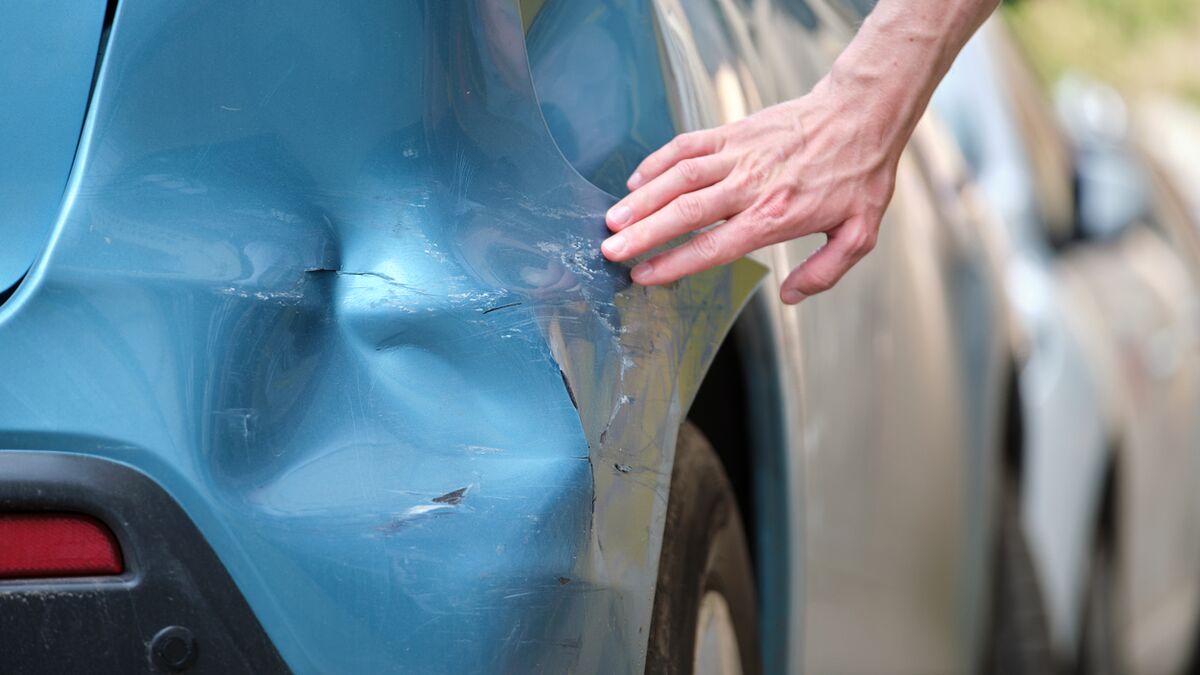
It’s happened to almost everyone: You return to your parked car and find a new dent, scrape, or scratch. It’s annoying, inconvenient, and sometimes expensive. The big question is whether repairing it is worth the cost, especially if your car is older.
How Much Does It Cost?
Repair costs depend on the extent of the damage, its location, and whether the paint is damaged.
Here are common ballpark ranges for a typical non-luxury model:
- Small dent with no paint damage: usually $100–$250
- Minor bumper scuffs/scratches: roughly $150–$600 for light repair and blending
- Deeper scratches or dents that need repainting: often $400–$800 or more per panel
- Damage across multiple panels: can exceed $1,000–$1,500 or more
- Bumper replacement and paint: often $700–$1,500 or more, depending on the vehicle, ADAS sensors, and trim. Simple jobs could be closer to $500.
Even if your car is older, repairs can still be pricey because labor, paint materials, and replacement parts don’t drop much just because the vehicle depreciates. Matching paint correctly and getting a clean finish also takes skilled work.
Get an Estimate First
If you’re unsure, start with a quote. Many body shops and paintless dent repair (PDR) technicians offer free estimates, so you can compare costs before deciding.
Why Wouldn’t You Fix It?
Fixing damage isn’t always the best financial decision — especially on older cars — because cosmetic repairs often don’t increase the car’s value by the same amount you spend.
Here’s a realistic example:
Let’s say a body shop quotes $1,200 to repaint a bumper or repair and repaint it — or possibly replace it, depending on the damage. If your insurance deductible is $500, you’d still pay $700 out of pocket.
That math is correct — but there’s an important catch:
- If the repair cost is close to your deductible, insurance may not help much.
- Also, filing a claim may affect your premiums later (it varies by insurer and situation), so it’s not always a simple “insurance pays the rest.”
If your car is only worth a few thousand dollars, spending $500 or more on cosmetic damage often doesn’t make sense.
When It Is Worth Fixing
Repairs are more likely to be worth it if:
- Your car is newer or higher-value
- Your car is leased — damage can cost you when it’s turned in
- The damage is cheap to fix
- The scratch goes through paint to bare metal, which can lead to rust. Not every scratch causes rust — clearcoat-only scratches are usually cosmetic. The bigger risk is exposed metal.
Quick decision guide
Fix it or leave it?
Yes Fix or seal it soon. At minimum, use touch-up paint or clear coat to prevent rust.
No Go to step 2.
Yes Get an estimate and strongly consider fixing. Lease turn-in and resale value can be affected.
No Go to step 3.
Examples: broken light, sharp edges, loose bumper cover, door won’t open/close properly, sensor/camera issues.
Yes Fix it.
No Go to step 4.
Rule of thumb: If the repair is under ~5-10% of the car’s value, it’s often reasonable. If it’s over ~10%, think twice.
Under 5-10% Fixing is usually worth considering.
Over 10% Usually skip it (unless safety issue, rust risk, lease, or you care a lot about appearance).
If the repair cost is close to your deductible, insurance may not be worth it.
A claim may affect future premiums (varies).
If it’s cosmetic and expensive, keep your money.
Our Take
If you drive a newer, valuable, or leased vehicle, repairing dents and scrapes is usually worth it. But if your car is older and the damage is primarily cosmetic, think twice. The repair cost could be high compared to the car’s value. In many cases, you’re better off saving your money, touching up exposed metal if needed, and living with a few imperfections.
Editor’s Note: We have updated this article since its initial publication.


i have a dent and scratches on the passenger side of the car. Collision shop verbally estimated repairs around $5000. Is a Mazda 2013 worth this expense to repair? Thanks!