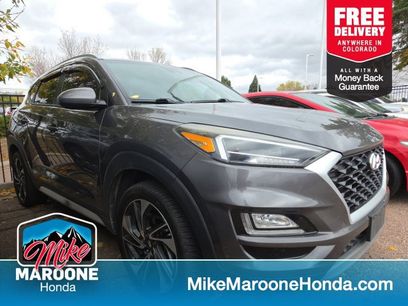
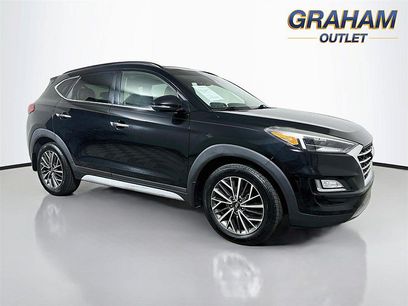
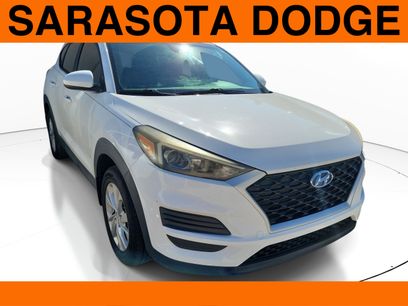
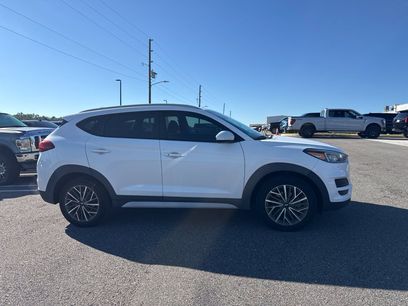
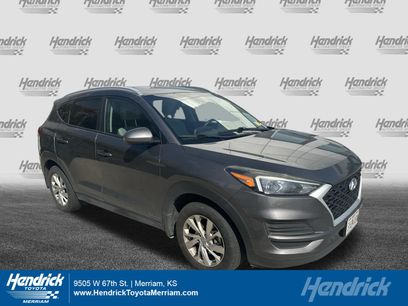
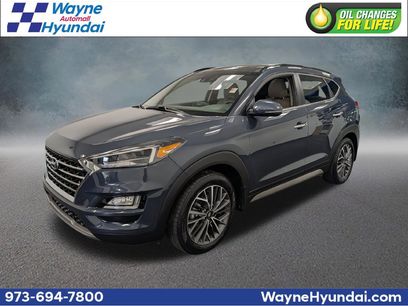
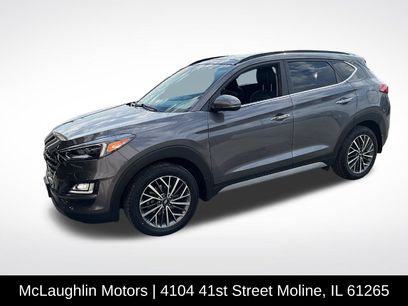
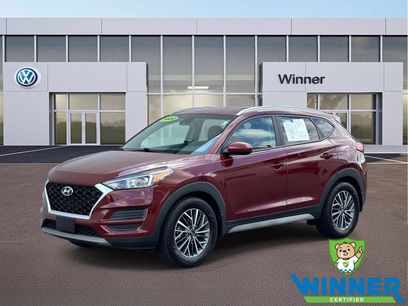
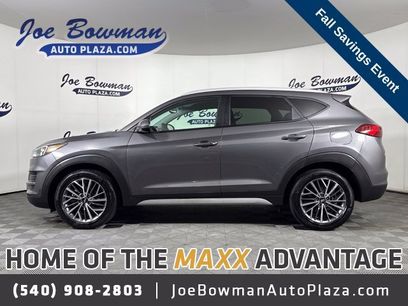
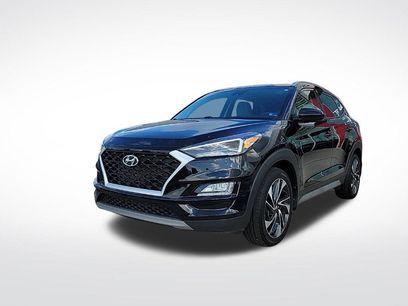
In the face of stiff competition, the compact 2020 Hyundai Tucson SUV hopes to lure customers with its sleek styling, well-equipped model range and confidence-inspiring 10-year/100,000-mile powertrain warranty. The Tucson’s aggressive good looks help it compete against similarly sized crossovers like the Mazda CX-5 and the Ford Escape, although it is not as powerful or agile as either of these rivals. The Tucson’s older design means it’s not as roomy on the inside as the Honda CR-V and the Toyota RAV. However, what the Tucson lacks in size, it more than makes up for in features, offering no less than six different trim levels ranging from basic to near-luxury. The Tucson is available with a choice of two fuel-efficient engines, optional all-wheel drive and a long list of features to meet just about any need. Although some in this class offer a bit more in terms of fuel economy, ride and handling, the Tucson can tout unique features like wireless cell phone charging, excellent resale values and its impressive warranty. Yet while the Tucson has proven itself worthy on paved roads, it can’t really tackle off-road obstacles in the same manner as the Jeep Cherokee Trailhawk or the Subaru Forester — something to consider if you do a lot of outdoor activities.
Autotrader’s Advice:
Although it’s a little pricey, the Tucson Ultimate is our favorite model in the lineup. It offers an impressive array of equipment teamed with a smooth engine and transmission, a high-quality interior and a supple ride. If the Ultimate is too much, go with the SEL. The base 2.0-liter engine in the SE and Value just isn’t very powerful and doesn’t work all that well in this car.
What We Like:
- Lots of features
- A wide range of standard and optional safety equipment
- A smooth ride
- Stylish interior and exterior
- Competitive pricing structure
What We Don’t:
- Somewhat generic driving experience
- Not much guts with the 2.0-liter engine
- Navigation option reserved for the most expensive trim
- Middle of the road fuel economy numbers
Original MSRP:
$24,445-$35,000 (when new).
MPG:
The Tucson offers two power plants. Base-level SE and Value use a 161-horsepower 2.0-liter 4-cylinder engine, which comes with a 6-speed automatic transmission and front-wheel drive or AWD. FWD models return 23 miles per gallon in the city and 28 mpg on the highway, while opting for AWD drops gas mileage numbers to 22 mpg city/25 mpg hwy. All other trims are powered by a 181-hp 2.4-liter 4-cylinder. Fuel economy with this engine tops out at 22 mpg city/28 mpg hwy with FWD, 21 mpg city/26 mpg hwy with AWD.
Standard Features & Options:
The Tucson is offered in six trim levels: SE, Value, SEL, Sport, Limited and Ultimate. All trims come standard with FWD, but can be outfitted with AWD. All prices are original 2020 msrp when new.
The
2020 Hyundai Tucson SE ($24,445, FWD) ($25,845, AWD) is fairly basic, though it includes a few useful convenience features. Standard equipment includes a backup camera, air conditioning, 17-in alloy wheels, a tilt-and-telescopic steering wheel, Bluetooth, a 7-in touchscreen audio with Apple CarPlay and Android Auto, automatic headlights, USB port for an iPod — all items that are also included in most of the car’s rivals. Standard safety equipment includes forward-collision warning, lane-keeping assist and driver attention warning. The standard engine is the 2.0-liter 4-cylinder paired with a 6-speed automatic.
The
2020 Hyundai Tucson Value ($25,895, FWD) ($27,295, AWD) adds blind spot warning, rear cross-traffic alert, an 8-way power driver’s seat with 2-way power lumbar, heated side mirrors, proximity key entry, heated front seats and 3-year trial to Hyundai’s Blue Link telematics services.
The
2020 Hyundai Tucson SEL ($26,845, FWD) ($28,245, AWD) adds the 2.4-liter engine, 18-in alloy wheels, rear seat vents, rear seat USB port and dual-zone automatic climate control.
The
2020 Hyundai Tucson Sport ($28,995, FWD) ($30,395, AWD) adds LED headlights and taillights, Qi wireless phone charging, 19-in alloy wheels, a hands-free smart lift gate and a 315-watt, 8-speaker Infinity audio system.
The
2020 Hyundai Tucson Limited ($30,145, FWD) ($31,545, AWD) gets 18-in alloy wheels, a surround-view monitor, leather seats, a heated steering wheel, a power front passenger seat, side mirror turn signal indicators and auto high beams.
The
2020 Hyundai Tucson Ultimate ($32,795, FWD) ($34,195, AWD) adds navigation, a panoramic sunroof, rain-sensing wipers, collision avoidance with pedestrian detection, adaptive cruise control with a stop/go feature, ventilated front seats and heated rear seats.
Safety:
The 2020 Hyundai Tucson offers virtually every modern high-tech safety feature you might expect from a car in this class. Standard features include side-curtain airbags, a backup camera, anti-lock brakes, lane-keeping assist, forward-collision warning and driver attention warning. Available assists include a blind spot monitoring system, pedestrian detection, rear cross-traffic alert and a surround-view monitor. In crash tests, the National Highway Traffic Safety Administration gives the 2020 Tucson its highest rating of five stars overall, with five stars in the front- and side-impact tests and four stars in the rollover test. The independent Insurance Institute for Highway Safety (IIHS) gives the Tucson its highest rating of Good in all crash tests and Superior in the crash avoidance and mitigation test, earning the model a Top Safety Pick award.
Behind the Wheel:
On the road, the Tucson is something of a mixed bag, though we suspect most crossover shoppers will appreciate the majority of what it has to offer. The Tucson touts a comfortable ride, predictable handling and, if you opt for the 2.4-liter engine (as most drivers will), a tremendously smooth engine-and-transmission combination. In all, we think the Tucson offers one of the most pleasurable, supple rides in the compact-crossover segment. Where the “mixed bag” remark comes in is for drivers who enjoy spending time behind the wheel. The Tucson isn’t especially fun to drive, as acceleration is mediocre with either engine, and steering — while suitable for the Tucson — isn’t exactly exciting. So while we think most drivers will appreciate the Tucson for its comfortable, smooth ride, those looking to have fun will probably want to consider another model with more power and improved handling. As for visibility, interior room and cargo space, we found the Tucson to be roughly on par with other models in its segment: It’s not a standout, but it’s far from being the worst in its class.

 Learn more