5 Thoughts About the 2024 Nissan Z Performance M/T
Author:
Brian Roskelly.
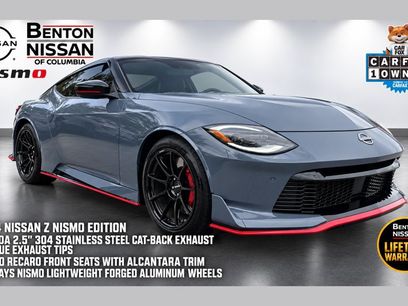
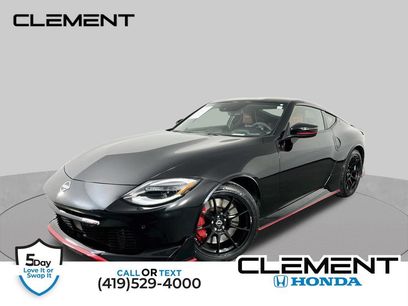
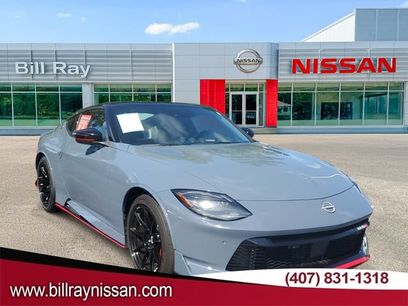
When Nissan reintroduced the Z for the 2023 model year, enthusiasts everywhere rejoiced that another Japanese manufacturer was remaining committed to the 2-door sports car segment. Though not a 100% top-to-bottom redesign over the previous 370Z, it’s hard to tell from its sharp exterior design. Our 2024 Z was painted in Boulder Gray with a black roof treatment, but most importantly, a Blue Leather interior with synthetic suede inserts that delighted every passenger who stepped inside. Nissan carried over the 6-speed manual transmission option right out of the gate while keeping the 9-speed automatic a no-cost option. Our tester’s Performance trim level with that stick shift sits in-between the base Sport and new-for-2024 NISMO, with a starting price of $52,210. Add $895 for the two-tone paint, $410 for a carpeted floor mat package, $500 for an illuminated kick plate, and the $1,095 destination charge, and the price ticks up to $55,110.
1. 400 Horsepower
The new Z dropped the previous generations’ alphanumeric nomenclature in favor of simplicity. The 370Z was powered by a 3.7-liter V6, and the 350Z had a 3.5-liter unit, so many people expected this new one to bear the name ‘400Z’. What matters is the power, which is provided by the twin-turbo V6 that first showed up on the Infiniti side in the Q60. It produces 400 hp and 350 lb-ft of torque, which are very healthy numbers and feel pretty accurate. It’s always a joy to get behind the wheel of a modern vehicle that touts that much power while allowing you to shift your gears the old-fashioned way.
The 350Z in 2009 was revolutionary for offering the “SynchroRev Match” feature, which allowed for rev-matched shifting of the manual transmission. This function has proliferated throughout the industry since then and enables less-experienced manual drivers to easily go through the sometimes difficult process of downshifting a vehicle. In the latest Z, it still works like a dream, with a strong throttle response that allows you to be right in the correct rpm spot to get the most out of the 400 hp at all times. If you don’t want it, there’s a simple switch on the center console to turn it off. Unlike some other companies like Hyundai, the car defaults to the last setting you left it on, so there’s no need to hit the switch every time you turn the car back on.
2. The Design
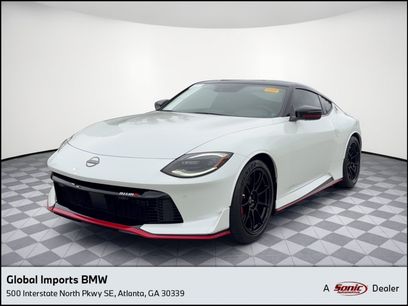
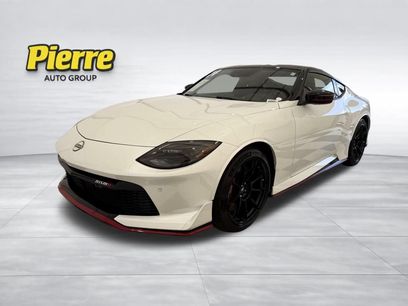
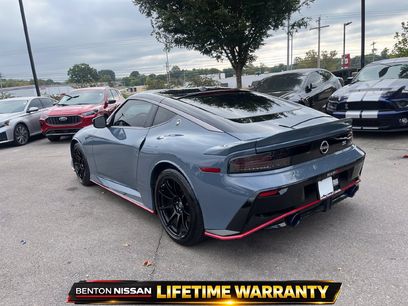
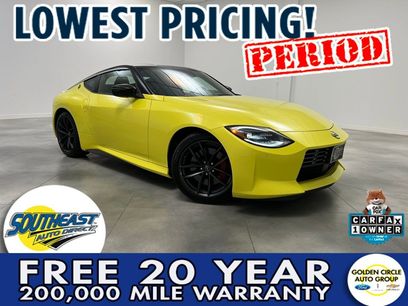
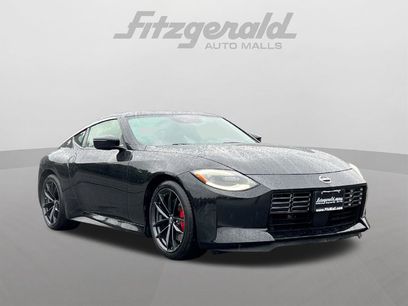
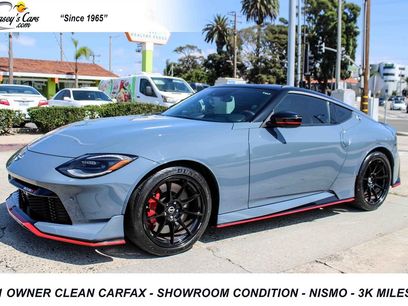
As previously stated, the 2023 Z was not a complete redesign over the previous 370Z. It rides on the same platform and maintains a few elements from that car, such as the interior door handles, air vents, and sheet metal cut lines. However, the work done on the exterior to make it look all-new was not futile, as this thing looks modern, sleek, and, frankly, unique. It draws inspiration from former generations, like the taillights from the 300ZX and the front grille from the Datsun 240Z. The chrome strip that runs along the top of the greenhouse pairs well with every paint choice and is especially fitting when you go with one of the two-tone options like our tester.
The daytime running lights up front are distinctive for being inspired by the older Z’s while looking fresh and contemporary. The Z badge on the B-pillar proudly promotes curiosity about the car by those who aren’t in the know. The diameter of the dual exhaust ports gives them the correct proportions in comparison to the whole lower valence. The 19-inch rims are sporty in design and functional in width, riding on staggered tires (255-millimeter up front, 275-millimeter in the rear). Major, but not complete, overhauls of aging models like the Z don’t usually go as well as this one.
3. Everything Inside Is Easy and Fun
The Z has always been about driving enjoyment, but its latest interpretation makes the ease-of-use factor more apparent than ever before. In a time when buttons are becoming second-tier to soft buttons on touchscreens, the Z gives you an excellent combination of both. The climate control dials make setting the system to your liking very simple, while the 9-inch touchscreen is super sharp, bright, and responsive. It gives you wireless phone integration that works every time, plus an intuitive native UI that you won’t be annoyed to use. There’s a lovely and large full-LCD instrument cluster with three different display layouts that give you a ton of information, preventing you from yearning for traditional analog gauges.
Then there’s the color. It’s blue! You can get the Z with a black or red treatment, but the beautiful blue interior of our tester was a show-stopper. The only other car company recently offering a blue interior color is Genesis (though they have walked that back due to low demand). It looks so good paired with the Boulder Gray exterior, and once again, is just pure FUN.
4. Wish it Sounded a Little Bit Better
Not everything is positive for the Z, but luckily, only one negative thing stood out: the exhaust note. The manual transmission models had to be fitted with a quieter exhaust to pass the drive-by noise test during development, so only the automatic models received a louder muffler. You can tell the difference if you’ve driven both. The manual Z simply doesn’t stir as much excitement as other cars out there with similar performance. The sound under full throttle is somewhat muted and a little gritty, but at least you can shift at your pleasure. The 9-speed automatic, in comparison, is not the most responsive transmission out there.
5. 100% Nissan
The biggest competitor to the Nissan Z today is the Toyota Supra; there is no question about it. Most people will tell you the Supra is the superior vehicle in every way and will provide receipts to back that claim up. It is faster in a straight line with its twin-turbo inline-6 engine, it offers a more efficient and lighter-weight turbocharged 4-cylinder engine option, its 8-speed automatic is snappier than the Z’s 9-speed, it is a bit more dynamic in the curves, it sounds better. Sure, all of that may be true. Why do I think the Z is still the better car? It’s all Nissan.
If you don’t already know, the Supra’s return in 2019 was only made possible by a partnership with BMW, who provided pretty much every element of the chassis, powertrain, and interior design. The exterior design may be all Toyota, but at the end of the day, you’re driving a BMW with a seriously cramped interior plus their infotainment system and switchgear from a couple of generations ago. If I wanted to buy a coupe with BMW’s B58 twin-turbo inline-6, I’d get an M240i. Better yet, I’d get the Z4 M40i so I could ride around with the top down. The Supra feels like a cop-out, whereas the Z is Nissan giving its all to a nameplate that has a long and treasured history, and it just feels right. If 2-door sports cars were more fruitful for automakers like Nissan, we would have seen a complete overhaul from the previous 370Z. Nissan chose to go it alone and, therefore, had to make some sacrifices in the development of this car. In my eyes, they did a pretty fantastic job with the resources they had, and we should all be thankful that the money was spent in the first place.
The Wrap
The Nissan Z is not the only beacon of hope for the preservation of the fun-to-drive sports car segment, but it is one of the most special. In America, we saw a decently long period where companies formerly known for producing sports cars (as well as companies who weren’t known for this) were simply not making them. Toyota went from 2005 to 2011 without anything like this in its collective lineup. Hyundai introduced its first serious sports car in 2008 with the Genesis Coupe. Mitsubishi still hasn’t seen the return of something in the same vein as the Lancer Evolution. The Z, though not alone, was there the whole time, bringing smiles to the faces of driving enthusiasts all over. It continues to do so today in a modern wrapper that stays true to the formula in an authentic, holistic way. For that, it’s worth a look if you want to spice up your driving life. Related:
2024 Nissan Z: Choosing the Right Trim
 Learn more
 Learn more