5 Thoughts on the 2024 Volkswagen Golf R
Author:
Matt Degen.
Quick, think of an iconic VW. The Bus, of course. OK, how about another. Beetle, you say? Legend. Still, there’s a third I’m thinking of, and it enjoys its own cult status. It’s the Golf, of course. Since you’re reading Oversteer, I’ll assume you are already intimately familiar with the Golf and why we car enthusiasts adore this little thing. For anyone else, the quick recap is that the Volkswagen Golf is a compact hatchback that exquisitely blends practicality, economy, and frisky driving manners. It’s currently enjoying its 50th anniversary. Over the past five decades, the Golf’s form and function have remained surprisingly constant, albeit evolving from small and basic to, well, small, tech-rich, and powerful.
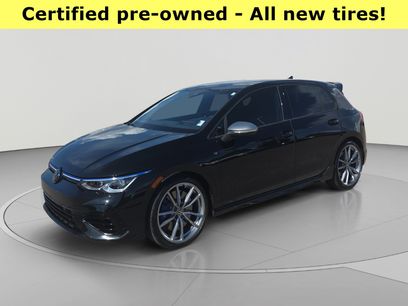
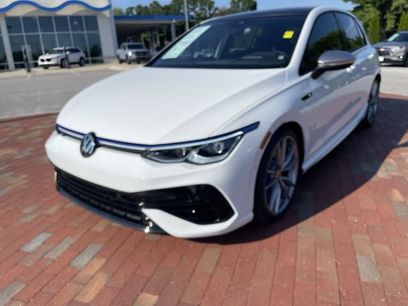
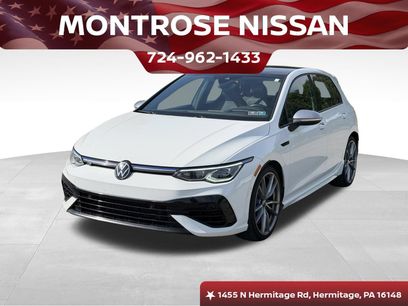
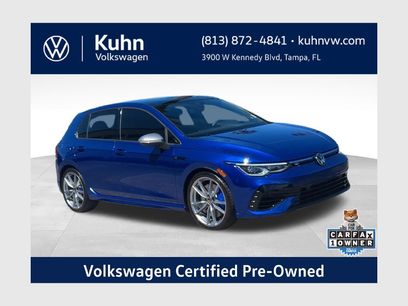
It’s been available with two or four doors and a wide range of powertrains. It has even enjoyed a subset of models over the years, including one of my favorites — the short-lived Golf Alltrack. But I digress. For its latest generation, and the eighth for those counting, the United States only receives the performance-focused versions of the Golf: the GTI and the Golf R. The GTI has long wooed enthusiasts with its affordable performance, while the Golf R, with its standard all-wheel drive and highly potent engine, is a little beast that rivals the Honda Civic Type R and Toyota GR Corolla. If these are the only two Golf variants currently for sale here in America, we could do worse. I recently spent a week in a 2024 Golf R with a 7-speed DSG automatic transmission, my first extended time in one since the prior generation. I have some thoughts.
1. Yay, it exists!
I probably don’t have to tell you that small cars make up only a small percentage of new-car sales here in the U.S. Over the past few years, we’ve seen the axing of models such as the Chevrolet Sonic and Spark, Ford Fiesta and Focus, Honda Fit, Mazda2, and Toyota Yaris. That VW even decided to keep the Golf alive for the U.S. when it launched this latest generation in 2022 is a win in my book. And those of us who love to drive — and I mean drive –can relish that the two it brought are the GTI and Golf R, both still available with a manual transmission. Side note: If you want the manual, get that while you can, as the 2025 GTI and 2025 Golf R will be automatic only.
2. It’s a quick chameleon.
Here’s the truth: When I first got into the Golf R and hammered down, it felt fleet but not as fast as I expected. A little subdued, in fact, and nowhere near 0-60 mph in 4.5 seconds as VW claims of the 315-horsepower Golf R. Then I noticed it was in Comfort mode. I began toggling through the various drive modes, and wow, what a difference they make. Most cars these days have different drive modes, of course, and we car reviewers tend to remark about how switching to Sport enhances acceleration, tightens steering feel, and the like. But in the Golf R? Man, it legitimately feels like a different vehicle as you toggle through Sport, Race, and Special. (There’s even a Drift mode, but alas, I’m still waiting to build that full-scale track at my house.) The one I found most impactful is the mode called “Special,” identified on the touchscreen by an icon in the shape of the famed Nürburgring race track in Germany. Switching to this mode made the Golf R one of the most frenetic little beasts I’ve ever driven. Throttle response, for example, was absurd — like almost EV-car absurd. The slightest prod to the gas pedal met immediate acceleration. All this driving customizability truly made for a hot hatch that could comfortably cruise on the freeway — with a decent adaptive cruise control system — or absolutely rip up the streets.
3. It’s a sleeper.
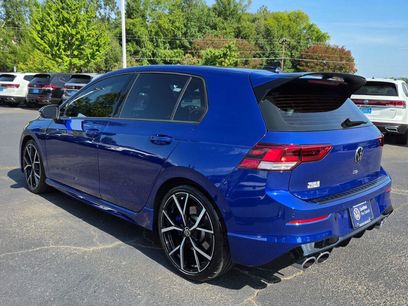
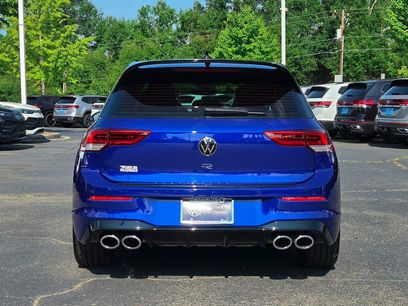
One aspect I’ve long loved about the GTI and Golf R is that they both look pretty much the same as a standard, econobox Golf. Yeah, we enthusiasts can identify an R by its quad tailpipes and subtle R badges. But almost everyone else will think it’s an ordinary hatchback. In other words, it’s a sleeper, just like that V8-packing Lexus IS 500 I wrote about a few months ago. And I love me a sleeper.
4. It’s practical.
The Golf R is still a Golf, meaning it’s a hatchback. And as much as I usually bristle at the “if you know, you know” axiom, here it is. Hatchbacks can fit a lot of stuff, especially with the rear seats folded. They’re like SUVs that way. Except better, because, well, you know.
5. Its infotainment system can be infuriating.
The one sticking point I have with the Golf R is a big one. I found the infotainment system finicky at best and vexing at worst. It’s overly complicated and relies too much on touch. The same goes for the climate controls. For example, simply changing fan speed means going into an on-screen menu after pressing the small climate button on the dash. Seriously? The navigation map looks like a relic from the past, and for some reason, the on-screen tuner buttons refused to work in my test model to change stations. Why does this have to be so hard?
Final Thoughts
If No. 5 on that list weren’t there, I’d consider the Golf R an exceptional enthusiast car. On performance and driving merits alone, I’d say it is. But even the most devoted of us who love the sheer act of driving deserve not to be vexed when simply wanting to change the radio station or dial in climate settings. Thankfully, next year’s models could rectify some of these issues. The 2025 Golf R and 2025 Golf GTI are getting a new 12.9-inch infotainment system for their midcycle refreshes. And while the touch-operated sliding controls are still there, they’ve been redesigned for better ergonomics. That, and the fact that there even is a 2025 Golf R/GTI, are further wins in my book.
The conundrum that 3-pedal enthusiasts will face, however, is this: Get a 2024 model with the 6-speed manual transmission and the aggravating infotainment system, or go 2025 with the updated tech and be forced into the DSG automatic? I know that can feel like picking your poison. If you face this dilemma, at least know that the automatic in the Golf R is exceptionally well-matched to this little rocket.
 Learn more