


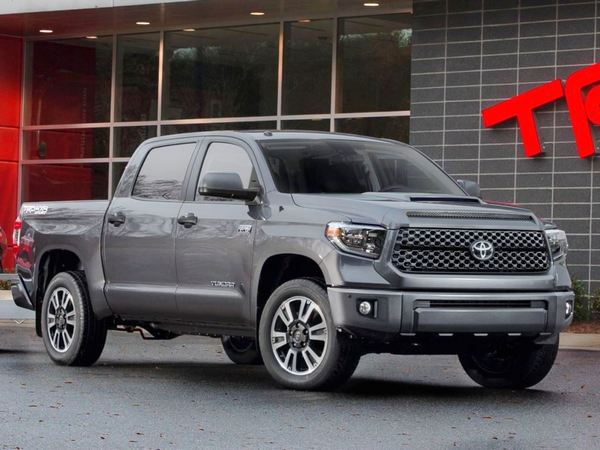
Used Toyota Tundra Quick Facts
- The best years to buy a used Toyota Tundra fall between 2014 and 2021.
- The third-generation Tundra offers a hybrid engine option.
- The Tundra is available only in a 1/2-ton configuration.
Full-size pickup trucks are some of the most useful, rugged vehicles on the road today, but the newest models are far from affordable for many buyers. That makes the used market extremely tempting, especially for the Toyota Tundra, given the automaker’s strong reputation for dependability. That said, trucks sometimes live a hard life of towing and hauling, so it’s important to find the most reliable years with the best equipment and capability. The Tundra is now in its third generation, so there are plenty of used model years to choose from. Let’s take a closer look to find the year that’s right for you.
Which Is the Best Model-Year Used Toyota Tundra?
The best years to buy a used Toyota Tundra fall between 2014 and 2021. These years have seen a series of proven V8 engines and more modern interiors than the older models. Those seeking advanced driver assist systems like forward collision warning and adaptive cruise control will want a 2018 or newer model.
While the newest Tundra has a lot going for it, it suffered a few problematic glitches early on, making it not the best used Tundra choice. The most serious involved a recall of 2022-2024 vehicles due to a manufacturing defect that could cause the engine to lose power or seize. This issue, along with the truck’s relatively short production run, makes predicting long-term reliability and resale difficult. For traditionalists, the second-generation Tundra offers the features most coveted in the pickup truck class: a V8 engine and a long history of proven reliability. But, even within this generation, there are years to covet and others to avoid.
We should note that early Tundra models suffered from rust issues, particularly around the frame. Toyota addressed some of the worst examples with a recall, but as the frame remains the same throughout this generation, there’s no saying the same fate won’t befall newer trucks down the road. If you’re buying a used Tundra from an area that regularly uses road salt during winter months, be sure to have the underside thoroughly inspected. If the frame is in reasonable condition, you’ll want to have it undercoated every few years and keep it clean between treatments. Other areas of concern include cam tower leaks on the 5.7-liter V8, rusted lower control arms, and poor fuel economy. Besides that, the Tundra has a solid history, with many owners reporting mileage of more than 200,000 miles with no significant issues beyond normal wear and tear.
Before buying any used truck, obtain a vehicle history report to see how it was maintained and whether it was involved in any accidents.
See Toyota Tundra trucks for sale near you.
Toyota Tundra By Generation: Which Should You Buy?
Third Generation: 2022-Current
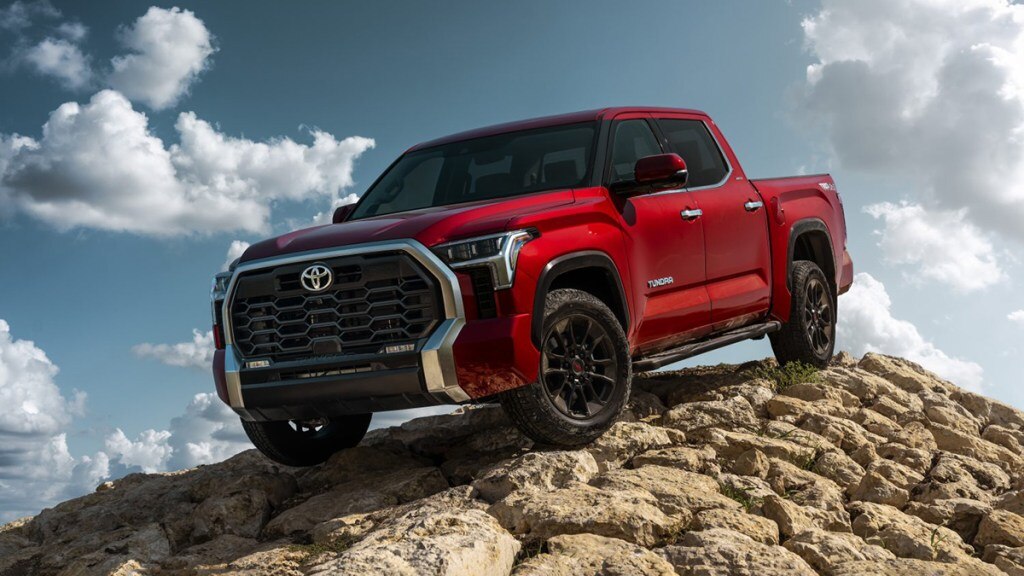
2026 Toyota Tundra — Powertrain Summary (U.S. Market)
▼| Powertrain (Engine) | HP / TQ (U.S. spec) | Transmission | Drivetrain | Max Towing | Max Payload | Trims | Body Styles |
|---|---|---|---|---|---|---|---|
| i-FORCE 3.4 L twin-turbo V6 (SR tune) | 348 hp / 405 lb-ft | 10-speed automatic | 4×2 or 4×4 | Up to 8,300 lbs | Up to 1,940 lbs | SR | Double Cab (6.5-ft & 8.1-ft beds); CrewMax (5.5-ft & 6.5-ft beds) |
| i-FORCE 3.4 L twin-turbo V6 | 389 hp / 479 lb-ft | 10-speed automatic | 4×2 or 4×4 | Up to 12,000 lbs (4×2 CrewMax SR5) | Up to 1,940 lbs | SR5, Limited, Platinum, 1794 Edition | Double Cab (6.5-ft & 8.1-ft beds); CrewMax (5.5-ft & 6.5-ft beds) |
| i-FORCE MAX 3.4 L twin-turbo V6 hybrid | 437 hp / 583 lb-ft | 10-speed automatic | 4×2 or 4×4 (TRD Pro: 4×4 only) | Up to 11,450 lbs (4×2 Limited) | Up to 1,680 lbs | Limited, Platinum, 1794 Edition, TRD Pro, Capstone | CrewMax only (5.5-ft & 6.5-ft beds; TRD Pro & Capstone are 5.5-ft only) |
2026 Toyota Tundra — Notable Features by Trim
▼| Trim | Notable Standard Features |
|---|---|
| SR |
|
| SR5 |
|
| Limited |
|
| Platinum |
|
| 1794 Edition |
|
| TRD Pro |
|
| Capstone |
|
Model-Year Changes:
2026: Updated Capstone interior, new paint, and package options
2025: New TRD Rally Package, updated interior features, including massaging front seats
2024: Changes are limited to some upgraded packages, such as the TRD Off-Road package offered on the Platinum trim.
2023: The SR5 gets a new blackout package.
See 2022-to-current Toyota Tundra trucks for sale near you
Second Generation: 2007-2021
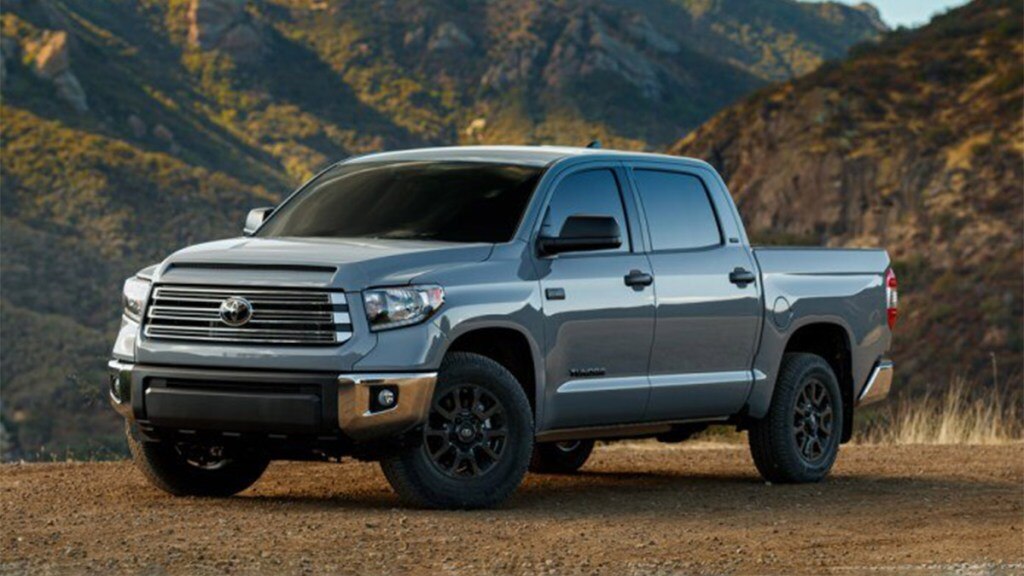
2021 Toyota Tundra — Powertrain Summary (U.S. Market)
▼| Powertrain (Engine) | HP / TQ | Transmission | Drivetrain | Max Towing | Max Payload | Trims | Body Styles |
|---|---|---|---|---|---|---|---|
| 5.7L i-FORCE DOHC V8 (E85 capable) | 381 hp / 401 lb-ft | 6-speed automatic (ECT-i) with sequential shift & TOW/HAUL mode | 4×2 (RWD) or 4×4 (part-time, electronic transfer case, A-TRAC) | Up to 10,200 lbs (4×2 Double Cab) | Up to 1,730 lbs (4×2 Double Cab) | SR, SR5, Limited, Platinum, 1794 Edition, TRD Pro | Double Cab (6.5-ft & 8.1-ft beds); CrewMax (5.5-ft bed); TRD Pro is CrewMax 4×4 only |
Sole engine for 2021 was the 5.7L i-FORCE V8 — the optional 4.6L V8 was discontinued after 2019. Fuel economy: 13/18/15 mpg (4×2) and 13/17/14 mpg (4×4) per 2020 EPA estimates. Gross Combined Weight Rating with Tow Package: 16,000 lbs across all configurations.
2021 Toyota Tundra — Notable Features by Trim
▼| Trim | Notable Standard Features |
|---|---|
| SR |
|
| SR5 |
|
| Limited |
|
| Platinum CrewMax only |
|
| 1794 Edition CrewMax only |
|
| TRD Pro CrewMax 4×4 only |
|
Model-Year Changes:
2021: Some paint color changes and two limited-edition models mark the final year for the second-gen Tundra.
2020: The 4.6-liter V8 is no more, but new features include an 8-inch touchscreen, standard Apple CarPlay/Android Auto, and Smart Key with push-button start.
2019: The TRD Pro rejoins the lineup, featuring Fox shocks and BBS alloy wheels.
2018: Toyota Safety Sense-P is made standard. The Regular Cab and TRD Pro are discontinued.
2017: No significant changes.
2016: Limited, Platinum, TRD Pro, and 1794 models get a larger 38-gallon fuel tank. Trucks with the 5.7-liter V8 gain trailer brake control.
2015: The V6 is dropped, making the 4.6-liter V8 the new standard engine.
2014: A major refresh brings a new interior and exterior, plus the first 1794 Edition.
2013: Toyota’s Entune audio system enters the Tundra cab.
2012: Limited and TRD trims gain a standard rear backup camera.
2011: The V6 gains 34 hp, increasing to 270 total. Trailer sway control is made standard.
2010: The 4.6-liter V8 joins the lineup, and new standard equipment includes a driver’s knee airbag, height-adjustable headlamps, and two new audio options.
2009: The Tundra adds two new TRD packages.
2008: Toyota offers a supercharger kit for the 5.7-liter V8.
See 2008-2021 Toyota Tundra trucks for sale near you
First Generation: 2000-2006
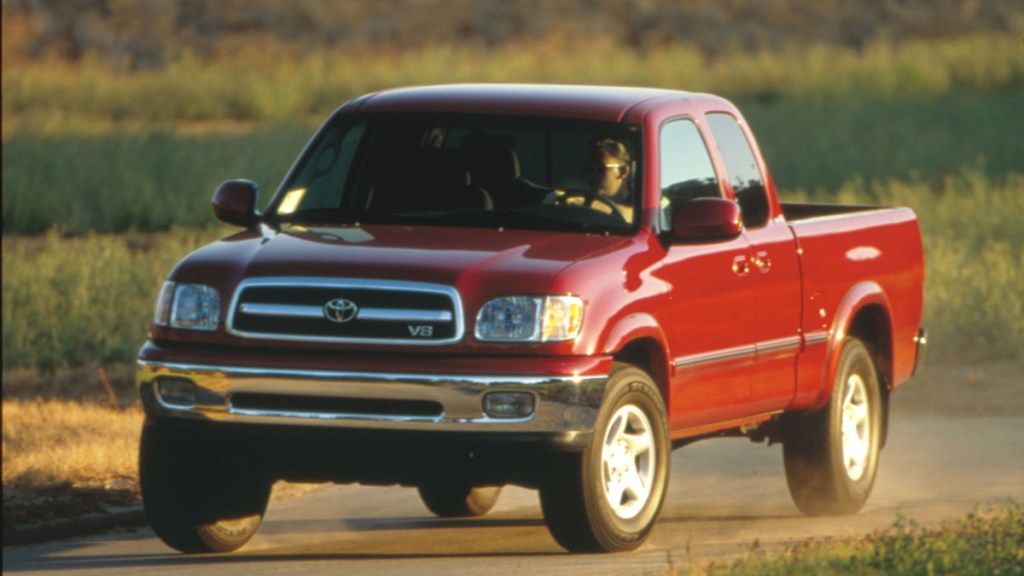
2005 Toyota Tundra — Powertrain Summary (U.S. Market)
▼| Powertrain (Engine) | HP / TQ | Transmission | Drivetrain | Max Towing | Max Payload | Trims | Body Styles |
|---|---|---|---|---|---|---|---|
| 4.0L DOHC 24-valve EFI V6 with VVT-i | 245 hp / 282 lb-ft | 6-speed manual overdrive (std) or 5-speed automatic (ECT) optional | 4×2 (RWD) only | Up to 5,000 lbs (Regular Cab) | Up to 1,565 lbs (Regular Cab manual) | Base, SR5 | Regular Cab; Access Cab |
| 4.7L DOHC 32-valve EFI i-FORCE V8 with VVT-i | 282 hp / 325 lb-ft | 5-speed electronically controlled automatic (ECT) with overdrive | 4×2 (RWD) or 4×4 (Touch-Select 4WD, 1.00:1 / 2.57:1 transfer case) | Up to 7,100 lbs (Regular & Access Cab w/ Tow Package) | Up to 2,025 lbs (Regular Cab 4×2) | Base, SR5, Limited | Regular Cab; Access Cab (incl. StepSide); Double Cab |
2005 introduced the all-new Tundra Double Cab on a 140.5-in. wheelbase. EPA mileage estimates: V6 manual 17/22 mpg, V6 automatic 18/22 mpg, V8 5-speed auto 16/18 (4×2) and 15/18 (4×4). Gross Combined Weight Rating: 9,200 lbs (V6) / 11,800 lbs (V8). 26.4-gal. fuel tank across all configurations. Both engines use Toyota Direct Ignition (TDI).
2005 Toyota Tundra — Notable Features by Trim
▼| Trim | Notable Standard Features |
|---|---|
| Base Regular Cab |
|
| SR5 Access Cab & Double Cab |
|
| Limited Access Cab & Double Cab |
|
| StepSide Access Cab — SR5 or Limited V8 |
|
2006: No major changes.
2005: A new 4.0-liter V6 is added, while the 4.7-liter V8 gains more power.
2004: A new Double Cab (crew cab) joins the lineup.
2003: Antilock brakes are standard, and the entire line gets a slight exterior makeover.
2002: V8 trucks offer a limited-slip differential.
2001: Access Cab models with a V8 offer the TRD Off-Road package.
See 2000-2006 Toyota Tundra trucks for sale near you
Which Toyota Tundra is Right for You?
The more basic trim levels make solid entry-level work trucks, especially the V8-equipped later second-generation models. TRD trims are best for off-roading, and the more luxurious trims make excellent everyday pickups. While the newer third-generation trucks might be tempting, especially because of their updated interior and better tech features, it’s important to check for open recalls to avoid potential engine issues.
Should You Buy a Used Toyota Tundra?
A used Toyota Tundra is a wise choice, especially a late-model second-generation truck. The Tundra has an excellent reputation for durability and longevity, provided owners address the few issues mentioned above. The Tundra also holds exceptional resale value. Check our sister site, Kelley Blue Book, to research the value of the used Tundra you want to buy.
Are Toyota Tundra Trucks Reliable?
The Tundra is a very reliable truck, with only a few known issues that might arise. Its engine, transmission, electronics, and suspension all earn high marks for longevity and ease of repair. That said, it’s best to avoid the recalled Tundra models from 2022 through 2024 until a solid fix is available.
Used Toyota Tundra Model Years to Avoid
First-generation Tundra models are interesting, but many of them have been ravaged by rust and high mileage. The second-generation Tundra is more readily available, but we’d still avoid some of the earlier years, 2007-2013, which are also plagued by rust issues. It’s also important to note that many second-gen trucks come with extremely high mileage, which can cause problems with even the most well-engineered parts. Finally, the 2022-2024 non-hybrid Tundra models have been under an engine recall. Toyota is still developing a fix for the problem as of May 2026, so it’s a good idea to check the VIN of any truck you’re considering to see whether it’s been affected by the recall.
Can You Take a Toyota Tundra Off-Roading?
The Tundra is a capable, rugged truck, especially when equipped with one of the various TRD packages or trim levels. That said, full-size trucks aren’t always the best choice for off-roading due to their long wheelbase and relatively large size. While the Tundra can get you far off the beaten path and back again, it won’t be as nimble, maneuverable, or capable as a smaller SUV, such as the Ford Bronco or Jeep Wrangler.
RELATED: Payload vs. Towing Capacity: Why It’s Important to Know the Difference
How Much Can a Toyota Tundra Tow?
The first-generation Tundra can tow a maximum of 7,000 pounds, the second-generation can tow up to 10,000 pounds, and the third-generation can tow up to 12,000 pounds.
See used Toyota Tundra trucks for sale near you
Editor’s Note: We have updated this article since its initial publication. Joe Tralongo contributed to the report.


