


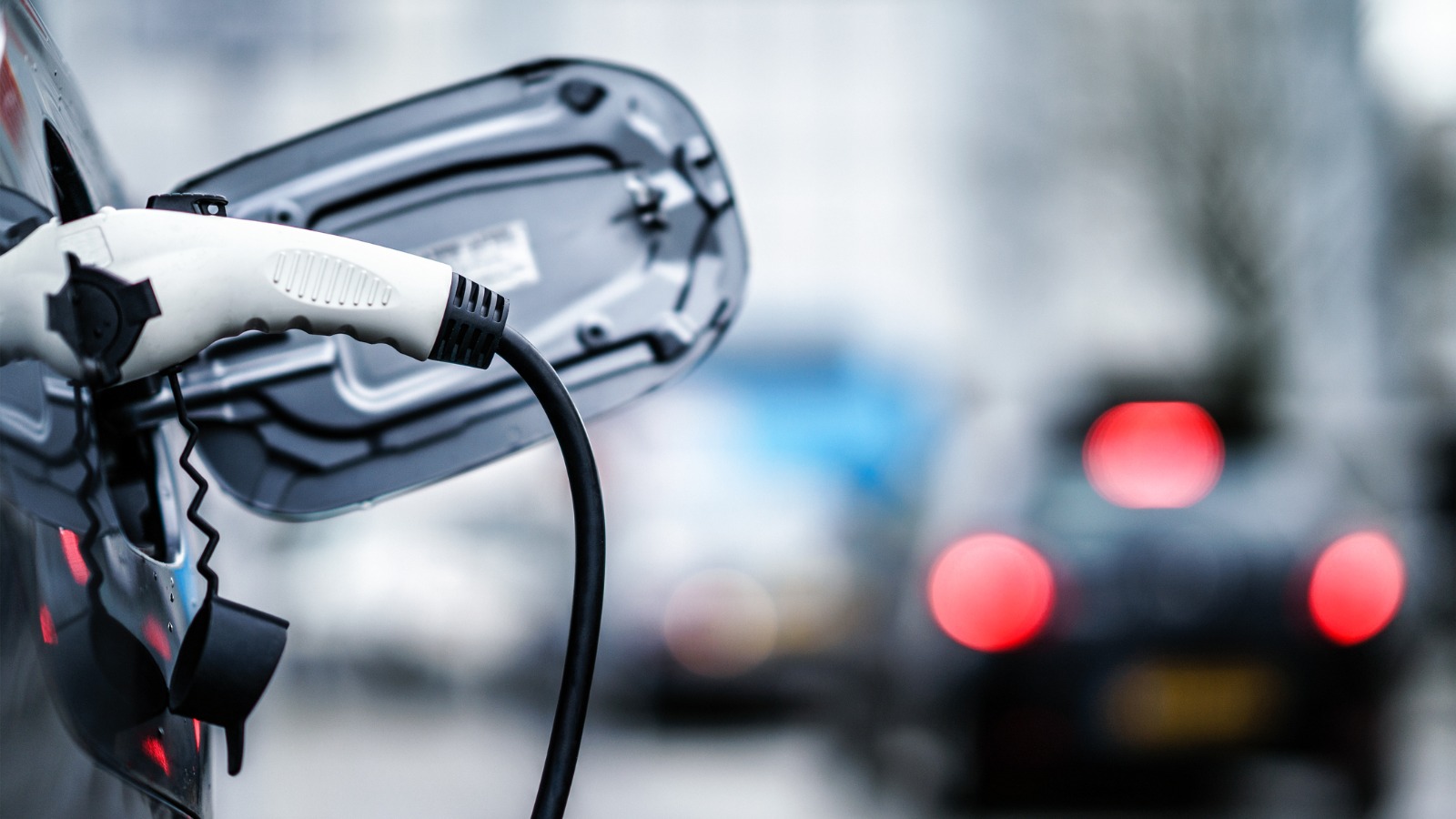
One of the biggest concerns for potential electric vehicle (EV) owners is the availability of convenient, efficient charging. This aspect of ownership can be confusing for electric car shoppers, but it’s actually not so complicated. We’ve broken down EV charging into four simple categories for you:
Charging Types and Recharge Speed

Understanding charging levels will help EV owners develop an efficient charging strategy tailored to their daily routines and travel plans.
- Level 1: This charging type is found in homes and uses a standard 120-volt alternating current (AC) household outlet. While it is very slow, Level 1 charging can be convenient for topping off a battery overnight.
- Level 2: Many EV buyers opt for a Level 2 charger at home if they can, but renters may have a harder time installing one. This type of EV charging requires a 240-volt AC circuit, similar to those used for an electric clothes dryer. Level 2 charging provides about 15-40 miles of range per hour, which is much faster than Level 1. For most EV owners, this is the perfect fit, as it allows them to recharge completely overnight. You can also find Level 2 chargers in public spaces like shopping centers, hotels, workplaces, and parking lots.
- DC Fast Charging: This is the fastest charging level and is available only at public stations. DC fast chargers use direct current (DC) to rapidly charge EV batteries. When automakers advertise charging speeds, they refer to third level fast charging speed — and in ideal conditions. Many new EVs can reach 80% of their capacity in about 30 minutes of less when using a fast charger.
Connectors or Types of Plugs
In the United States, there are four types of charging connectors. A public charging station must have a compatible connector or adapter for the EV’s charging port.
- Type 1 (SAE J1772): Widely used in North America, this standard features a single-phase AC connector for Level 1 and Level 2 charging. This is the connector used by plug-in hybrid vehicles (PHEVs).
- CCS1 (Combined Charging System): Developed by major automakers, CCS plugs combine AC and DC charging in one connector. Most European- and American-made EVs have CCS charging ports, which is the standard for most Level 3 DC fast chargers.
- CHAdeMO: Some Japanese-built EV models use a plug design called CHAdeMO. These connectors are popular in Japan, but are largely phased out in America in favor of CCS1 plugs. The Nissan Leaf moved from CHAdeMO to NACS for the 2025 model year. The 2026 Mitsubishi Outlander PHEV is one of the only new electric cars using CHAdeMO connectors.
- NACS (North American Charging System): Also known as the Tesla chargers, these connectors were developed by Tesla for its vast Supercharger network. Originally, Teslas were the only vehicles that could use this connector without an adapter. Most modern EVs today have built-in NACS ports, allowing non-Tesla owners to charge at Superchargers. While NACS is now generally considered the charging standard for all new EVs, shoppers considering used EV should check charger compatibility before purchasing.
Charging Station Availability

According to U.S. Department of Energy, there are 80,168 public charging stations across the country in May 2026. While more than 15,000 locations offer DC fast charging, about 66,500 have Level 2 chargers. Those figures continue to grow, but the reliability of chargers is far more important than their number.
Most public stations are part of third-party charging networks, such as Electrify America, EVgo, or ChargePoint. You can find available chargers through these third-party apps or, often, through your vehicle manufacturer’s app. While most stations will have multiple plugs, some stations may only have a single charger so it’s always a good idea to check beforehand. Planning a charging route is especially important if you’re planning on taking a long road trip away from home.
EV Charging Misconceptions
Some people think EV charging is free, but that’s not entirely true. Sure, some offices provide free charging for their employees working onsite. And yes, some manufacturers offer incentives and free charging for a certain time period after buying a car. But in most cases, drivers will have to pay to charge EVs through an app, even if the charging station doesn’t have a visible credit card reader.
Another common misconception is the belief that an EV battery should be kept fully charged. Charging a battery to 100% can create unnecessary stress on the power cells. Instead, manufacturers generally recommend keeping the battery between 20% to 80% to preserve its battery health.
Editor’s Note: We have updated this article since its initial publication. Regina Yu contributed to the report.


