



Quick Facts About All-Wheel Drive
- All-wheel drive (AWD) offers better traction and stability in challenging road conditions.
- Vehicles with AWD often incur higher costs from reduced fuel efficiency and higher maintenance expenses compared to front-wheel-drive (FWD) or rear-wheel drive (RWD) cars.
- Consider your needs and the typical driving environment when deciding if AWD is a smart purchase.
Before I moved to Maine, I’d only driven in snow once or twice, and even then, the storms were nothing to write home about. When I got here, I started plotting a move to an AWD vehicle to cope with the sometimes extreme weather and poor road conditions, but I quickly realized that I might not need it as much as I first thought. There are a surprising number of people in New England and other snowy climates who rely on front- or rear-wheel drive (RWD) vehicles and a good set of snow tires, but there are situations in which AWD is a legitimate necessity.
Of course, snow isn’t the only reason to consider an AWD vehicle, and it can be a real lifesaver in some situations. Let’s get into the details.
What Is All-Wheel Drive?
You’re probably familiar with front-wheel drive (FWD) and RWD vehicles, but AWD builds on those formats. It distributes power and torque to all four wheels as needed. Many AWD systems can shift torque between the wheels that need traction the most. In everyday driving, most AWD vehicles rely on two wheels, which is why you’ll sometimes hear the terms front-biased or rear-biased to describe the vehicle’s primary drive wheels.
Unlike 4-wheel drive (4WD), AWD automatically activates when the computer senses wheel slippage, making it more practical and easier to use for most drivers. That said, some systems let the driver “lock” the front and rear axles, making the vehicle behave more like a 4WD.
AWD: Pros and Cons
PROS
● Extra Traction
All four wheels spin for better grip on slick, slippery, or snow-covered surfaces. Essential for harsh winter climates.
● Resale Value
AWD vehicles offer better resale value than 2WD counterparts. Easier to sell when it’s time to upgrade.
● Peace of Mind
Confidence driving in snow, rain, or challenging conditions. AWD helps when the going gets tough.
CONS
● Higher Cost
$1,500–$3,000 upfront premium. More complex system means higher maintenance costs, especially out of warranty.
● Weight & Gas Mileage
AWD systems add weight and use more energy. EPA estimates 1–2 MPG loss vs. 2WD models.
Note: AWD improves capability but doesn’t make vehicles invincible. Safe driving habits remain the most important factor in handling challenging road conditions.
Are All-Wheel Drive and 4-Wheel Drive the Same Thing?
No. AWD and 4WD are not the same, and the terms cannot be used interchangeably. While some vehicles have automatic 4WD systems that activate without driver input, most require manual activation through a dial or shift lever. That said, 4WD is better for off-roading because all four wheels engage together, and many systems offer locking differentials and 2-speed transfer cases with low-range operation.
All-Wheel Drive Can Be a Drag if You Don’t Really Need It
AWD isn’t a 100% cheat code for bad road conditions, and it can be a burden for people who don’t absolutely need it. Here’s why:
- AWD is heavy: If you don’t need it, having AWD means you’ll be lugging around heavy drivetrain components that reduce fuel economy and cause unnecessary wear.
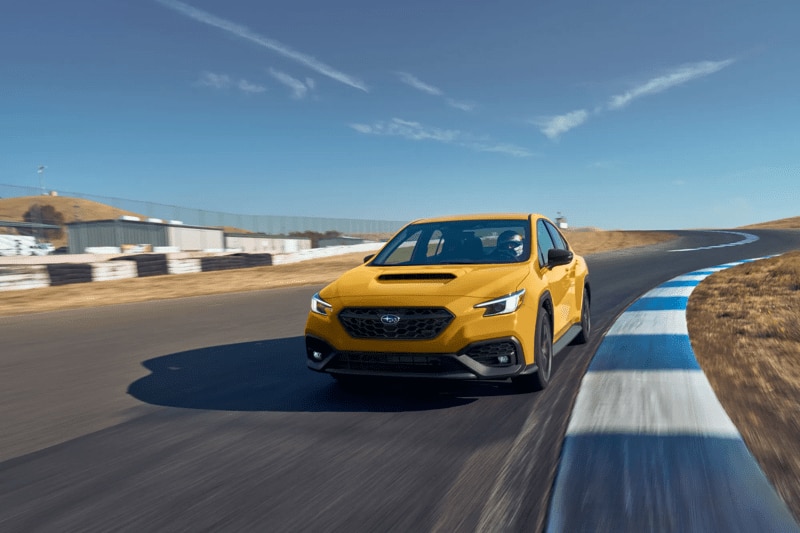
- AWD is an additional expense: Most automakers charge extra for AWD, so you’ll pay more for a feature you don’t really need. Subaru is the notable exception here, as all but one of its current models come standard with AWD.
- AWD doesn’t make you invincible: It’s easy to let AWD do the heavy lifting on slippery road surfaces, but it can also make drivers feel more confident than they should. AWD does not help with braking, and it is nowhere near as effective as it could be without the right tires for the situation.
Editor’s Note: We have updated this article since its initial publication.


