


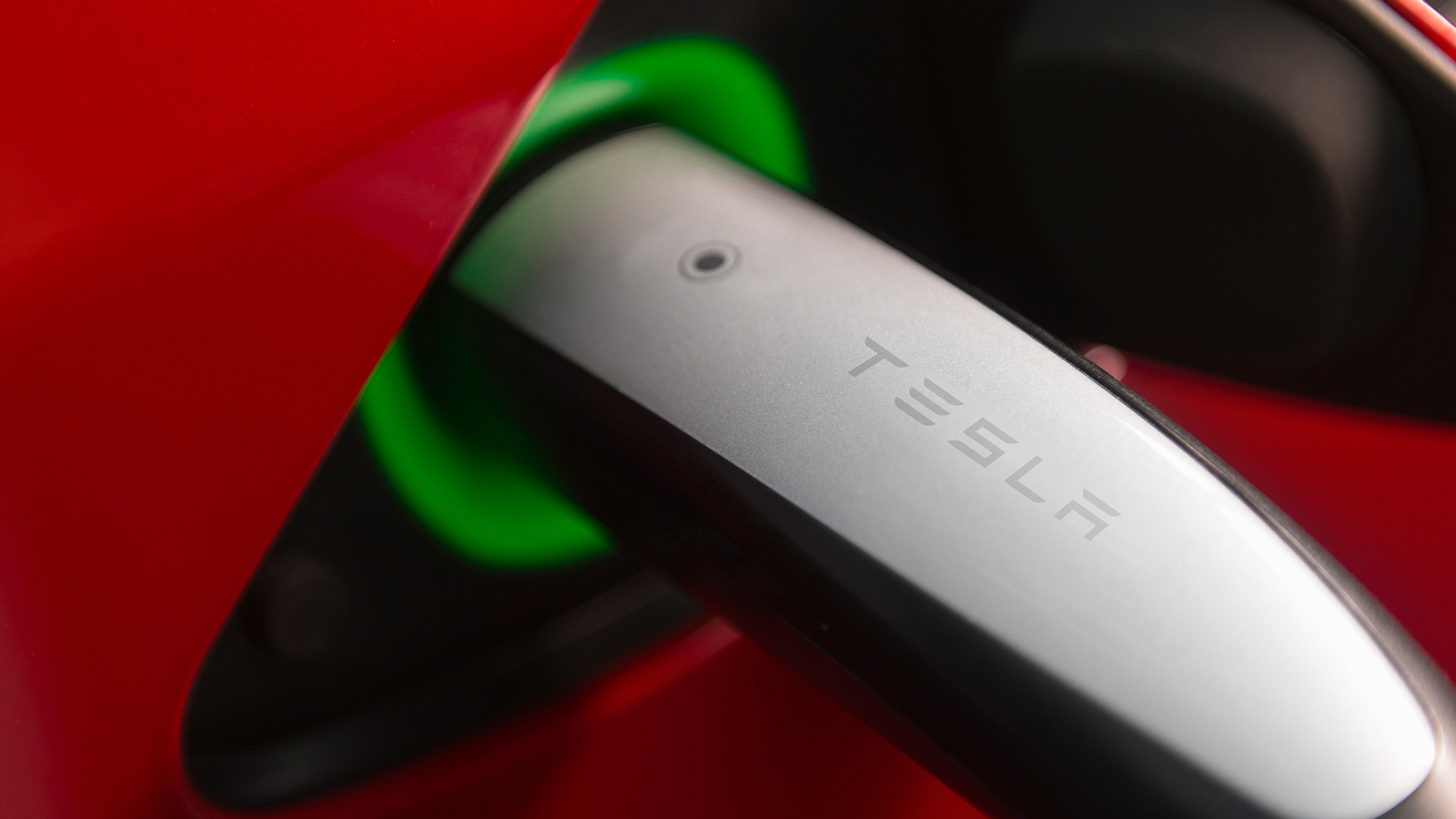
The North American Charging System (NACS) is Tesla’s proprietary electric vehicle (EV) charging platform and plug design. Initially limited to Tesla models, NACS ports and adapters are now standard or optional equipment on many EVs from other automakers, giving those vehicles access to the Tesla Supercharger network.
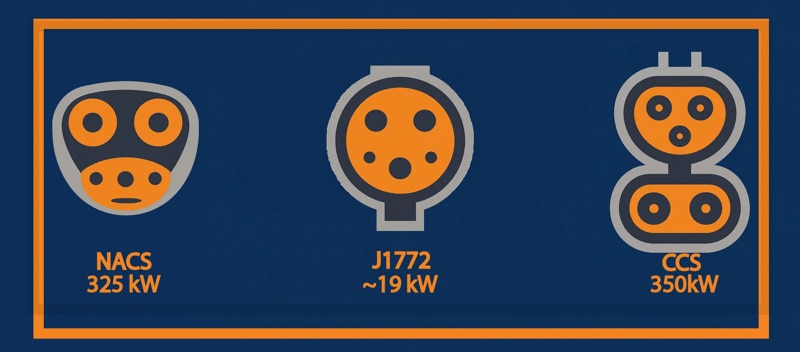
NACS Charging Speeds vs. Other Standards
Automakers Offering NACS Ports
Tesla currently lists 20 manufacturers with access to its Supercharger network, either via NACS ports installed at the factory or plug-in adapters:
| Ford | Rivian |
| General Motors (GM) | Volvo |
| Polestar | Nissan |
| Lucid | Mercedes‑Benz |
| Hyundai | Genesis |
| Kia | Honda |
| Acura | JLR |
| Audi | Porsche |
| Toyota | Volkswagen (VW) |
| Subaru | BMW |
Beginning later in 2026, Tesla Supercharger availability will start for Stellantis EVs, such as the Jeep Wagoneer S and Dodge Charger Daytona.
NACS Adapters
Many new EVs from non-Tesla brands come equipped with NACS from the factory, but those without require an adapter. Some automakers initially provided adapters, but the process was slow at first due to engineering and production challenges. Third-party solutions have also expanded, with several adapters and NACS-equipped chargers available from various companies.
Tesla Supercharger Network Locations
As of early 2026, Tesla claims more than 36,500 charging stalls for its vehicles and more than 25,000 stalls for NACS-equipped EVs from other automakers. Unlike some public charging networks, Superchargers boast an uptime rate of more than 99.5%. The company operates charging locations across North America and the globe, though they are concentrated around major population hubs.
Pros and Cons of NACS Charging
The Tesla Supercharger Network offers a range of benefits over other charging solutions, but it’s not perfect. It’s also important to note that the automaker’s charging systems are almost constantly evolving, so the number and locations of charging stations will continue to grow.
Use the Supercharger network via approved adapters as sites open to more brands.
Tap into Supercharger reliability, often stronger than many public CCS sites.
Smaller, lighter plug can be easier to handle for many drivers.
Designed for higher voltage/power, enabling future speed improvements.
Cost and convenience benefits at home with compatible gear or adapters.
Requires adapters that add steps, bulk, and potential resistance.
Adapter size/length can hinder use in tight spots or short-cable setups.
Shared AC/DC pins demand precise automaker software and testing.
Some engineers cite thin margins; Tesla states the system is safe.
Some sites have limited stalls or sit far from amenities.


