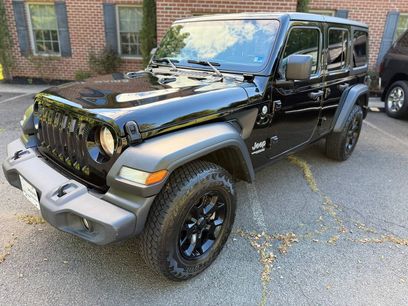
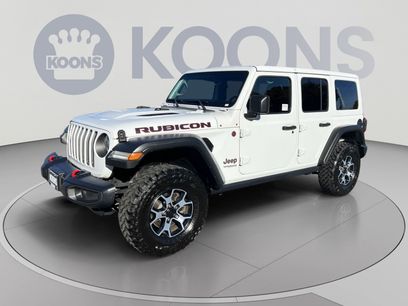
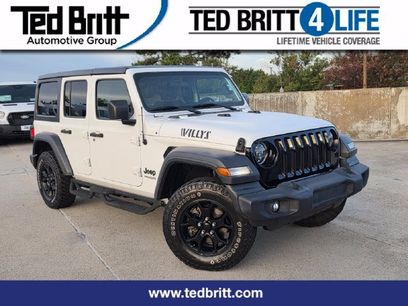
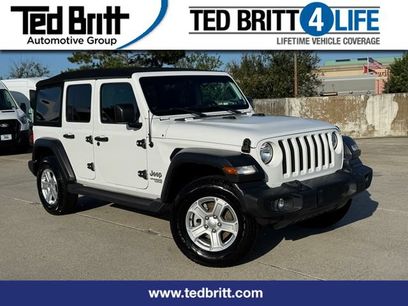
Given how seldom Jeep‘s iconic Wrangler gets a full redesign, we’re still inclined to refer to the 2020 Jeep Wrangler as “new,” despite the fact that it’s been on sale since the 2018 model year. For 2020, the Wrangler sees a few small updates, the most notable of which is the addition of a diesel powertrain that should be available some time in the 2020 calendar year. Either way, the Wrangler is in a league of its own in terms of off-road capability. It’s the only SUV on sale in the United States today that still comes with a solid front axle — which is great off-road but results in seriously compromised on-road driving dynamics. Still, most buyers see the Wrangler’s inherent quirks as a positive rather than a negative, and it’s helped this vehicle maintain a loyal fan base over the years. While it’s still fair to say that there’s nothing else like a Wrangler, this won’t be true for much longer, as Ford plans to introduce a reincarnated Bronco sometime in the coming year aimed squarely at Jeep’s legendary off-roader. There’s also an all-new Land Rover Defender that’s positioned to compete with upper trims of the Wrangler, and a new Toyota 4Runner is certain to bow sometime in the next few years. Needless to say, the competition will be heating up soon, which means that things should get a lot more interesting for the Wrangler in the coming years.
Autotrader’s Advice:
Any Wrangler offers great off-road capability, but at the expense of day-to-day livability. Still, for many, the trade-off is well worth it, as there are few vehicles on sale today outside of Jeep’s own Gladiator that match the Wrangler’s coolness factor — at least, not until the new Bronco goes on sale. When it comes to choosing the perfect Wrangler for you, it’s hard to argue with the convenience factor of the 4-door Unlimited for starters. Most buyers will be well served by the Wrangler’s Sport S trim, as it offers basic creature comforts not available on the base Sport while still keeping the price tag within reason. Beyond this though, it’s really up to you. If you want more curb appeal, look to the Sahara. If you want to tackle the hardest trails Moab has to offer, get a Rubicon. Rest assured that any one of these should offer great resale value.
What We Like:
- New diesel option
- Go-anywhere off-road capabilities
- Removable roof and doors
- Distinctive style and driving experience
- Interior is nicer than it needs to be
What We Don’t:
- Solid front axle means poor on-road driving dynamics
- Removable roof and doors result in added road and wind noise
- No IIHS safety rating
Original MSRP:
$33,290–$64,000 (when new).
MPG:
Estimated fuel economy with the standard 6-speed manual transmission is 17 miles per gallon city, 23 mpg highway and 19 mpg in combined driving. The optional 8-speed automatic improves things a bit, coming in at 18 mpg city/23 mpg hwy/20 mpg combined. Optional on all Wrangler models is a 2.0-liter turbocharged 4-cylinder only comes with the automatic and returns considerably better fuel economy: 23 mpg city/25 mpg hwy/24 mpg combined in the 2-door Wrangler and 22 mpg city/24 mpg hwy/22 mpg combined in the 4-door Wrangler.
Standard Features and Options:
The 2020 Jeep Wrangler is offered in four different trim levels: Sport, Sport S, Sahara and Rubicon.
The
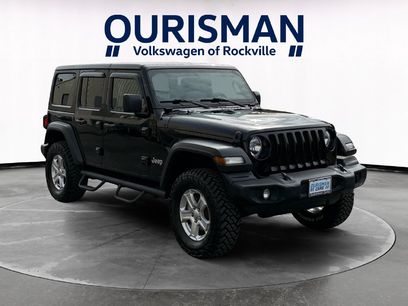
2020 Jeep Wrangler Sport ($29,790-$33,290, when new) comes standard with the 3.6-liter V6, a 6-speed manual transmission, 4-wheel drive, 17-in steel wheels, all-season tires, skid plates, hill-start assist, fog lights, a backup camera, a height-adjustable driver’s seat, a tilt-and-telescopic steering wheel, cruise control, a 5-in touchscreen infotainment system, a USB port and an 8-speaker audio system. Air conditioning is optional on the 2-door but is standard on the 4-door Unlimited. A limited-slip rear differential is also optional.
The
2020 Jeep Wrangler Sport S ($32,990-$36,490, when new) adds power locks, mirrors and windows, plus 17-in alloy wheels, keyless entry and a security alarm. It also opens the door to other options, including the Convenience Group (remote ignition and a universal garage door opener) and the Technology Group (dual-zone automatic climate control, a 7-in Uconnect touchscreen interface, an instrument cluster display and satellite radio). As with the Sport, a limited-slip rear differential is optional on the Sport S.
The
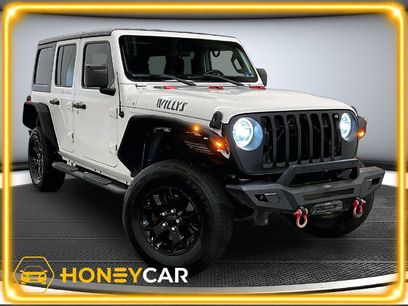
2020 Jeep Wrangler Willys ($35,485-$38,985, when new) is the one to offer functional benefits, as it comes with a limited-slip rear differential, rock rails, 32-in mud-terrain tires and black accents. There’s also a fun, vintage-inspired 4WD sticker on the rear tailgate.
The
2020 Jeep Wrangler Sahara ($40,140, when new) is available only as a 4-door and prioritizes curb appeal over off-road capability. Standard on the Sahara are silver headlight surrounds, silver accents on the bumper, body-colored fenders, 18-in alloy wheels, side steps, dual-zone automatic climate control and a few other distinctive styling elements. The Sahara can also be had with a power-retractable “Sky” one-touch convertible top, although this option costs an eye-watering $4,000.
The
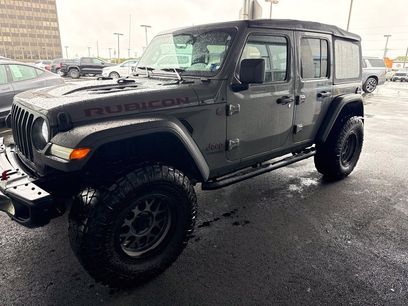
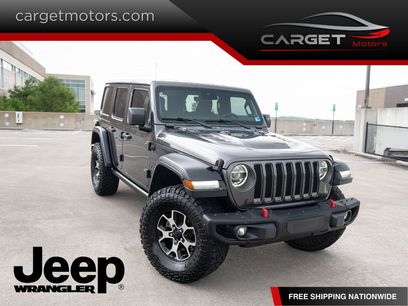
2020 Jeep Wrangler Rubicon ($39,790-$43,290, when new) gains heavy-duty Dana 44 front/rear axles, front/rear electronic locking differentials, an electronically disconnecting front swaybar, upgraded Rock-Trac part-time 4WD, rock rails, all-terrain tires, taller fender flares, special wheels and styling elements, automatic headlights, upgraded cloth upholstery, a 115-volt power outlet, a second USB port and the contents from the Convenience and Technology groups. Heavy-duty winch-capable bumpers are optional.
Safety:
The Wrangler is available with forward-collision warning with automatic emergency braking, full-speed adaptive cruise control, automatic high beams, blind spot monitoring and a park assist system. Every Wrangler comes with only front- and side-impact airbags. Given its convertible top, there are no curtain airbags. Per federal regulations, a rearview camera and stability control are also included. The new Wrangler has yet to be crash-tested by a third party. That said, crash tests conducted in the European and Australian markets have shown the Wrangler to be a bit lacking with regard to overall crash worthiness, so this is something to keep in mind.
Behind the Wheel:
The 2020 JL Wrangler is far more civilized than the old JK generation. Steering response and feel in particular are greatly improved, although its solid front axle suspension still yields a weird sawing response atypical of just about everything else on the road. Some may find it charming, others may find it spooky. Ride quality and visibility are also much better than before, and in general, it’s so much easier to live with a modern Wrangler on a day-to-day basis than it was in generations prior. We also love the JL’s soft-top roof design, which allows you to remove the rear panels for air flow but keep the top bit in place to prevent sunburns. Inside, however, is where the Wrangler’s newfound civility will be most appreciated. The cabin is now more comfortable, materials are nicer and available feature content is surprisingly generous. The latest Uconnect touchscreen infotainment systems — some of the most user-friendly in the industry — are a particularly welcomed addition. And yet, as much as this civility is appreciated, the new JL Wrangler is also a far more capable off-roader. It can go places you’d normally need a horse or helicopter to reach. Even a base Sport is a veritable mountain goat, but obviously the Rubicon, with its locking front and rear differentials, better suspension and all-terrain tires, is what you’ll really want for the toughest trails. We’d also recommend trying both the standard V6 and the new 4-cylinder turbo upgrade. Neither is a bad choice, but the turbo’s extra torque and better fuel economy are hard to argue with. Once it’s formally on sale, the diesel should up the ante even further, but buyers interested in its low-end grunt should be prepared to pay a premium.

 Learn more
 Learn more